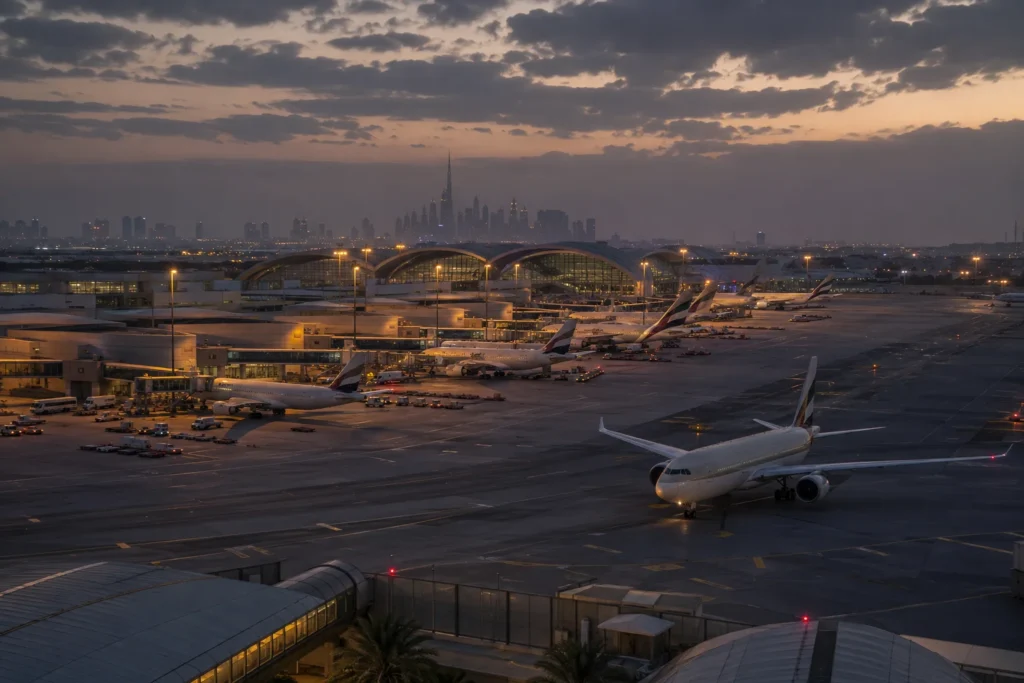
Ongoing geopolitical volatility across the Middle East continues to impact global aviation networks, creating widespread operational challenges for international air travel. Following recent military developments in the Gulf region, international civil aviation authorities and regional transport ministries have updated safety bulletins, prompting major carriers to adjust, reroute, or suspend scheduled flights across key transit corridors.
The European Union Aviation Safety Agency (EASA) has maintained an active Conflict Zone Information Bulletin, advising European operators and affiliated commercial carriers to avoid or perform strict risk assessments for airspace over the United Arab Emirates, Bahrain, Kuwait, Qatar, Jordan, and portions of the Gulf of Oman. The advisory, extended through late August, cites heightened risks associated with air defense activations, drone overflights, and rapid military developments.
Because the disruption coincides with the peak summer holiday travel period, civil aviation authorities and hub operators across the Gulf Cooperation Council (GCC) are urging all outbound, inbound, and transiting passengers to verify flight statuses directly with their operating airlines before making their way to airport terminals.
Regional Airport Operations and Safety Guidance for Passengers
Despite widespread adjustments by European and North American carriers, primary aviation infrastructure across major Gulf hubs—including Dubai International Airport, Zayed International Airport in Abu Dhabi, and Hamad International Airport in Doha—remains open and operational. However, capacity constraints, tactical rerouting, and longer transit times remain common.
Civil aviation authorities across the United Arab Emirates have confirmed that national airspace management continues under continuous, real-time safety monitoring. Aviation officials report that local operations are maintained in close alignment with international safety standards, though flight paths may undergo sudden real-time adjustments to navigate around restricted sectors.
For families and leisure travelers departing the region during the busy summer season, airport authorities advise arriving at departure terminals at least three hours prior to scheduled flight times. Passengers should allow extra time to complete security checks, clear passport control, and navigate potential queue delays brought on by higher terminal passenger volumes.
Carrier-By-Carrier Operational Status and Policy Coverage
Air carriers operating across the region have introduced flexible rebooking policies, fee waivers, and schedule updates to assist travelers navigating unexpected delays or cancellations.
Emirates: Operating a substantial portion of its global route network, the Dubai-based carrier continues scheduled passenger operations across major international corridors. The airline offers complimentary rebooking options for eligible tickets alongside integrated travel protection cover for international passengers experiencing schedule interruptions.
Etihad Airways: The UAE flag carrier maintains scheduled flights to over 80 global destinations. Rebooking fee waivers are available for affected passengers, with specialized health and travel protection coverage provided on international itineraries.
Qatar Airways: Operations at Hamad International Airport cover over 160 global destinations, with regular passenger flights serving key European, Asian, and American routes. Date-change flexibilities remain available for passengers with confirmed bookings.
Regional Carriers: Budget and regional operators, including Flydubai, Air Arabia, Gulf Air, and Flynas, continue running reduced or modified flight schedules. Passengers flying on routes intersecting restricted airspace sectors may experience longer flight durations due to precautionary detour paths.
Indian Carriers: Transport operators including Air India, Air India Express, and IndiGo continue to adjust weekly services between India and West Asia, maintaining risk-assessed corridors to serve high-volume routes.
International Suspensions: Multiple European, North American, and Asian airlines—including Air France, British Airways, KLM, Lufthansa, Cathay Pacific, and Air Canada—have temporarily paused or reduced select flight services into specific Gulf and Levant airports, citing safety instructions from their respective national aviation regulators.
Strategic Route Adjustments and Airspace Navigation
To maintain passenger safety during ongoing conflict advisories, commercial flight planners are utilizing alternative flight corridors around the Arabian Peninsula. The necessary rerouting of aircraft around restricted flight information regions has led to increased flight durations on long-haul services connecting Europe, Asia, and North America.
These tactical flight path alterations require additional fuel uplift and revised transit schedules, which can occasionally lead to secondary delays for connecting flights at major hub airports. Civil aviation safety bodies emphasize that while these operational adjustments create schedule extensions, they are essential to ensuring the highest standards of passenger and aircrew security.
Travelers with upcoming bookings in or through the Middle East should regularly monitor official airline communications, review travel insurance coverage for flight interruptions, and confirm all transit legs before departure. Regional transport ministries and civil aviation safety agencies continue to conduct real-time risk assessments, with route availability subject to update based on official regulatory advisories.
For more travel news like this, keep reading Global Travel Wire