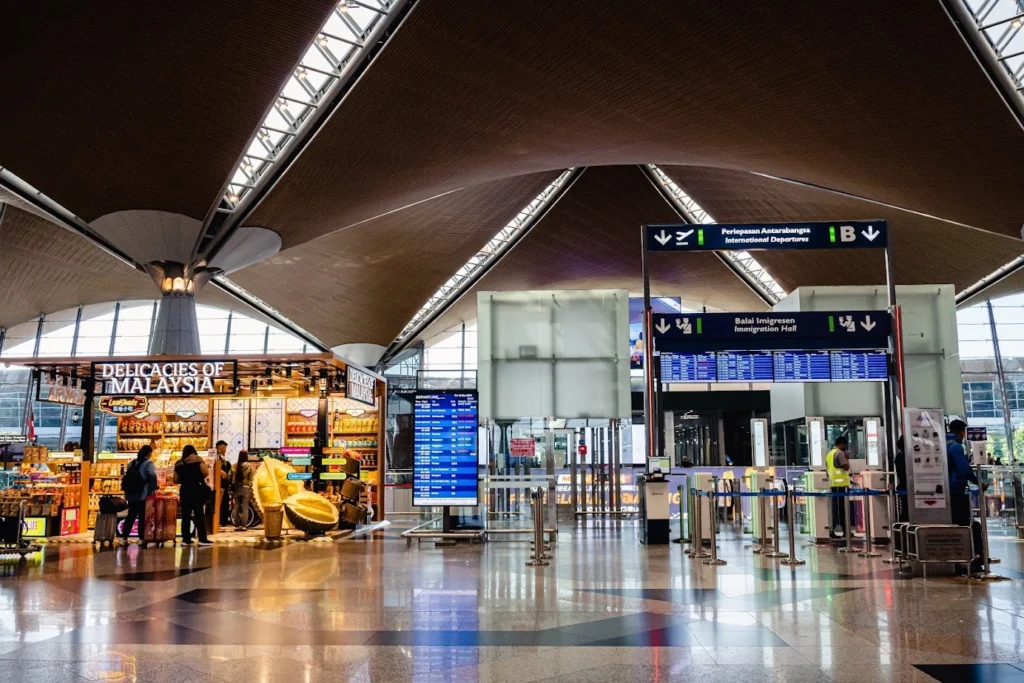
Malaysia’s airport network welcomed 51 million passenger movements during the first half of 2026, as rising international demand and expanding airline connectivity strengthened the country’s tourism economy.
Passenger traffic across Malaysia Airports’ domestic network increased by 1.8% compared with the same six-month period in 2025. International traffic became the main growth engine, offsetting softer demand across several domestic routes.
International passenger movements rose by 7.7% year-on-year to reach 27.8 million between January and June. Strong travel demand emerged from Indonesia, Singapore, Thailand, China, Australia, Vietnam and European markets.
The performance supports Malaysia’s efforts to increase visitor arrivals under Visit Malaysia 2026 while reinforcing the country’s role as a major aviation gateway connecting Southeast Asia with wider regional markets.
KLIA leads Malaysia’s international expansion
Kuala Lumpur International Airport remained the central driver of national aviation growth during the first half of the year.
KLIA handled 31.7 million passenger movements, representing an increase of 5.4% compared with the corresponding period in 2025. International passenger traffic at the airport climbed by 7.8% to 23.4 million.
The results demonstrate KLIA’s importance for inbound tourism, long-haul travel and regional connections. Higher international load factors also indicated that airlines were using available capacity more effectively despite challenging market conditions.
International visitors arriving through KLIA provide direct demand for hotels, restaurants, shopping centres, attractions and transport services across Kuala Lumpur and surrounding destinations.
The airport also serves as an essential transfer point for travellers continuing to Penang, Langkawi, Sabah, Sarawak and other leisure destinations.
Visit Malaysia 2026 begins with strong demand
Malaysia’s aviation network began 2026 with 9.4 million passenger movements in January, the opening month of the Visit Malaysia 2026 campaign.
KLIA recorded 5.9 million passengers during January, representing year-on-year growth of 8.2%. Penang International Airport handled 741,183 passengers, increasing by 3.8%.
At least six new routes were introduced during the month. These services connected Malaysia with Shanghai, Jinan, Hong Kong, Hefei, Guangzhou and Harbin.
The new links supported easier access for Chinese travellers while improving international connectivity for Kuala Lumpur, Kota Kinabalu, Tawau and Penang.
Improved aviation access is expected to support Malaysia’s cultural tourism, urban breaks, culinary travel, shopping, beaches and nature-based experiences throughout the campaign year.
Chinese New Year lifts February traffic
Malaysia Airports recorded another 8.9 million passenger movements in February, bringing the total for the first two months of 2026 to 18.3 million.
Traffic during the two-month period increased by 5.8% year-on-year. Chinese New Year travel demand, additional frequencies and new regional services supported the performance.
Malaysia Airlines, Firefly, AirAsia and Batik Air added flights to high-demand destinations, including Kuching, Johor Bahru, Tawau and Sibu.
International connectivity also expanded through services involving Hong Kong, Hefei, Singapore, Nanjing, Guangzhou and Hangzhou.
The additional capacity helped families return home during the festive period while giving international visitors more options for travelling across Malaysia.
Hari Raya supports first-quarter movement
Passenger demand remained strong during March as the Hari Raya travel period increased movement across the national airport network.
By the end of April, Malaysian airports had handled 35.5 million passenger movements for the year. This represented growth of 7.4% compared with the same period in 2025.
April alone recorded 8.1 million passengers. Traffic moderated from the exceptional festive demand seen during March, while airlines also made operational adjustments in response to changing market conditions.
The expanded Sultan Ismail Petra Airport in Kota Bharu supported East Coast connectivity. The airport handled 562,081 passengers during the first four months of 2026, increasing by 3.9% year-on-year.
Its improved terminal capacity provides greater potential for tourism growth in Kelantan and surrounding destinations.
New routes strengthen June connectivity
Malaysia Airports handled 7.6 million passengers in June, including 4.1 million international and 3.5 million domestic movements.
Traffic softened compared with May as airlines adjusted capacity amid elevated fuel prices, geopolitical uncertainty and changing passenger demand.
However, eight new services strengthened Malaysia’s international and regional connectivity during June.
The additions included routes linking Pekanbaru with Melaka, Kota Bharu with Jakarta and Kuala Lumpur with Kansai. New connections also involved Dalian, Nanjing, Lombok, Banjarmasin, Shanghai and Padang.
These services provide travellers with more direct choices while expanding Malaysia’s links with China, Indonesia and Japan.
Domestic aviation faces capacity pressure
Domestic passenger movements declined by 4.4% during the first half of 2026 as airlines adjusted capacity and responded to higher operating costs.
Sabah recorded the sharpest moderation, with traffic falling by 7.1%. Penang, Langkawi and several secondary airports also experienced lower year-on-year passenger volumes.
Nevertheless, regional airports remain essential for distributing international visitors beyond Kuala Lumpur.
Reliable domestic connections allow tourists to reach island resorts, wildlife destinations, heritage cities and rural communities that depend on aviation-supported visitor spending.
International tourism supports Malaysia’s economy
The arrival of 51 million passengers across Malaysia’s airport network highlights aviation’s growing contribution to tourism, hospitality and regional economic activity.
International growth is supporting accommodation providers, tour operators, transport businesses, restaurants and retail outlets. Meanwhile, new routes are improving access to destinations beyond the capital.
Malaysia Airports is also investing in infrastructure, passenger processing, terminal capacity and service improvements to prepare for future demand.
With 27.8 million international passenger movements and continuing airline expansion, Malaysia enters the second half of 2026 with strong tourism momentum.
The performance demonstrates how Visit Malaysia 2026, international connectivity and airport investment are helping position the country as one of Asia-Pacific’s most accessible and diverse travel destinations.
For more travel news like this, keep reading Global Travel Wire