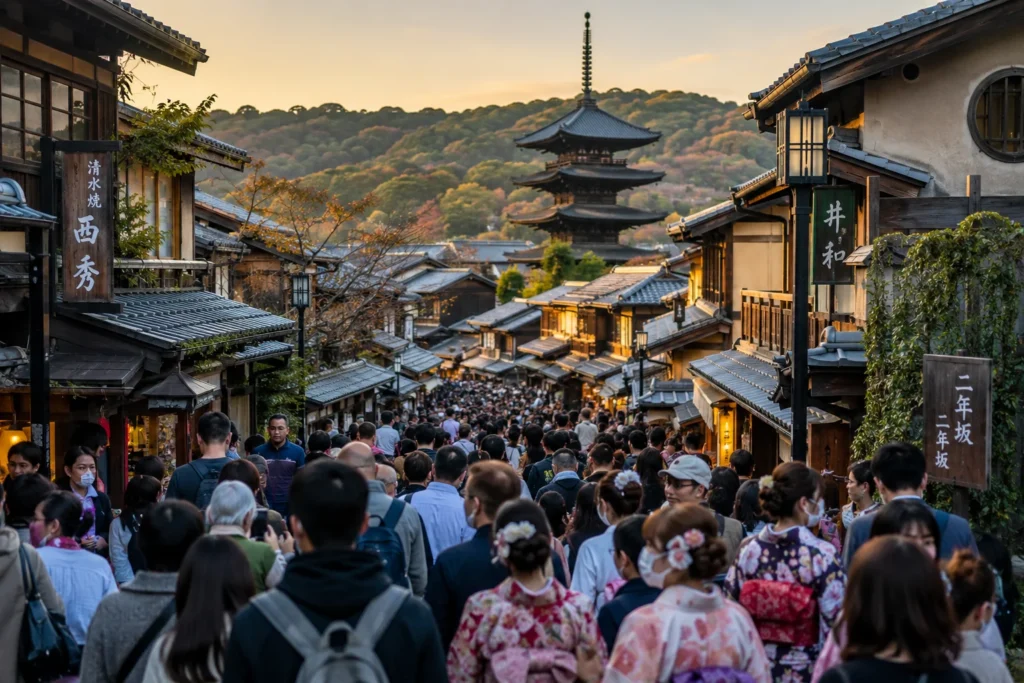
Kyoto has long stood as Japan’s cultural heartland, drawing millions to its centuries-old wooden shrines, bamboo groves, and historic tea houses. Official municipal survey data confirms that the ancient capital has shattered all previous attendance records, welcoming a total of 62.79 million leisure travelers in 2025. This historic milestone marks the first time visitor numbers have crossed the 60-million threshold since official tracking began in 1958.
Yet, alongside these staggering economic milestones, municipal findings reveal a growing paradox. Despite record visitor satisfaction rates overall, a declining proportion of both domestic and international travelers express a strong desire to return. As crowding, transit congestion, and behavioral issues mount, local authorities face an urgent mandate: balance historic economic windfalls with sustainable destination management.
Unpacking the Record Numbers: Inbound vs. Domestic Trends
International travel served as the primary engine driving Kyoto’s historical swell. Official municipality statistics record 12.68 million international visitors in 2025, representing a 17 percent surge compared to 2024. Domestic leisure visits also showed positive momentum, rising 11 percent to reach 50.11 million guests.
Arrival patterns showed remarkable consistency throughout the calendar year, averaging between four to five million arrivals each month without traditional seasonal lulls.
Overnight stays similarly posted new benchmarks, climbing to 16.59 million total stays. Overseas travelers accounted for nearly half of all hotel bookings, logging 8.09 million overnight stays—a 14 percent year-over-year increase. Among international guests staying overnight, visitors from China constituted the largest demographic share at approximately 20 percent, followed closely by travelers from the United States and Taiwan.
In contrast, domestic overnight stays dropped eight percent to 8.49 million. Municipal analysis suggests rising lodging rates within the city center have prompted Japanese residents to seek accommodation in surrounding regions or convert their visits into day trips.
Economic Windfalls and Employment Impact
The influx of global travelers pushed tourism expenditures to unprecedented heights. Total spending reached an all-time record of 2.0474 trillion yen (approximately US$13.6 billion), exceeding the previous record by 163.5 billion yen and marking the first time municipal tourism revenue surpassed the two-trillion-yen mark.
According to official economic impact assessments from municipal reports, this visitor spending actively supports approximately 230,000 jobs across accommodation, dining, transportation, and retail sectors. This equates to supporting roughly one out of every three employed residents within Kyoto City.
High Satisfaction Masked by Growing Friction
Overall sentiment remains overwhelmingly positive on the surface. Official survey responses indicate that 97.3 percent of international visitors and 90.9 percent of domestic visitors reported feeling satisfied with their trip to the ancient capital.
However, beneath these headline figures lies a notable gap in overall visitor comfort. Approximately 21 percent of international travelers and 47.2 percent of domestic tourists acknowledged experiencing disappointment during their stay. For both groups, the leading complaint was severe physical crowding, followed by poor visitor manners and extreme seasonal weather.
While Kyoto’s geography within a natural basin accentuates hot summers and freezing winters, public congestion and visitor behavior fall directly under municipal governance. Crucially, the survey identified a multi-year downward trend in the percentage of tourists who state they would strongly recommend Kyoto to others or definitely plan a return visit.
Municipal Countermeasures and Sustainable Solutions
To mitigate friction between visitors and local communities, Kyoto City has deployed targeted measures aimed at managing crowd density and protecting neighborhood heritage:
Off-Peak Travel Promotion: Public campaigns encourage visits to popular cultural sites outside peak hours, promoting early morning and evening itineraries.
Hands-Free Transit Initiatives: To reduce overcrowding on city buses and trains, authorities strongly urge tourists to utilize professional luggage forwarding and station storage services rather than traveling with large suitcases.
Neighborhood Access Rules: Following reports of tourists trespassing on private alleyways and harassing maiko and geisha for photographs, the city restricted access and photography on selected streets in historic districts like Gion.
Awareness Campaigns: Distribution of educational posters and multilingual pamphlets instructs visitors on local etiquette, from proper trash disposal to respectful behavior near private residences.
The Path Forward for Kyoto Visitors
The challenge facing Kyoto highlights the delicate balance between thriving tourism and quality of life for local communities. The city’s efforts to ease congestion require co-operation from the travelers themselves.
By embracing hands-free travel services, exploring lesser-known districts beyond the main sightseeing hubs, and observing local etiquette standards, international and domestic guests can help preserve the charm of Japan’s ancient capital for generations to come.