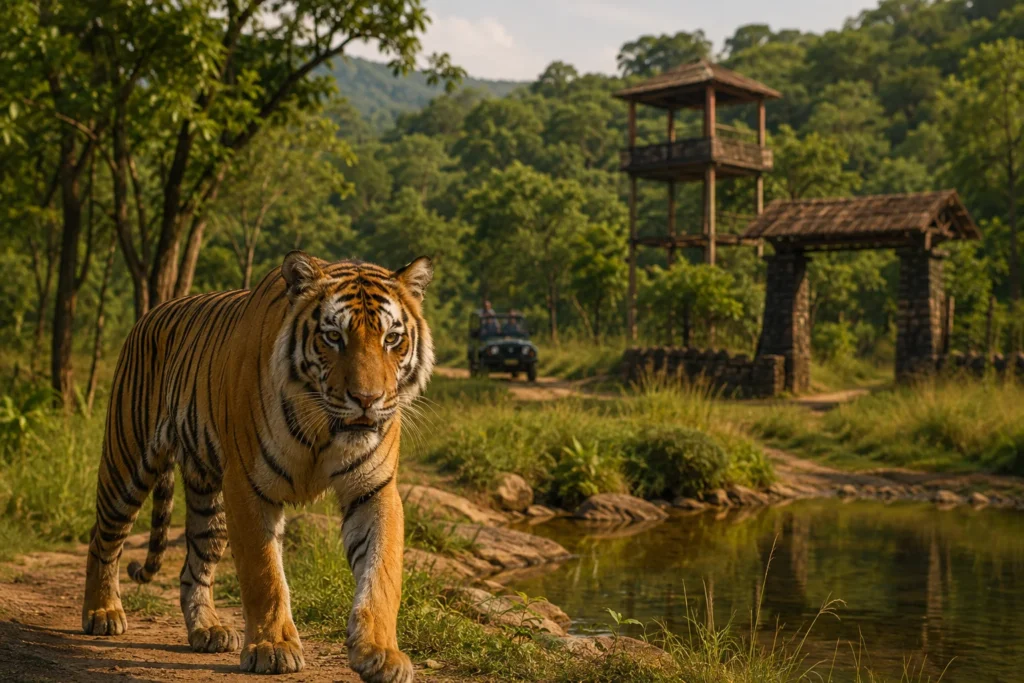
Observed globally on July 29, International Tiger Day 2026 brings renewed international focus to India’s crucial leadership in big cat conservation. According to official data from the National Tiger Conservation Authority (NTCA) and the Ministry of Environment, Forest and Climate Change, India shelters over 75 percent of the world’s wild tiger population.
This monumental success is sustained across a network of 58 protected tiger reserves spanning mangrove deltas, dry deciduous woodlands, riverine grasslands, and sub-tropical rainforests. For global nature enthusiasts and ethical wildlife travelers, India’s top tiger reserves demonstrate how long-term habitat management, science-based monitoring, and community involvement can successfully reverse the decline of an apex predator.
The Pillars of India’s Conservation Framework
A designated tiger reserve functions as the core ecological anchor for entire regional biodiversity networks. The official management model implemented by the National Tiger Conservation Authority rests on three key priorities:
Habitat Protection and Connectivity: Safeguarding core forest areas while maintaining vital wildlife corridors that allow genetic exchange between tiger populations.
Rigorous Scientific Monitoring: Utilizing camera-trap networks, spatial mapping technology, and DNA analysis through regular nationwide census assessments.
Community Integration: Engaging local buffer-zone communities through eco-tourism employment, anti-poaching patrol programs, and direct benefit-sharing.
Key India Tiger Statistics (Official NTCA Data):
* Global Share of Wild Tigers: Over 75%
* Total Designated Tiger Reserves: 58 Protected Areas
* Total Wild Tiger Population: Estimated 3,682 Individuals
* Top States by Population: Madhya Pradesh, Karnataka, Uttarakhand
Top Indian Tiger Reserves Across Diverse Ecosystems
Sundarbans National Park (West Bengal)
Located in the world’s largest mangrove delta along the Bay of Bengal, the Sundarbans presents a truly unique tiger habitat. The Royal Bengal Tigers here have adapted over centuries to swim across wide tidal channels and navigate saline coastal waterways. Unlike traditional land safaris, wildlife observation here is conducted entirely aboard authorized river vessels.
Jim Corbett National Park (Uttarakhand)
Established in 1936 as India’s very first national park, Jim Corbett holds a historic place in Asian wildlife conservation. Located in the Himalayan foothills along the Ramganga River, its diverse landscape of riverine belts, marshy depressions, and dense sal forests hosts the highest individual tiger density among all Indian reserves.
Bandhavgarh Tiger Reserve (Madhya Pradesh)
Set amidst the Vindhyan hills, Bandhavgarh is renowned for its high tiger population density and rich historical heritage. The reserve combines open grasslands and steep rocky ridges crowned by the ancient ruins of Bandhavgarh Fort, offering exceptional wildlife viewing conditions.
Kanha Tiger Reserve (Madhya Pradesh)
Famous for its sweeping sal forests and open meadows, Kanha served as the landscape inspiration for classic wildlife literature. Beyond protecting Bengal tigers, the reserve is celebrated for saving the hard-ground barasingha (swamp deer) from near-extinction through dedicated species recovery initiatives.
Ranthambore Tiger Reserve (Rajasthan)
Ranthambore offers one of the most visually distinctive safari settings in Asia. Dry deciduous forests, seasonal lakes, and historic battlements of the 10th-century Ranthambore Fort form a backdrop where tigers regularly move among ancient architectural ruins.
Nagarhole National Park / Kabini (Karnataka)
Situated in the Western Ghats biodiversity hotspot, the Kabini region of Nagarhole National Park protects dense tropical forests and reservoir shorelines. The area supports a high concentration of tigers alongside Asian elephants, Indian leopards, and gaurs.
Tadoba-Andhari Tiger Reserve (Maharashtra)
Tadoba-Andhari is Maharashtra’s oldest and largest national park, dominated by teak forests, bamboo thickets, and deep valleys. Its well-managed water bodies ensure frequent wildlife sightings, making it a pivotal stronghold for central Indian tiger conservation.
Pench National Park (Madhya Pradesh & Maharashtra)
Straddling the border of two central states, Pench features open canopy woodlands and the meandering Pench River. The park’s diverse prey base supports healthy tiger and leopard populations within a vital central Indian forest corridor.
Dudhwa & Pilibhit Tiger Reserves (Uttar Pradesh)
Located along the Indo-Nepal border, these reserves protect the critical Terai arc landscape. Characterized by tall alluvial grasslands and swampy wetlands, this corridor supports big cats alongside rare species like the Indian rhinoceros and Bengal florican.
Essential Visitor Guidelines for Responsible Wildlife Tourism
State forest departments and the National Tiger Conservation Authority maintain strict regulatory protocols to minimize human impact within core tiger habitats:
Official Booking Channels: Permit allocations for vehicle safaris are regulated by state forest departments under strict daily quotas; bookings must be secured via official government portals.
Seasonal Access Restrictions: Most reserves close their core zones during the annual monsoon season (typically July through September) to support breeding cycles and habitat restoration.
Field Regulations: Strict adherence to vehicle speed limits, designated safari tracks, noise bans, and distance requirements from wildlife is legally mandated across all reserves.
Support Local Eco-Lodges: Travelers are encouraged to choose government-certified, eco-friendly accommodations in reserve buffer zones that directly employ local community members.
Through sustained scientific management, strict legal protection, and community-centered eco-tourism, India continues to set an international benchmark for preserving wild tigers and their natural habitats for generations to come.
For more travel news like this, keep reading Global Travel Wire