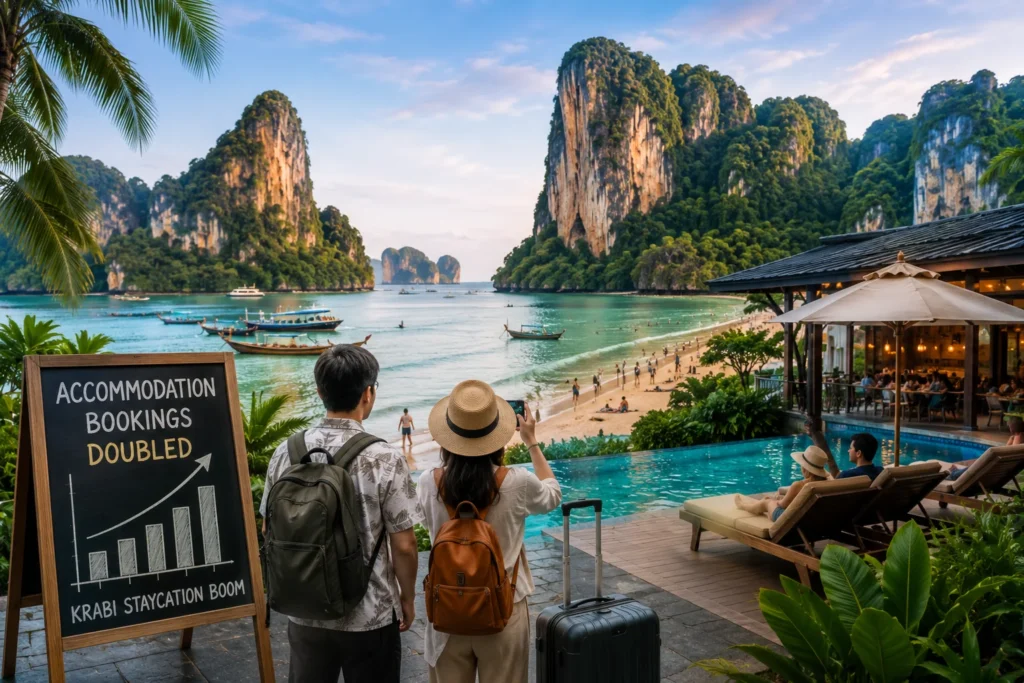
Thailand’s coastal province of Krabi has recorded a major surge in domestic tourism demand, driven by a growing preference for short, high-quality leisure breaks. Official domestic tourism data reveals that accommodation bookings across Krabi have more than doubled compared to the previous year. This performance represents the highest staycation growth rate among major coastal destinations nationwide, signaling a fundamental shift in how Thai residents plan holiday escapes.
Domestic travelers are increasingly prioritizing flexibility, wellness, and convenience over extended, crowded itineraries. The trend reflects elevated traveler confidence in Krabi’s tourism infrastructure, enhanced safety standards, and sustainable environmental management, paired with its renowned natural landscape of limestone karst formations and clear turquoise waters.
Shift Toward Experience-Driven Coastal Breaks
Thailand’s domestic travel market is undergoing a structural evolution. Rather than committing to lengthy annual vacations, urban professionals and families are opting for frequent two- to three-day weekend getaways. A short trip to a premium coastal destination is increasingly viewed as a highly restorative alternative that easily integrates into busy work and personal schedules.
Krabi has emerged as the premier destination for this evolving travel model. The province offers a balanced environment where beach relaxation, active outdoor exploration, and wellness activities can be seamlessly experienced within a single weekend.
Key characteristics driving the current booking trend include:
Short-Stay Formats: The two- to three-day break dominates domestic bookings, offering optimal relaxation without requiring extended workplace leave.
Integrated Travel Intent: Visitors are combining wellness retreats, island adventure, and local culinary experiences within single, short itineraries.
Broad Accommodation Appeal: Booking surges span the full hospitality spectrum, from boutique guesthouses and family-run inns to luxury beachfront resorts.
Flexible Travel Planning: Modern domestic tourists favor low-commitment, highly accessible destinations supported by reliable regional transport.
Multi-Layered Natural and Cultural Appeal
Krabi’s geographic layout is uniquely suited to the short-break format. Its primary natural and cultural highlights are situated within close proximity, allowing visitors to maximize their time without spending excessive hours in transit.
World-Class Coastal Landscapes
Krabi’s coastline is defined by dramatic limestone cliffs rising out of the Andaman Sea, framing famous shorelines like Railay Beach and Ao Nang. These iconic landscapes provide a scenic setting for relaxation and photography.
Tropical Island Networks
The province serves as the entry point to world-renowned island chains, including Koh Phi Phi, Koh Lanta, and the Railay Peninsula. Island-hopping excursions, snorkeling, and diving are accessible via short boat rides from mainland piers.
Outdoor Adventure and Nature Parks
Inland, Krabi offers extensive forest trails, freshwater pools, and natural hot springs. The vertical karst cliffs of Railay and Tonsai remain globally recognized destinations for professional and recreational rock climbing.
Culinary and Wellness Offerings
Local hospitality providers have expanded dedicated yoga and wellness retreat packages. Concurrently, Krabi’s food scene—highlighting regional southern Thai flavors and fresh local seafood—delivers an authentic cultural dimension for visiting food enthusiasts.
Strategic Destination Management and Quality Control
The expansion of Krabi’s domestic market is supported by coordinated destination management policies implemented by regional tourism authorities, local administrative bodies, and hospitality operators.
Strategic priorities guiding the province’s tourism development include:
Upgrading Site Standards: Continuous maintenance and safety upgrades across public beaches, island dock facilities, and national park areas.
Enhancing Visitor Safety: Elevated safety protocols and visible security measures to maintain high confidence among visiting families and solo travelers.
Environmental Protection: Active conservation efforts aimed at preserving fragile coastal ecosystems, coral reefs, and beach environments from environmental degradation.
Community-Led Tourism: Direct involvement of local communities in managing visitor services, ensuring broad economic distribution of tourism revenue.
By focusing on service consistency and environmental stewardship, provincial managers aim to convert first-time staycation visitors into long-term repeat guests.
Practical Advice for Short-Stay Visitors
For travelers planning a domestic getaway to Krabi, strategic planning helps ensure a seamless experience:
Advance Reservations: Due to high weekend occupancy rates, visitors are advised to secure preferred lodging and regional transport well in advance.
Off-Peak Visits: Exploring popular spots like Railay Beach or the Emerald Pool early in the morning helps avoid midday visitor peak hours.
Local Tour Operators: Engaging licensed local guides and boat operators ensures higher safety standards and supports regional eco-tourism initiatives.
Seasonal Awareness: While Krabi is a year-round destination, checking weather reports between May and October helps in planning coastal and island-hopping activities around monsoon patterns.
Sustainable Outlook for Krabi Tourism
The staycation surge highlights Krabi’s strong position within Thailand’s broader travel economy. By balancing natural conservation with high service standards, Krabi provides a successful blueprint for sustainable, high-value domestic tourism growth.
For more travel news like this, keep reading Global Travel Wire