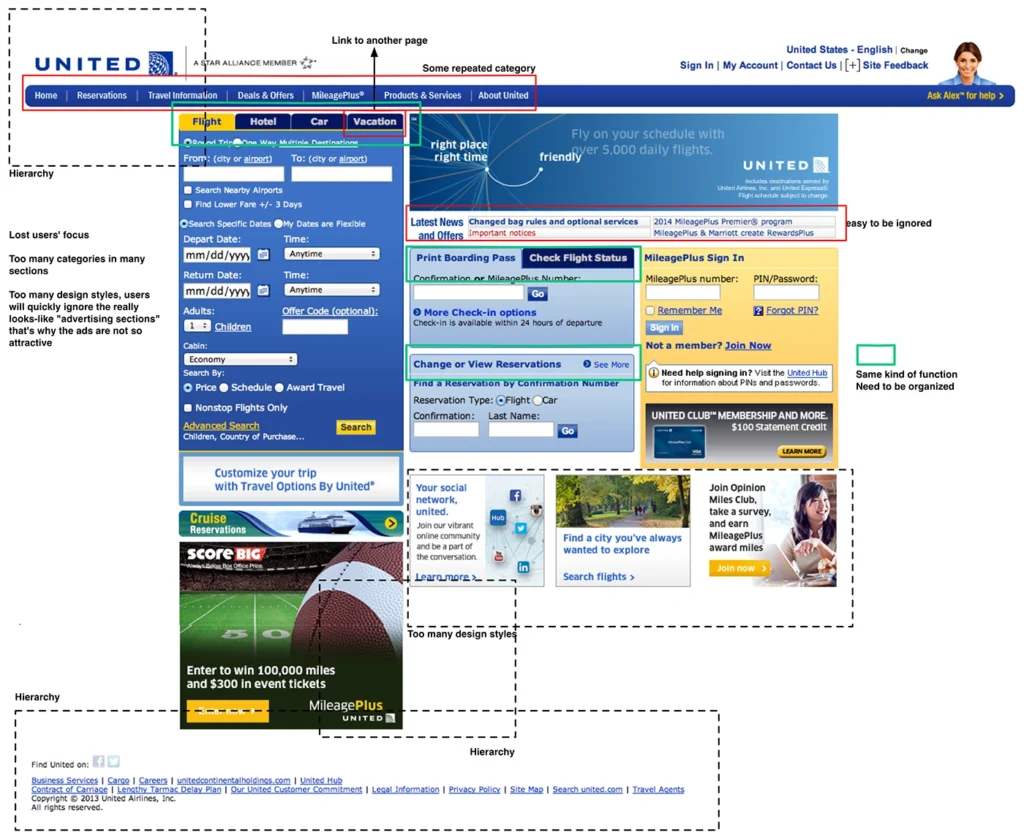
United Airlines and American Airlines have ranked among the most frustrating major travel websites in a performance study examining mobile and desktop booking experiences.
The findings show that slow-loading pages remain a serious challenge for airlines, accommodation platforms and online travel agencies. United Airlines received the lowest overall score, while American Airlines recorded the weakest mobile performance among the travel brands analysed.
As travellers increasingly search, compare and book trips online, website speed can influence whether a reservation is completed or abandoned. Delays become especially damaging when customers are comparing rapidly changing airfares, hotel rates and limited availability.
The study, conducted by web development agency Azuro Digital, assessed eight major travel websites through Google PageSpeed Insights. The tool measures how quickly pages load, become interactive and provide a stable visual experience.
United Airlines receives lowest combined score
United Airlines finished at the bottom of the overall ranking with a mobile performance score of 21 out of 100 and a desktop score of eight.
Its average score of 14.5 was the lowest recorded in the study.
The airline’s desktop website reportedly required 13.2 seconds before visible content appeared. Such a delay can create immediate frustration for customers attempting to search flights, review schedules or manage existing reservations.
Travel booking websites must process live fares, availability, loyalty information and personalised options. However, customers still expect these systems to respond quickly.
A lengthy loading period may encourage travellers to open another airline or booking platform before United’s content becomes usable. This creates commercial risks in highly competitive markets where several carriers may offer similar schedules.
American Airlines records weakest mobile performance
American Airlines received the lowest mobile score in the analysis, achieving 18 out of 100. Its desktop website scored 28, producing an average performance score of 23.
The study found that the airline’s Largest Contentful Paint reached 27.4 seconds on mobile devices. This measurement reflects how long the main visible content takes to appear.
Mobile performance has become particularly important because travellers frequently search for flights while commuting, visiting airports or already travelling. Customers may also use smartphones to check schedules, select seats, review baggage rules or make urgent booking changes.
A slow mobile experience can therefore affect more than ticket purchases. It may also influence customer service, disruption management and passenger confidence.
Booking platforms also face performance concerns
Booking.com shared second place with American Airlines in the ranking.
The accommodation platform scored 34 on mobile and 12 on desktop, resulting in an average of 23. The difference between its mobile and desktop results demonstrates how website performance can vary considerably across devices.
Delta Air Lines and Expedia also appeared among the lowest-performing brands. Delta scored 46 on mobile and 11 on desktop, while Expedia received scores of 30 and 27.
Both recorded average scores of 28.5.
Kayak performed slightly better, with mobile and desktop scores of 32 and 30. However, its average of 31 remained well below the level classified as good performance by Google PageSpeed Insights.
Tripadvisor leads but remains below top benchmark
Airbnb and Tripadvisor delivered the strongest results among the websites included in the study.
Airbnb scored 51 on mobile and 45 on desktop, producing an average score of 48. Tripadvisor ranked first with a mobile score of 54 and a desktop score of 59.
Its average performance rating reached 56.5.
Despite leading the selected group, Tripadvisor remained below Google’s highest performance category. PageSpeed Insights generally considers scores between 90 and 100 good, while results from 50 to 89 indicate that improvement is needed.
Scores below 50 are classified as poor.
Therefore, the findings suggest that website speed remains a broader travel industry challenge rather than a problem limited to one airline or booking company.
Complex booking technology can reduce speed
Travel websites are often more technically demanding than standard commercial platforms. They may include live pricing, route maps, payment systems, loyalty accounts, advertising technology and third-party booking tools.
These features provide important services but can also slow loading when websites depend on large images, unnecessary scripts or poorly optimised integrations.
Performance measurements used in the study included Total Blocking Time, Largest Contentful Paint, Cumulative Layout Shift, First Contentful Paint and Speed Index.
Together, these indicators assess how quickly a page becomes visible, stable and ready for customer interaction.
Improvement measures can include compressing images, reducing scripts, strengthening caching systems and streamlining website code. Faster servers and better management of third-party tools may also improve performance.
Digital booking experience shapes travel decisions
Website performance now forms a critical part of the traveller journey.
Customers expect airline and accommodation platforms to provide immediate access to prices, schedules and availability. When a website responds slowly, confidence can decline before a passenger even views the available products.
Poor performance can also reduce completed reservations and increase demand on customer service teams. By contrast, faster platforms can make booking easier, improve satisfaction and encourage repeat business.
The study demonstrates that even globally recognised travel companies may struggle to deliver consistent digital experiences across mobile and desktop devices.
As airlines and travel platforms invest in artificial intelligence, personalised offers and mobile services, basic website speed will remain essential.
Travel brands that improve performance can strengthen customer confidence and protect online revenue. Those that fail to modernise risk losing bookings within seconds to faster competitors offering a smoother digital journey.
For more travel news like this, keep reading Global Travel Wire