Lufthansa Group is accelerating its expansion across India in 2026 through larger aircraft, additional services and deeper cooperation with Air India.
The strategy includes deploying the Airbus A380 on Lufthansa’s Mumbai–Munich route from July and introducing SWISS flights between Zurich and Bengaluru during the 2026–27 winter schedule.
Lufthansa Group airlines have also added capacity on selected India routes as Middle East instability and changing airspace conditions reshape travel between Europe and Asia.
The expansion gives Indian travellers more direct access to Germany, Switzerland and destinations throughout Europe. It also reflects strong demand from business passengers, international students, tourists and people visiting friends and relatives.
Rather than reducing its India presence during a period of geopolitical uncertainty, the airline group is placing the market at the centre of its Asian network strategy.
Airbus A380 adds capacity between Mumbai and Munich
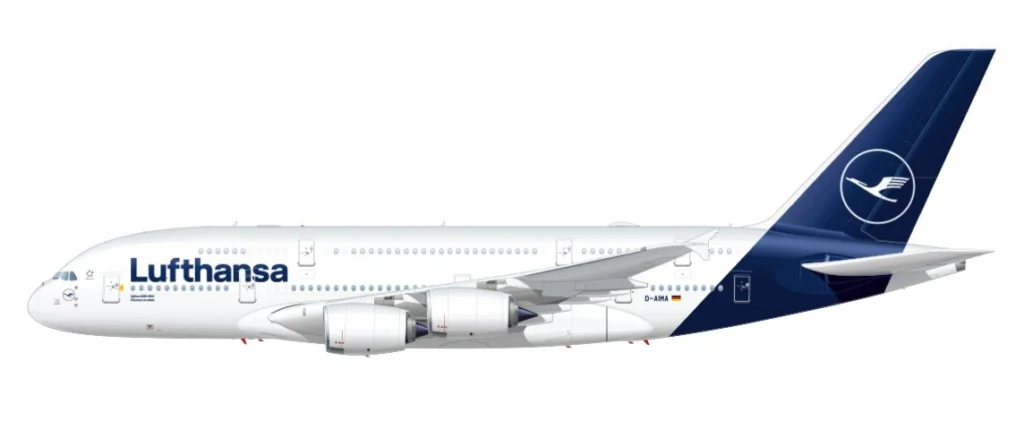
Lufthansa is introducing the Airbus A380 on its daily Mumbai–Munich service, replacing the smaller Airbus A350 from July 2026.
The aircraft change represents a significant increase in seating capacity on one of the most important business and tourism corridors between India and Germany.
Mumbai serves as India’s financial capital and supports substantial demand from corporate travellers, investors, students and premium passengers. Munich provides connections across Lufthansa’s European and international network.
The A380 is the largest long-haul aircraft in Lufthansa’s fleet. Its deployment can accommodate more travellers on the nonstop route while strengthening Munich Airport’s role as a major gateway for Indian passengers.
Lufthansa’s A380 fleet is also receiving a redesigned Business Class. The updated cabin includes direct aisle access from every seat, greater privacy and beds measuring at least two metres.
However, travellers should check the aircraft configuration during booking because the cabin modernisation programme is continuing across the fleet through 2027.
The Mumbai upgrade is expected to support visitor movement in both directions. Indian travellers gain increased access to Germany and surrounding European markets, while European passengers receive more capacity for travel to Mumbai and western India.
SWISS opens Zurich–Bengaluru corridor
Swiss International Air Lines will launch its first service to Bengaluru during the winter 2026–27 schedule.
The Lufthansa Group carrier will operate five weekly flights between Zurich and Bengaluru. The service begins as the winter timetable takes effect on October 25, 2026.
Flight LX140 will depart Zurich on five days each week and reach Bengaluru the following morning. The return flight, LX141, will leave Bengaluru early and arrive in Zurich later the same day.
Bengaluru becomes SWISS’s third destination in India after Delhi and Mumbai.
The route directly connects Switzerland’s largest city and financial centre with one of Asia’s most important technology and innovation hubs. Numerous multinational and European businesses maintain operations in Bengaluru, creating sustained demand for corporate travel.
The service also gives leisure travellers easier access to Karnataka and other southern Indian destinations. Bengaluru provides connections to cultural centres, wildlife regions, heritage attractions and tourism markets across South India.
For Indian passengers, Zurich offers onward access to destinations throughout Europe through the wider SWISS and Lufthansa Group network.
Extra flights respond to changing Asian demand
Lufthansa Group has adjusted parts of its Asian network in response to conditions affecting Middle East airspace and connecting travel.
The group announced additional capacity on selected services to India during the 2026 summer schedule. These included extra flights between Frankfurt and Hyderabad, Frankfurt and Delhi, and Munich and Bengaluru.
SWISS also extended its increased Zurich–Delhi capacity through the end of the summer schedule. The airline added a second daily Airbus A330 service alongside its regular daily connection.
These additions provide alternative Europe–Asia capacity while some aviation corridors face operational uncertainty.
Airspace restrictions can force airlines to use longer routings, increasing journey times, fuel consumption and crew requirements. Airlines must therefore balance passenger demand with changing costs and operational risks.
India’s diverse travel market offers greater resilience because demand does not depend on a single passenger segment. Corporate travel, tourism, education and family journeys all contribute to traffic between India and Europe.
Air India cooperation could deepen connectivity
Lufthansa Group and Air India signed a memorandum of understanding in February 2026 to explore a wider joint business partnership.
The planned cooperation builds on their existing codeshare arrangements and shared Star Alliance membership.
It could eventually include coordinated flight schedules, route planning, sales, marketing and improvements to the overall passenger journey. However, the broader agreement remains subject to regulatory and competition approvals.
The framework covers Air India, Air India Express and Lufthansa Group airlines, including Lufthansa, SWISS, Austrian Airlines, Brussels Airlines and ITA Airways.
Closer cooperation could make travel easier by combining Air India’s domestic and international network with Lufthansa Group hubs across Germany, Switzerland, Austria, Belgium and Italy.
Passengers may benefit from more coordinated connections, wider destination choices and smoother single-ticket journeys between Indian cities and European markets.
The partnership also reflects India’s growing importance within global aviation. Rapid economic growth and rising international mobility are encouraging airlines to expand capacity and improve premium products.
Tourism benefits from stronger European access
Additional India-Europe flights can generate benefits beyond the aviation sector.
Increased seat capacity supports hotels, restaurants, tour operators, event organisers and ground transportation companies. It can also encourage business investment and international conference travel.
Mumbai and Bengaluru are major sources of high-value outbound demand. Meanwhile, German and Swiss travellers represent important markets for Indian leisure tourism, cultural journeys and longer itineraries.
Improved connectivity can help distribute overseas visitors beyond gateway cities. Passengers arriving in Mumbai or Bengaluru can continue to destinations across Maharashtra, Karnataka and neighbouring states.
European destinations may also benefit from easier access for Indian travellers seeking city breaks, alpine holidays, education, business events and multi-country itineraries.
India moves closer to Lufthansa’s growth centre
Lufthansa Group’s 2026 expansion shows how airlines can pursue growth while adapting to international disruption.
The Mumbai A380 upgrade adds substantial capacity to Germany. The new SWISS Bengaluru route creates a direct India–Switzerland technology and tourism corridor. Extra flights provide further options during a period of changing Asian travel patterns.
At the same time, Lufthansa Group’s developing partnership with Air India could create a larger integrated network between the subcontinent and Europe.
Geopolitical tensions and airspace restrictions will remain important operational risks. Nevertheless, Lufthansa Group’s continued investment signals confidence in India’s long-term travel demand.
As international mobility expands, India is becoming more than another destination within the Lufthansa network. It is emerging as a strategic market supporting the group’s wider European connectivity and future Asian growth.
For more travel news like this, keep reading Global Travel Wire