Europe’s aviation landscape is changing rapidly as airlines redirect aircraft toward lower-cost airports, emerging destinations and markets offering stronger passenger demand.
Bratislava has become one of the clearest beneficiaries, while neighbouring Vienna faces pressure from changing airline strategies. Meanwhile, Cyprus and several Mediterranean aviation markets are navigating geopolitical disruption, rising operating costs and increasingly selective traveller behaviour.
The European Travel Commission’s latest quarterly assessment shows that international arrivals across Europe increased by 5% during the first part of 2026. Overnight stays rose by 4.8%, confirming that European tourism remained resilient despite economic and geopolitical uncertainty.
However, this growth was distributed unevenly. Airlines are increasingly reviewing airport charges, passenger demand, aircraft deployment and operational flexibility before deciding where to add or remove capacity.
Bratislava records exceptional flight expansion
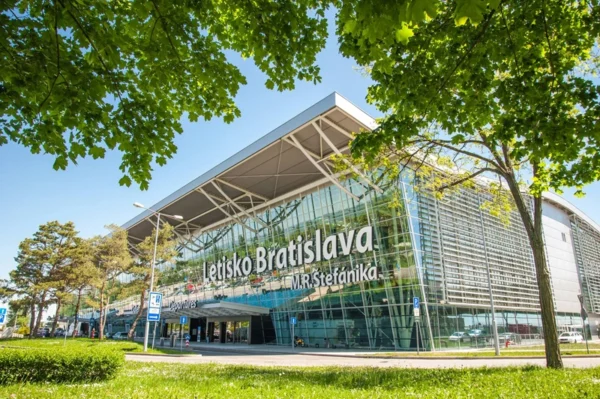
Slovakia emerged as Europe’s fastest-growing aviation market during the reporting period, with flight volumes increasing by 72.9% year on year.
The extraordinary expansion strengthened Bratislava’s position as an increasingly important Central European gateway. It also demonstrated how low-cost airline investment can rapidly transform the competitive relationship between neighbouring airports.
Bratislava offers access to the Slovak capital while remaining close enough to Vienna to serve travellers visiting the wider cross-border region. New flights could therefore benefit Slovak tourism while also attracting passengers who previously relied on Austria’s larger aviation hub.
Additional connectivity can support hotels, restaurants, attractions, conference venues and local transport providers. It can also help Bratislava position itself as an affordable European city-break destination for travellers prioritising value.
The trend reflects a wider airline focus on airports that can support cost-efficient operations. As fuel, labour and airport expenses rise, carriers are under greater pressure to place aircraft where routes can remain commercially sustainable.
Vienna faces stronger regional competition
Vienna remains one of Central Europe’s most established aviation and tourism gateways. However, the rapid growth of nearby Bratislava introduces a stronger competitive challenge.
Airline decisions to relocate or expand capacity at lower-cost airports can influence fares, route availability and passenger behaviour. Travellers may be willing to use an alternative gateway when it offers cheaper tickets, convenient ground transport or access to several destinations within one journey.
This developing competition could encourage both airports to strengthen airline partnerships, improve passenger services and refine their market positioning.
Vienna continues to benefit from its international hub role, premium tourism appeal and extensive transport network. Bratislava, however, can compete through affordability, regional accessibility and expanding low-cost connectivity.
The emerging contest shows that airport size and historical importance alone may no longer guarantee future growth. Flexibility and operating costs are becoming increasingly decisive.
Cyprus feels the effects of regional uncertainty
Cyprus experienced a more difficult start to 2026, with international tourist arrivals declining by 17.9%. The European Travel Commission attributed the fall partly to differences in Easter timing and weaker traveller confidence linked to the island’s perceived proximity to conflict in the Middle East.
The aviation slowdown presents challenges for a destination that depends heavily on international flights. Reduced confidence can influence airline schedules, seat capacity, hotel bookings and spending across coastal tourism communities.
Cyprus remains a well-established Mediterranean destination with beaches, cultural attractions, resorts and year-round tourism potential. Nevertheless, geopolitical concerns can affect booking decisions even when a destination’s tourism infrastructure continues operating normally.
Airlines may react to weaker demand by reducing frequencies, using smaller aircraft or delaying planned expansion. These adjustments can create fewer travel choices and place pressure on tourism businesses during important booking periods.
Mediterranean destinations deliver mixed results
Cyprus’s decline contrasted sharply with strong growth elsewhere in Southern and Mediterranean Europe.
Greece recorded a 38.3% increase in arrivals, while Italy achieved growth of 21.1%. Malta’s arrivals increased by 16.4%, underlining the continued strength of Mediterranean travel demand.
Greece benefited from expanding connectivity and efforts to distribute visitors beyond heavily visited destinations. Italy’s tourism performance was supported by events, infrastructure development and broader visitor movement beyond its best-known cities.
Malta also continued attracting travellers interested in culture, history and Mediterranean experiences.
These results show that regional disruption does not affect every destination equally. Airline access, traveller confidence, perceived safety, accommodation value and destination diversity all influence performance.
Passenger demand remains resilient
European air passenger activity remained strong during the first quarter of 2026, with revenue passenger kilometres increasing by 7%. March produced the strongest monthly growth at 8%.
However, growth slowed sharply in April as Middle East disruption affected European connections with several international markets. Even so, airlines adjusted capacity to protect aircraft occupancy and route performance.
The figures demonstrate the balancing act facing airlines. Passenger demand remains substantial, but carriers must manage expensive fuel, longer routings, operational restrictions and uncertain booking patterns.
Affordability becomes aviation’s new battleground
Value for money has become one of the strongest influences on European travel decisions. Nearly half of European tourism industry respondents identified affordability and value as a major opportunity during the second quarter, up from 32% previously.
This environment could favour emerging airports such as Bratislava, where airlines may find lower operating costs and passengers may access more competitive fares.
Europe’s next aviation winners will therefore be determined by more than traffic size. Airports that combine affordability, dependable operations, convenient access and strong destination appeal will be best positioned to attract airline capacity.
Bratislava’s rise, Vienna’s competitive pressure and Cyprus’s more difficult environment reveal a European aviation market being reshaped by cost, confidence and adaptability.
For more travel news like this, keep reading Global Travel Wire