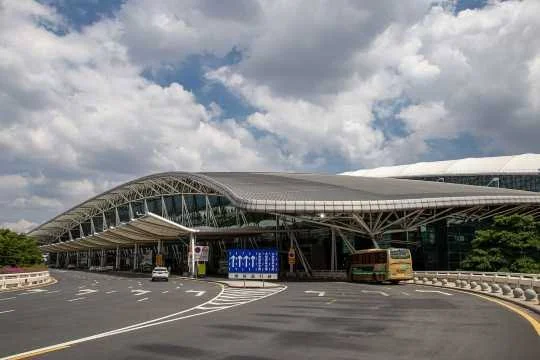
China is aligning with several fast-growing Asian travel markets as airport passenger growth begins to outpace the delivery of suitable hotel rooms.
Airports across Asia-Pacific are forecast to record annual passenger growth of 4.8% between 2025 and 2028. Southern Asia leads the outlook with 6.3%, while South-eastern Asia is expected to expand by 5.1%.
Vietnam stands out with projected annual growth of 8.1%. India is also powering regional expansion, while Eastern Asia’s international traffic could increase by 6.6% annually.
This acceleration creates a wider infrastructure challenge. Airports may have sufficient capacity to welcome more travellers, but destinations must also provide well-located accommodation at suitable prices.
The risk is greatest where passenger volumes, occupancy and room rates rise faster than hotel construction. For travellers, the result could be less choice and higher prices during peak periods.
China aviation reaches historic scale
China’s civil airports handled 1.529 billion passenger journeys in 2025, increasing 4.8% from the previous year. International-route passenger throughput climbed by 18.7%.
The country ended 2025 with 270 certified civil transport airports. Of those, 41 handled more than 10 million passengers during the year.
China’s scale makes its airport-hotel relationship different from smaller markets. Large aviation volumes can generate demand across business travel, domestic tourism, international holidays and major events.
However, China also has one of the world’s largest hotel development pipelines. Chengdu had 136 projects containing 24,216 rooms, while Guangzhou recorded 126 projects with 25,329 rooms.
That development could help both cities absorb future aviation demand. Yet planned projects will only relieve pressure when financing, construction and openings are completed.
Hotel construction follows a slower timetable
Across Asia-Pacific excluding China, the hotel pipeline reached 2,323 projects and 433,241 rooms at the end of 2025. Project numbers increased 11% annually, while the room count rose 5%.
Only 890 projects containing 189,271 rooms were under construction. Another 398 projects with 77,767 rooms were scheduled to begin within 12 months.
The remaining 1,035 projects, representing 166,203 rooms, were in early planning. These properties may take years to reach travellers.
This timing gap matters because airport traffic can increase much faster than accommodation capacity. An airline can add flights within a season, while hotels require land, approval, finance, construction and trained employees.
The type of accommodation also matters. A destination may add luxury rooms without solving limited availability in its affordable or midscale market.
India’s major gateways show pricing strength
India demonstrates how strong aviation demand can combine with resilient hotel performance.
National hotel occupancy reached approximately 63% to 65% in 2025. Average room rates stood between ₹8,500 and ₹8,700, while revenue per available room reached roughly ₹5,400 to ₹5,600.
The country recorded approximately 64,118 branded-room signings across 586 properties. However, only about 14,199 rooms opened across 176 hotels during the year.
Delhi’s Indira Gandhi International Airport handled 79.3 million passengers during the 2024–25 financial year. This was approximately 7.6% more than the previous year.
Delhi hotel occupancy increased from 73% in 2024 to 76% in 2025. Average daily rates rose from US$123 to US$130.
Mumbai presents an even tighter market. Its airport handled 55.12 million passengers during 2024–25, while hotel occupancy reached 80% in 2025. Average daily rates increased to US$145.
Bengaluru followed a pricing-led pattern. Occupancy rose from 65% to 67%, while average daily rates climbed from US$95 to US$108.
These markets show why business travellers may experience accommodation pressure even outside traditional holiday peaks.
Kuala Lumpur expands supply alongside demand
Kuala Lumpur offers a different regional signal. Kuala Lumpur International Airport handled 63.3 million passengers in 2025, increasing 10.8% annually.
Malaysia’s accommodation inventory reached 347,534 rooms during the first half of 2025, representing growth of 1.9%. National occupancy also increased from 52.6% to 54.1%.
Kuala Lumpur occupancy reached 63.6%, compared with 60.3% a year earlier. The market is therefore adding rooms while utilisation strengthens.
This catch-up pattern could support greater price stability than markets where occupancy is already high and near-term supply remains limited.
Bangkok highlights limits of passenger comparisons
Bangkok demonstrates why airport traffic cannot be treated as a direct measurement of hotel demand.
Suvarnabhumi Airport handled 62.2 million passengers in 2024, up from 51.7 million during 2023. Yet Bangkok hotel occupancy declined to 74.3% in 2025.
Average daily rates still rose 6% to THB4,560, while revenue per available room reached THB3,080.
Airport totals include residents, transit passengers and people using alternative accommodation. Consequently, passenger growth indicates market potential but does not prove a room shortage.
Travellers face a new booking reality
Travellers should monitor passenger growth, hotel occupancy and average daily rates together. When all three increase while new room delivery remains limited, early booking becomes more valuable.
Major conferences, festivals, concerts and sporting events can intensify pressure within days. Affordable and centrally located rooms may disappear first, even when premium accommodation remains available.
Asia’s next tourism bottleneck may therefore emerge after passengers leave the airport. Destinations that balance aviation expansion with timely, diverse hotel supply will be better positioned to offer connectivity, accommodation choice and stable pricing.
For more travel news like this, keep reading Global Travel Wire