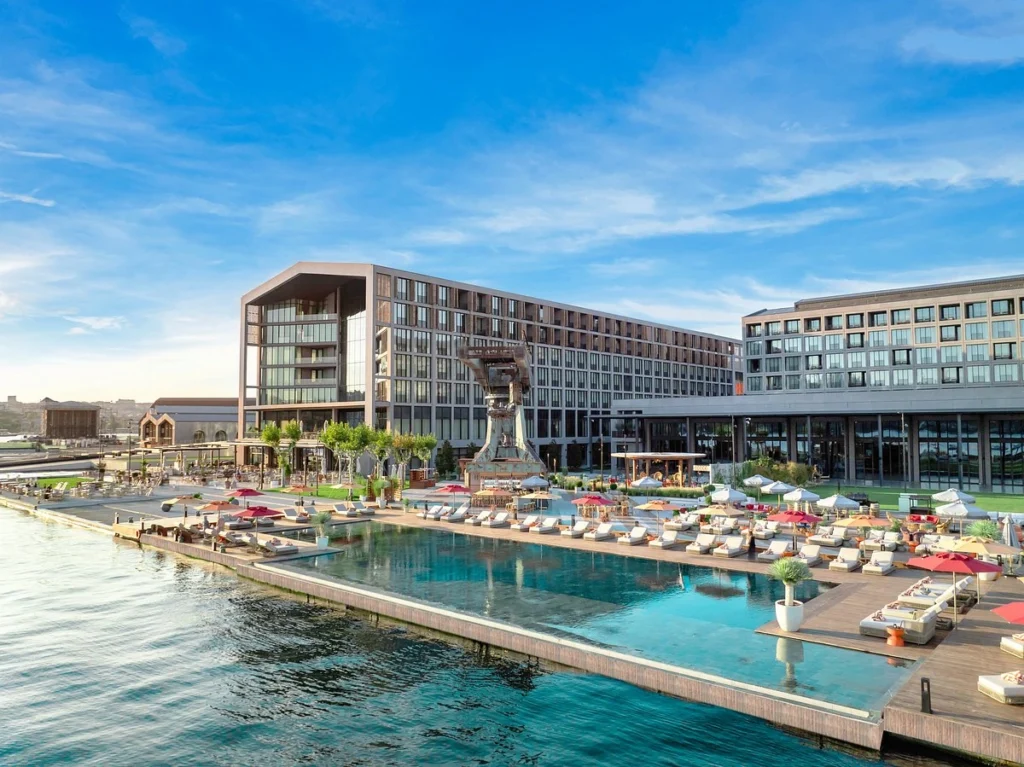
Türkiye is reshaping international travel through expanding airport connectivity, stronger tourism revenue, sustainable hotel programmes and a growing range of luxury, wellness and experience-led accommodation.
The country welcomed 9.2 million visitors during the first quarter of 2026, representing growth of 4.2% over the same period in 2025. Tourism income also increased by 4.2% to nearly US$9.9 billion, while average nightly spending by foreign visitors rose from US$116 to US$119.
These results demonstrate that Türkiye’s hospitality market is no longer driven only by high-volume summer beach holidays. Istanbul, Antalya, Bodrum, İzmir, Cappadocia and other destinations are increasingly attracting travellers seeking cultural experiences, wellness programmes, medical services, gastronomy, business events and longer premium stays.
For international visitors, the transformation means greater accommodation choice, improved flight access and more personalised hotel experiences throughout the year.
Airports support rising international demand
Türkiye’s position between Europe, Asia and the Middle East gives the country an important role in global aviation. Istanbul functions as a major connecting gateway, while airports serving Antalya, İzmir, Bodrum, Dalaman and regional destinations support leisure and business travel.
Official airport data show that Türkiye’s airports handled approximately 67.5 million passengers during the first four months of 2026, excluding most direct-transit duplication. This represented growth of about 5% compared with the corresponding period in 2025. International passenger traffic reached more than 36 million.
Istanbul’s principal airport handled about 25.7 million passengers during the period. Istanbul Sabiha Gökçen exceeded 15.2 million, while Ankara Esenboğa, İzmir Adnan Menderes and several regional airports also recorded growth.
Stronger airport traffic supports airlines, hotels, restaurants, tour operators and ground-transport companies. It also enables travellers to combine Türkiye with destinations across Europe, Central Asia, the Caucasus, Africa and the Middle East.
Hotels move beyond conventional accommodation
Türkiye’s hotel sector is adapting to travellers who expect more than a room and breakfast.
Luxury coastal resorts increasingly combine accommodation with spas, private beaches, sports, nutrition programmes and destination-focused activities. Urban hotels are adding flexible workspaces, digital services and social areas designed for business passengers and remote professionals.
Meanwhile, boutique hotels in Istanbul, Cappadocia and historic towns are using restored buildings, local architecture and regional cuisine to create more immersive stays.
This shift reflects demand for properties that connect visitors with their surroundings. Guests are increasingly interested in cultural workshops, local food, outdoor recreation and personalised wellness rather than standardised hotel experiences.
The trend also supports longer stays. Travellers who can combine work, leisure and wellbeing within one property may remain in a destination beyond a traditional weekend or package holiday.
Sustainability becomes a national hospitality priority
Environmental management is becoming an increasingly visible part of Türkiye’s tourism strategy.
The Türkiye Sustainable Tourism Program was launched in cooperation with the Global Sustainable Tourism Council framework. It covers issues including energy and water use, pollution reduction, biodiversity, cultural heritage and benefits for local communities.
More than 1,600 accommodation establishments were listed through the programme by July 2026, with participating properties independently assessed and regularly reviewed.
For travellers, certification can make it easier to identify hotels working toward recognised environmental and social standards. For operators, the programme encourages measurable improvements rather than relying only on general sustainability claims.
Coastal destinations can particularly benefit from stronger waste, water and ecosystem management because their tourism economies depend on clean beaches, healthy marine environments and protected landscapes.
Wellness and medical travel broaden visitor demand
Türkiye has also developed a strong position in wellness and health-related tourism.
Thermal destinations, spa resorts, rehabilitation facilities and medical providers attract visitors seeking treatments alongside leisure experiences. Pamukkale, Afyonkarahisar, Bursa and other regions have long-established thermal traditions, while Istanbul and Antalya serve international medical travellers.
Wellness is also becoming integrated into conventional resorts through fitness programmes, healthy menus, sleep-focused services and nature-based activities.
This diversification can reduce dependence on peak summer demand. Medical, wellness and business travellers often visit during different periods from traditional beach holidaymakers, helping hotels maintain occupancy throughout the year.
Technology changes the hotel journey
Digital services are improving convenience across Türkiye’s accommodation market.
Mobile booking tools, online check-in, digital communication and contactless services can reduce waiting times and make hotel stays easier for international visitors. Multilingual technology is particularly valuable in a destination welcoming travellers from numerous source markets.
However, technology is not replacing hospitality. Successful properties are combining digital efficiency with personal service, cultural knowledge and local recommendations.
Hotels are also using visitor data to provide more relevant dining, wellness and activity options, although responsible privacy practices remain important.
Türkiye’s tourism influence extends beyond its borders
Türkiye’s hospitality expansion provides a wider lesson for global destinations.
Its tourism model combines large aviation gateways, resort capacity, heritage attractions, wellness services and sustainability programmes. This allows the country to serve very different visitor groups while responding quickly to changing demand.
As traveller expectations continue evolving, international hotels and destinations will face pressure to offer the same mix of connectivity, digital convenience, environmental responsibility and authentic experiences.
Türkiye is therefore not simply expanding its own visitor economy. It is demonstrating how an established tourism destination can modernise its infrastructure, diversify its accommodation and compete for the next generation of international travellers.
For more travel news like this, keep reading Global Travel Wire