India is introducing three passenger-focused travel developments covering online luggage payments, Tatkal counter queues and organised pilgrimage tourism.
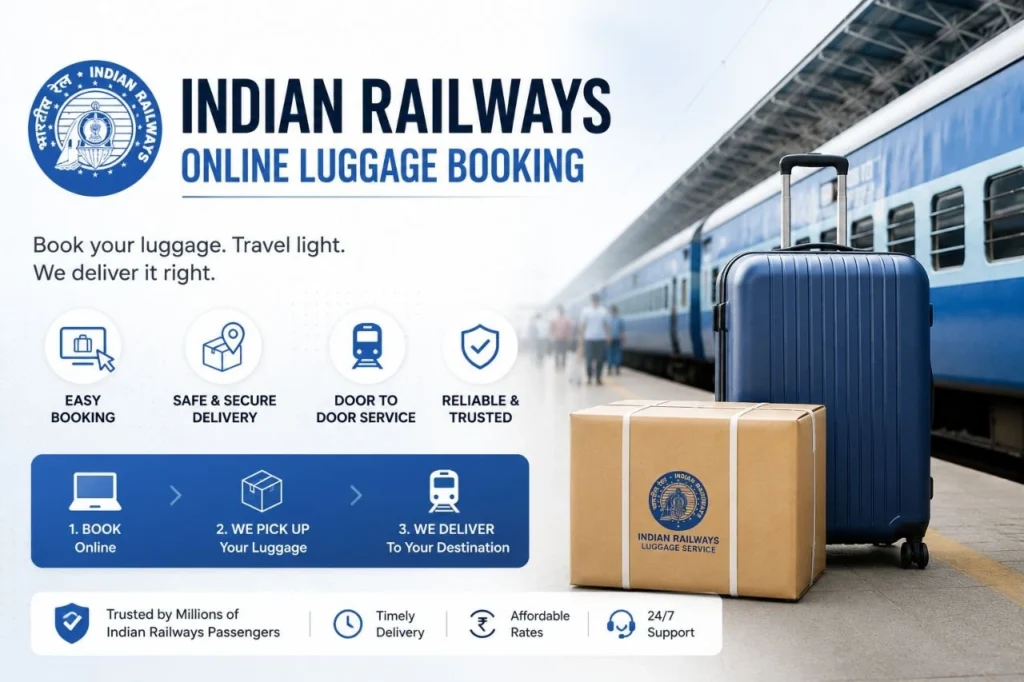
Indian Railways launched online booking for personal luggage from July 31, 2026. The service applies to passengers holding confirmed tickets in reserved compartments and allows eligible travellers to declare and pay for chargeable luggage digitally before travelling.
Separately, selected West Central Railway reservation counters introduced a token-based queue system for offline Tatkal customers from August 1. The arrangement organises the order in which passengers approach counters but does not reserve a berth or change national Tatkal opening times.
Meanwhile, an IRCTC Tourism pilgrimage package from Hyderabad connects Gaya, Varanasi, Sarnath, Prayagraj, Ayodhya, Naimisharanya and Lucknow during an eight-day itinerary.
Together, the developments could reduce administrative stress while giving passengers more organised ways to manage long-distance journeys.
Online luggage payments reduce station paperwork
The new digital luggage service covers personal belongings carried by passengers inside reserved compartments.
Previously, travellers carrying chargeable luggage often depended on station luggage offices to complete declarations and payments. Online processing could help eligible passengers understand costs before reaching the station and reduce time spent completing paperwork.
However, the facility does not introduce new baggage allowances. Existing limits based on travel class remain unchanged.
First AC passengers can carry up to 70 kilograms without charge, subject to a maximum limit of 150 kilograms. AC Two Tier and First Class passengers receive a 50-kilogram free allowance, with a maximum of 100 kilograms.
AC Three Tier and AC Chair Car passengers receive a free allowance of 40 kilograms. Sleeper Class also allows 40 kilograms free, with a maximum limit of 80 kilograms.
Second Class passengers receive a 35-kilogram free allowance. Charges continue to apply when luggage exceeds the allowance for the booked class.
Passengers may still need to use station facilities when physical verification or additional processing is required.
Tatkal tokens organise selected counter queues
The Tatkal token arrangement applies only to participating West Central Railway reservation counters. It should not be treated as a nationwide change to Indian Railways’ Tatkal system.
Tokens establish the order in which offline customers receive service. The system aims to reduce overcrowding, queue-jumping and disputes among passengers waiting for limited Tatkal tickets.
AC Tatkal reservations continue to open at 10 a.m. one day before the train’s scheduled departure date. Non-AC Tatkal bookings still open at 11 a.m.
The token does not guarantee confirmation. Ticket availability continues to depend on the route, travel class, demand and the number of successful bookings completed before a passenger reaches the counter.
Online customers using the official railway ticketing website or mobile application remain outside the physical token process.
Travellers should confirm whether their chosen station has implemented the arrangement before arriving. Local token distribution procedures may also differ between participating counters.
IRCTC pilgrimage tour connects sacred destinations
The Ganga Gaya Sangam pilgrimage package provides a seven-night, eight-day itinerary beginning in Hyderabad.
The listed September departure starts on September 2, 2026. The journey includes flights from Hyderabad to Gaya and from Lucknow back to Hyderabad, while air-conditioned road transport connects destinations during the tour.
The itinerary covers Gaya, Varanasi, Sarnath, Prayagraj, Ayodhya, Naimisharanya and Lucknow.
Scheduled attractions include Mahabodhi Temple, Vishnupad Temple, Mangala Gauri Shaktipeeth, important religious sites in Varanasi, Sarnath and Triveni Sangam.
The programme also includes Ayodhya’s temple area, Naimisharanya and Lucknow’s Bara Imambara before the return flight.
The package includes seven nights of accommodation, seven breakfasts, seven dinners and one lunch. Travel insurance and an escort service are also included.
Fixed package simplifies complex journeys
The pilgrimage circuit can benefit travellers who may find it difficult to coordinate flights, hotels, intercity transport and sightseeing separately.
It may prove especially useful for families, senior travellers and organised groups seeking a structured journey through several major religious destinations in Bihar and Uttar Pradesh.
However, the programme operates according to fixed timings. Flight schedules, hotels and sightseeing arrangements may change because of operational or local conditions.
Large coaches may not reach every temple entrance or narrow street. Travellers could therefore need local vehicles, including auto-rickshaws, at their own expense.
Rituals, entrance charges, personal purchases and services outside the published itinerary may also cost extra.
Rail and tourism services support smoother journeys
Online luggage booking has the widest national impact of the three developments. It brings another railway process onto a digital platform without changing existing weight limits.
The Tatkal token system addresses a narrower regional challenge by organising physical queues at selected counters. Its future expansion will depend on railway decisions and operational results.
The IRCTC package serves a different purpose by combining transport, accommodation and pilgrimage visits into one organised tourism product.
Passengers should check their ticket status, luggage eligibility, station procedures and package availability before making payments.
These measures do not remove every difficulty associated with rail and pilgrimage travel. However, they demonstrate how digital services, organised counter systems and packaged tourism can make complex Indian journeys more manageable.
For more travel news like this, keep reading Global Travel Wire