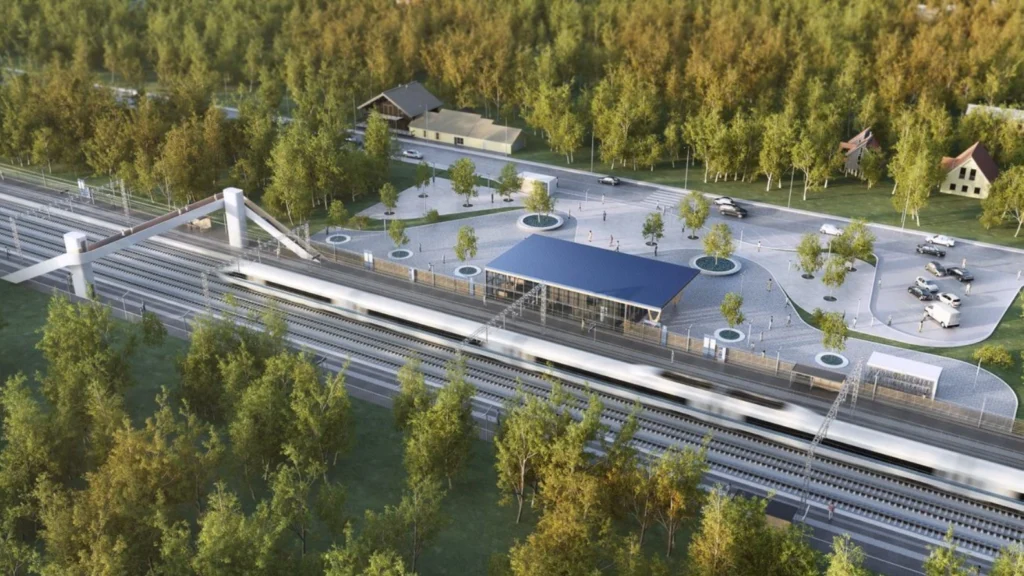
Germany is emerging as a major western gateway to the Baltic region as expanding passenger services and the Rail Baltica project create stronger railway links through Poland to Lithuania, Latvia and Estonia.
Travellers can already combine trains from Berlin through Warsaw to Lithuania, with onward connections towards Latvia and Estonia. Although Rail Baltica is still under construction, existing services are making multi-country journeys increasingly practical.
The long-term project will create a standard-gauge railway connecting Tallinn, Pärnu, Riga, Panevėžys, Kaunas, Vilnius and the Lithuanian-Polish border. It will integrate the Baltic states more closely with Poland, Germany and the wider European railway system.
For tourism, the corridor promises easier city-centre travel, stronger access to cultural destinations and a lower-emission alternative to short-haul flights.
Berlin becomes a Baltic gateway
Berlin plays an important role because it connects international travellers with Poland through established cross-border passenger services.
Visitors can begin in the German capital before continuing to Warsaw and then travelling north towards Lithuania. This creates opportunities for extended itineraries combining major cities, historic towns and less-explored regions.
Germany’s extensive railway network also makes Berlin accessible from other European destinations. Travellers arriving from France, Belgium, the Netherlands, Switzerland or other German cities can continue east without transferring through an airport.
This strengthens Berlin’s role as a starting point for sustainable journeys into Central and Northern Europe.
Poland provides the essential bridge
Poland forms the geographical railway bridge between Germany and the Baltic states.
From Warsaw, passengers can continue towards Lithuania through services operated in cooperation with Polish and Lithuanian railway companies. Current Lithuania-Poland trains involve a coordinated transfer at Mockava station.
The transfer takes place on the same platform, reducing complications for passengers carrying luggage. Official timetable information indicates that Vilnius and Warsaw are connected in approximately seven hours and 30 minutes.
The journey also opens tourism opportunities beyond the capitals. Travellers pass through regions including Białystok and Suwałki, creating potential demand for nature tourism, regional accommodation and cross-border cultural experiences.
Lithuania strengthens international access
Lithuania is currently the Baltic country with the strongest operational passenger connection to Poland’s railway system.
Vilnius and Kaunas can be reached through coordinated services at Mockava. This gives European visitors a practical alternative to flying and improves access to Lithuania’s cultural and business destinations.
Vilnius offers a historic centre, museums, religious landmarks and a growing meetings sector. Kaunas adds architecture, cultural venues and access to other parts of the country.
Lithuania also operates a direct daily service between Vilnius and Riga. The journey takes approximately four hours and four minutes, strengthening tourism movement between the Lithuanian and Latvian capitals.
These services provide an early indication of how stronger Baltic railway cooperation can support multi-destination tourism.
Riga gains a central position
Riga will occupy a central place in the future Rail Baltica network.
The Latvian capital is already a leading Baltic destination, attracting visitors with its Art Nouveau architecture, historic centre, cultural programme and business tourism facilities.
Rail Baltica is expected to connect Riga more directly with Lithuania and Estonia while improving integration with the wider European network.
The planned corridor will also strengthen links between rail travel and Riga’s aviation gateway. This could help international visitors combine flights with lower-emission onward journeys across the Baltic region.
Tour operators may eventually create integrated itineraries covering Vilnius, Riga, Tallinn and surrounding nature destinations within one railway holiday.
Tallinn moves closer to Europe
Tallinn will become the northern major destination on the Rail Baltica corridor.
Estonia’s capital is known for its medieval Old Town, coastal setting, museums and digital economy. Improved rail access could diversify the country’s visitor markets and make overland travel from Central Europe more attractive.
The corridor will also serve Pärnu, one of Estonia’s best-known resort destinations. This could support leisure travel beyond the capital and distribute tourism spending across more communities.
Connections with ferry services may eventually extend the journey towards Finland, linking Baltic rail tourism with Nordic travel markets.
Rail Baltica construction advances
Rail Baltica is planned as an approximately 870-kilometre, double-track and fully electrified railway using Europe’s 1,435-millimetre standard gauge.
The infrastructure is being designed for passenger speeds of up to 249 kilometres per hour. It will use advanced European signalling technology and support passenger, regional, night and freight services.
Rail Baltica reported in April 2026 that construction had started on 43% of the main corridor. The Baltic governments remain committed to connecting the region with the European network by 2030.
The project will reduce the technical separation created by the Baltic region’s existing 1,520-millimetre railway gauge.
Sustainable tourism gains momentum
The new corridor could make rail more competitive with aviation and road travel.
City-centre stations simplify access to hotels, restaurants and attractions. Passengers can also work, rest or enjoy changing landscapes during longer journeys.
For destinations, improved rail connectivity can reduce pressure on airports and roads while encouraging visitors to stay longer and combine several countries.
Rail Baltica therefore represents more than a transport project. It is creating a new tourism corridor linking Germany and Poland with Lithuania, Latvia and Estonia.
As construction progresses and existing services improve, the Baltic region is moving closer to the centre of Europe’s sustainable travel future.
For more travel news like this, keep reading Global Travel Wire