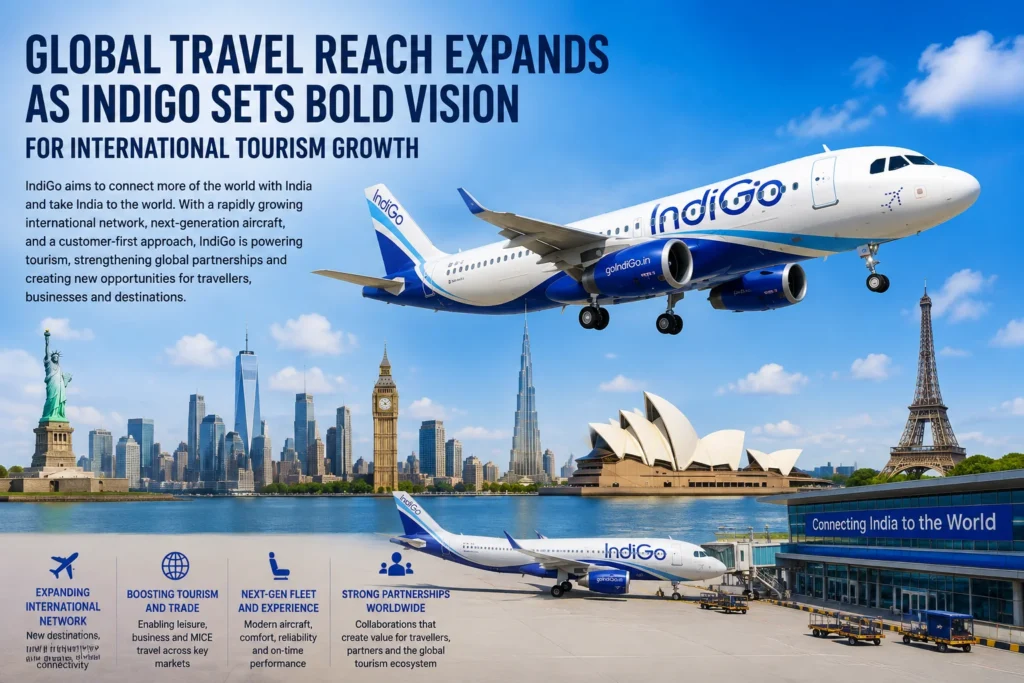
India’s international aviation landscape is undergoing a decisive shift as domestic market leader IndiGo enters a new era of global connectivity. Marking two decades of commercial operations, the airline has outlined an ambitious strategic vision aimed at transforming from a regional domestic powerhouse into a globally recognized network carrier. Under the leadership of new Chief Executive Officer Willie Walsh, who formally assumed office following official corporate announcements, the airline is accelerating its overseas footprint to capture growing outbound travel demand and support inbound tourist arrivals across South Asia.
Despite persistent global headwinds, including airspace closures, geopolitical volatility, and aerospace supply-chain constraints, the carrier remains committed to its long-term target of expanding international operations to represent approximately 40 percent of its total capacity by the fiscal year 2030. This international growth strategy forms a core pillar in connecting non-stop destinations across Europe, Asia, Africa, and the Middle East directly to India’s major heritage, cultural, and business hubs.
Strategic Leadership Transition to Drive Global Air Connectivity
The appointment of Willie Walsh as IndiGo CEO represents a deliberate leadership pivot tailored for complex global expansion. Walsh, an industry veteran who previously led major international airline groups including British Airways and the International Airlines Group, as well as serving as Director General of the International Air Transport Association, brings deep expertise in international network planning, cross-border operations, and airline brand positioning.
Assuming executive duties during the airline’s 20th-anniversary milestones, Walsh emphasized that current geopolitical pressures and operational bottlenecks will not alter the airline’s strategic growth trajectory. The corporate focus centers on elevating passenger standards, building a globally relevant aviation product, and leveraging India’s strategic geographic position between Europe, Asia, and Africa. Board leadership indicated that navigating the transition from a point-to-point domestic model to a multi-hub global network requires executive experience in international route management and complex fleet integration.
Accelerating International Capacity and Strategic Network Reach
IndiGo’s global expansion plans build upon an already vast domestic infrastructure that commands nearly two-thirds of India’s domestic passenger traffic. The airline operates a fleet of over 430 aircraft, connecting more than 95 domestic stations to over 40 overseas destinations, backed by code-share and interline partnerships with 13 international carriers.
To achieve its long-term network goals, the carrier is executing a multi-tiered international route strategy:
Regional Expansion: Rapid deployment of direct services into high-demand leisure and business markets across Southeast Asia, Central Asia, and the Middle East.
Medium-Haul Routes: Opening direct point-to-point linkages to emerging tourism destinations across Europe and Asia using extended-range narrow-body aircraft.
Direct Long-Haul Flight Infrastructure: Preparing internal operational systems, crew management platforms, and premium customer service offerings to support intercontinental wide-body aircraft services.
By linking secondary and tertiary domestic cities into its primary international hubs, the airline offers seamless single-ticket connectivity for overseas travelers exploring regional Indian tourism destinations.
Modern Fleet Integration to Capture Long-Haul Tourist Markets
Central to this transformation is the strategic induction of advanced aircraft types capable of serving distant markets efficiently. The arrival of long-range Airbus A321XLR aircraft allows the airline to pioneer new non-stop international sectors without the immediate financial risk associated with operating larger dual-aisle jets on developing routes. These aircraft open direct travel corridors to mid-range European and Asian destinations, bypassing traditional long-haul transit hubs.
Looking further ahead, the planned introduction of wide-body Airbus A350 aircraft will propel the carrier into long-haul intercontinental markets. Operating wide-body jets requires building new engineering capabilities, specialized maintenance facilities, advanced cabin products, and enhanced inflight service protocols. This fleet evolution positions the airline to compete directly for long-haul leisure passengers, business travelers, and high-value international transit traffic.
Navigating Global Aviation Constraints and Operational Complexity
The path toward international expansion involves managing notable industry-wide operational challenges. Global supply-chain disruptions and engine maintenance delays continue to affect aircraft availability across the aviation sector. Additionally, extended flight paths caused by international airspace restrictions increase fuel burn and operational costs on select European and Middle Eastern routes.
To safeguard its reputation and maintain schedule integrity across expanding international corridors, management has prioritized operational discipline and fleet reliability. Building long-term trust among international travelers—who possess multiple airline choices—requires maintaining consistent service quality, robust connection handling at major hubs, and responsive customer support.
Boosting Inbound Tourism and Positioning India as a Global Hub
The expansion of domestic carrier capacity aligns directly with national tourism initiatives aimed at raising India’s global tourism profile. By offering direct, affordable, and frequent air services, the airline helps capture a larger share of the global Indian diaspora and international holidaymakers who historically relied on foreign hub transfers in the Gulf or Southeast Asia.
To further amplify this destination growth, strategic partnerships with national tourism authorities—such as collaborative global destination marketing campaigns—are promoting India’s diverse travel offerings, ranging from heritage and spiritual circuits to wellness and eco-tourism. As new airport infrastructure opens across metropolitan centers and regional travel hubs, expanded international air routes ensure that global travelers enjoy convenient, direct access to the rich cultural tapestry of the subcontinent.
For more travel news like this, keep reading Global Travel Wire