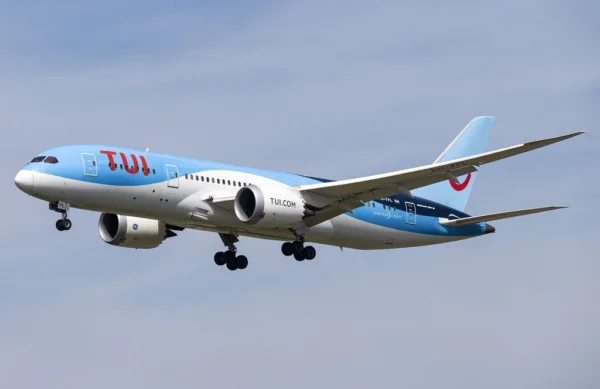
Air Tahiti Nui plans to introduce free Starlink internet across its entire Boeing 787-9 fleet in 2027, expanding connectivity for passengers travelling to and from French Polynesia.
An agreement with SpaceX covers every travel class, making the proposed service available without an additional Wi-Fi charge. The airline intends to support messaging, online work and entertainment, including during flights over oceans and remote regions.
However, the announcement does not specify a launch month, installation sequence or first equipped aircraft. The service remains a planned upgrade rather than an amenity passengers can already expect on every departure.
Free Access Will Extend Across Cabins
The fleet-wide agreement places connectivity within the shared passenger experience, with access planned regardless of ticket class.
For travellers comparing accommodation cabins, internet availability would therefore become a common feature rather than a benefit restricted to premium tickets.
That approach could appeal to families, leisure passengers and business travellers who want to remain connected during lengthy journeys.
Nevertheless, the announcement does not provide detailed access instructions or explain whether registration will be required.
Device limits and other usage conditions also remain unspecified. Passengers will need further information as the airline prepares individual aircraft for service.
Ocean Coverage Addresses A Long-Haul Challenge
Connectivity over distant stretches of ocean is central to the proposal.
Air Tahiti Nui has described the planned service as offering reliable coverage across remote regions, where passengers may otherwise experience limited digital access.
For visitors travelling to French Polynesia, that could make the flight a more connected part of their holiday journey.
Passengers may be able to exchange messages with relatives, review travel arrangements or access online entertainment while airborne.
However, the announcement’s coverage ambitions should remain distinct from demonstrated performance on the airline’s aircraft.
Actual passenger experience will become clearer after installations are completed and equipped flights begin operating.
Low Latency Supports Responsive Internet Use
The planned connection has been described as having latency of approximately 25–30 milliseconds.
Latency measures the delay involved in sending and receiving information through a network. Lower latency can help online activities feel more responsive.
It should not be confused with download speed, for which the supplied announcement gives no numerical figure.
The airline has identified streaming, online gaming and everyday communication among the activities the service is intended to support.
Those uses place different demands on connectivity, particularly when multiple passengers connect simultaneously.
Detailed performance conditions have not been published, so travellers should avoid assuming a guaranteed speed for every device or flight.
Work And Entertainment Gain More Flexibility
For passengers who choose to work during a journey, internet access could support emails, online tasks and communication with colleagues.
Leisure travellers may instead use the connection to browse, follow social media or watch films and television programmes.
Families could also benefit from additional entertainment choices on personal devices, subject to the eventual service conditions.
These possibilities broaden how passengers can spend their time onboard without changing the purpose of the journey itself.
The announcement does not establish separate streaming subscriptions or access to paid entertainment platforms. Travellers should distinguish internet connectivity from any content membership they already use.
Rollout Details Will Matter When Booking
The 2027 deployment plan covers the complete Boeing 787-9 fleet, but installation timing remains important for individual reservations.
A fleet-wide commitment does not mean every aircraft will necessarily receive the equipment on the same day.
Until a detailed schedule is available, passengers should check whether their particular departure is expected to offer the service.
Aircraft assignments can also affect which onboard facilities are available.
The announcement describes connectivity from take-off to landing, although detailed operating conditions have not been set out.
Further passenger guidance will be needed to explain when devices can connect and how access works during different flight stages.
Connectivity Adds To The Visitor Journey
Air Tahiti Nui has linked the project to passenger feedback and its wider focus on onboard service quality.
The immediate tourism relevance concerns the experience of reaching French Polynesia, rather than new routes or additional flight capacity.
Free internet could help travellers stay in contact and organise parts of their journey while crossing the ocean.
However, no figures establish additional bookings, visitor spending or tourism growth resulting from the agreement.
The confirmed direction is a planned digital improvement across the airline’s Dreamliner fleet. Its practical benefits will depend on installation progress, published access conditions and performance once the service enters operation.
For more travel news like this, keep reading Global Travel Wire