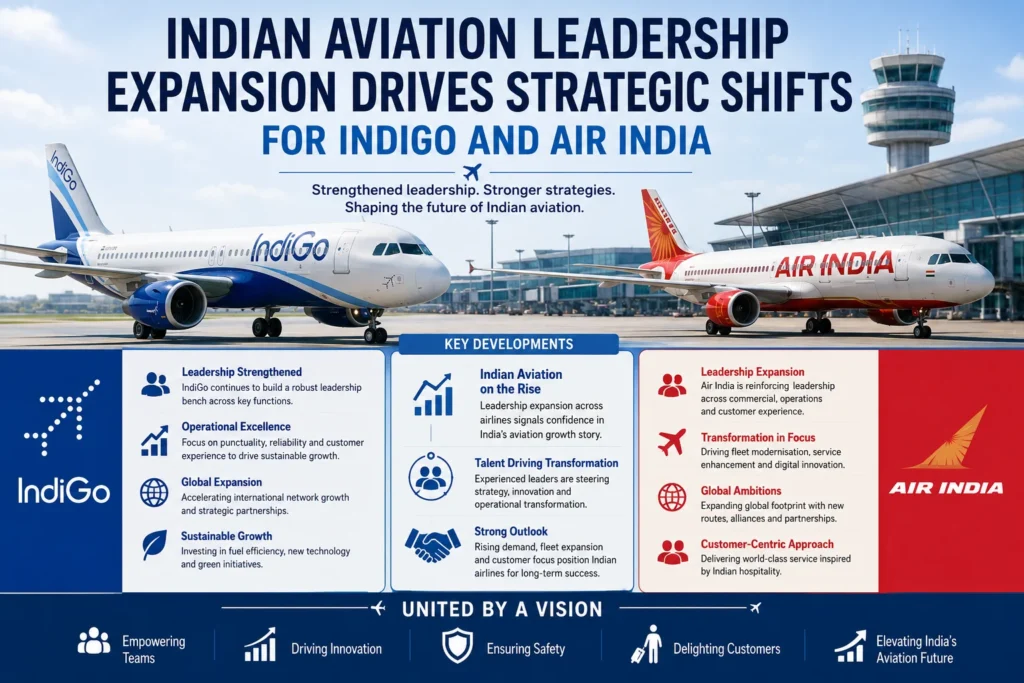
The Indian commercial aviation sector has entered a decisive new era following major executive leadership transitions at the nation’s two largest carriers. Willie Walsh officially assumed charge as Chief Executive Officer of IndiGo, while Air India announced former Ethiopian Airlines Group chief Tewolde Gebremariam as its incoming Chief Executive Officer and Managing Director.
Both global industry veterans join the Indian market as airlines navigate recovery from recent operational headwinds, airspace closures, currency fluctuations, and fluctuating jet fuel prices. While both executives inherit a dynamic marketplace, their strategic mandates present vastly different managerial priorities across low-cost operational scaling and full-service brand revitalization.
Willie Walsh Steers IndiGo Toward Long-Haul International Growth
Willie Walsh, a former Director General of the International Air Transport Association and previous chief executive at British Airways and International Airlines Group, takes the helm at IndiGo during a period of rapid network scaling. Holding a commanding domestic market share, IndiGo is actively shifting its strategic posture from a dominant short-haul regional carrier toward a major global long-haul operator.
The primary operational mandate for Walsh centers on managing IndiGo’s upcoming fleet induction and international route expansion. The carrier is preparing for the arrival of long-range Airbus A321XLR aircraft and wide-body Airbus A350-900 jets, designed to connect major Indian urban centers directly with destinations across Europe, East Asia, and the Middle East.
Industry analysts note that maintaining IndiGo’s signature low-cost discipline while integrating complex wide-body fleet maintenance, dual-class cabin offerings, and international codeshare alliances will be critical. Furthermore, establishing robust scheduling buffers and operational safeguards to protect on-time reliability across dense international networks remains a top administrative priority for the incoming leadership.
Tewolde Gebremariam Takes Over Transformation Strategy at Air India
At Air India, incoming Chief Executive Officer Tewolde Gebremariam brings more than a decade of experience transforming Ethiopian Airlines into Africa’s largest and most profitable airline group. Recruited by the Tata Group to succeed outgoing CEO Campbell Wilson, Gebremariam assumes responsibility for executing the complex secondary phase of Air India’s multi-year privatization transformation.
Air India has already completed foundational structural integration steps, including the consolidation of group carriers, brand modernization, technology upgrades, and multi-billion-dollar aircraft commitments for hundreds of new Boeing and Airbus jets. Gebremariam’s mandate shifts the airline’s focus from initial restructuring toward operational execution, premium service standardization, and sustainable profitability.
Key objectives for Air India include establishing modern hub-and-spoke transit operations at primary Indian airports, enhancing maintenance, repair, and overhaul capabilities, and upgrading cabin interiors across legacy aircraft. Central to this effort is building high-yield international passenger traffic to position Air India against leading international network carriers.
Navigating Shared Industry Headwinds and Regulatory Approvals
While the long-term priorities for IndiGo and Air India diverge across business models, both incoming leaders face immediate industry-wide operational realities. Global aircraft delivery delays, aviation supply chain constraints, regional airspace diversions, and volatile global fuel costs require disciplined financial management and agile route planning.
Regulatory procedures for the new appointments are moving forward in accordance with civil aviation norms. While Willie Walsh has officially assumed operational duties at IndiGo, Air India confirmed that Gebremariam’s formal onboarding timeline will be finalized following standard regulatory background clearances required for foreign-origin aviation executives.
The simultaneous appointment of globally recognized aviation leaders underscores the growing prominence of the Indian market within international commercial aviation. As both carriers advance their fleet commitments and international route networks, the strategic directions set by Walsh and Gebremariam will play a central role in shaping air travel accessibility and passenger connectivity across the region.
Traveler Considerations for Expanding Indian Air Networks
For international leisure visitors, business travelers, and holidaymakers navigating routes into and across South Asia, the strategic moves by IndiGo and Air India signal significant long-term improvements in air connectivity:
Expanded non-stop international flights connecting secondary Indian tourist hubs directly with European and Asian gateways.
Enhanced fleet reliability and upgraded passenger cabin amenities across modern long-haul aircraft.
Seamless transfer itineraries through modernized hub airports in New Delhi and Mumbai for regional connections.
Greater pricing competition across international routes as both low-cost and full-service operators expand capacity.
With government aviation authorities expanding airport terminal capacity across major metropolitan centers, the leadership transitions at IndiGo and Air India reflect a matured, globally competitive aviation sector ready to support rising passenger volumes.
For more travel news like this, keep reading Global Travel Wire