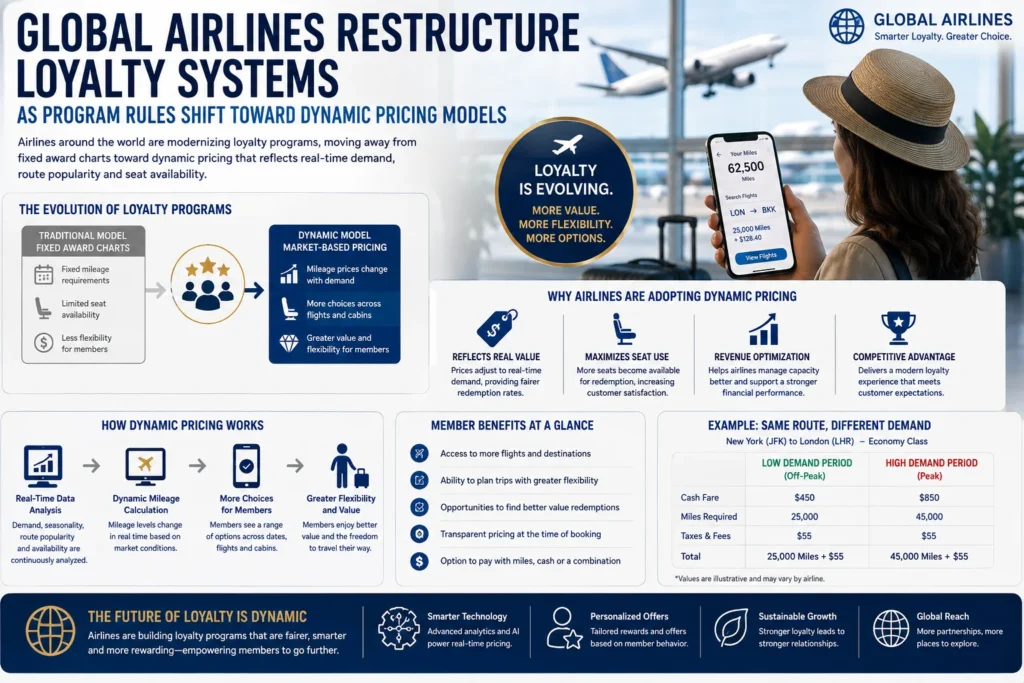
International carriers across major aviation alliances have enacted comprehensive updates to their frequent flyer redemption frameworks, systematically closing legacy booking mechanisms that previously enabled complex, low-cost award routing. Official program updates released by global airlines confirm a widespread operational shift toward revenue-aligned redemption structures, dynamic award pricing, and tier-restricted access for premium cabin inventory.
These policy adjustments mark a fundamental transition in how commercial airlines value and distribute frequent flyer rewards. By phasing out fixed award charts and multi-region routing incentives, carriers aim to protect high-yield premium cabin revenue while aligning loyalty point valuations more directly with prevailing cash ticket fares across international networks.
Strategic Realignment of Frequent Flyer Redemption Policies
Over the past year, several leading international airlines officially updated their loyalty program terms and conditions to restrict policy loopholes that allowed travelers to book multi-city or round-the-world itineraries at reduced point thresholds.
United Airlines officially retired its multi-city Excursionist Perk routing rule, which previously allowed eligible loyalty members to add a free stopover segment within a single geographic region during multi-city award travel. In addition, the carrier formally transitioned away from fixed-rate mileage upgrade charts in favor of dynamic waitlist algorithms, making immediate, guaranteed cabin upgrades less predictable for non-elite members.
Similarly, All Nippon Airways (ANA) updated its international reward guidelines to discontinue Star Alliance Round the World award issuances. The decision concluded a long-standing program feature that enabled travelers to book global itineraries spanning more than 20,000 flight miles for a fixed, published mileage amount.
Furthermore, international carriers such as Emirates adjusted redemption access for their top-tier First Class cabins, restricting premium seat availability exclusively to higher-tier frequent flyer members and elite loyalty status holders.
End of Fixed Award Charts and Complex Multi-Region Routing
The gradual elimination of legacy award rules reflects an industry-wide effort to eliminate pricing arbitrage between alliance partners. Historically, frequent flyer members could leverage discrepancies between partner award charts to secure long-haul international flights at significantly reduced mileage rates compared to standard cash prices.
Under updated airline loyalty program rules, published award charts are increasingly replaced by dynamic mileage pricing engines. Under dynamic pricing models, the number of frequent flyer points required for a specific flight fluctuates in real time based on seasonal demand, seat availability, historical booking curves, and baseline ticket prices.
For international travelers, this operational change means that high-demand holiday periods, summer peak seasons, and popular long-haul routes require substantially higher mileage balances. The removal of fixed-rate multi-region stopovers also increases the total mileage required for complex multi-destination holidays, requiring travelers to redeem separate point allocations for each individual flight segment.
Transition Toward Dynamic Pricing and Tier-Restricted Access
Aviation industry statistics show that loyalty programs represent a multi-billion-dollar operational asset for major airline groups. As demand for premium leisure travel continues to reach record levels across international routes, carriers are prioritizing seat inventory for cash-paying customers and top-tier frequent flyers.
By restricting first-class and business-class award availability to elite status holders, airlines ensure that high-value perks remain reserved for their most frequent customers. Casual loyalty program members and occasional travelers face stricter limitations when attempting to redeem points for long-haul premium seats, often finding limited inventory or significantly inflated redemption rates.
Additionally, carriers are shifting focus toward revenue-based earning models, where mileage accrual is calculated based on total dollars spent rather than physical miles flown. This dual adjustment—changing both how points are earned and how they are redeemed—ensures that loyalty programs directly support commercial airline profitability.
Impact on International Tourism and Leisure Travel Planning
The systemic restructuring of airline award programs has direct implications for international leisure tourism and long-haul vacation planning. For decades, strategic frequent flyer redemptions enabled price-conscious travelers to access premium cabin experiences and execute complex multi-country itineraries that might otherwise have been cost-prohibitive.
With the closure of multi-region routing perks and fixed round-the-world tickets, family planners and international tourists must adapt their travel budgeting strategies:
Multi-city itineraries across Europe, Asia, and the Americas now require individual point redemptions for each flight segment, increasing overall mileage costs.
Premium cabin award seats on popular long-haul routes require early booking windows or higher elite tier status within carrier loyalty frameworks.
Seasonal travel planning must account for dynamic redemption rates, which peak alongside traditional cash fare surges during holiday seasons.
Despite these program changes, airline loyalty programs remain a valuable tool for international travel, offering flexibility, priority airport services, and seat upgrades when managed strategically.
Recommended Loyalty Strategies for Modern International Travelers
To maximize frequent flyer value within modern, dynamic program structures, travel experts and civil aviation advisers recommend adopting proactive redemption habits:
Focus point redemptions on off-peak travel windows where dynamic pricing algorithms assign lower mileage requirements to award seats.
Diversify point balances across flexible, transferable loyalty currencies rather than relying on a single airline program.
Book international award travel well in advance of departure dates to secure baseline redemption tiers before dynamic rates adjust upward.
Leverage official airline mobile applications and loyalty alerts to track sudden award inventory releases for premium cabins.
As global airlines continue to refine their loyalty program frameworks, staying informed through official carrier communications ensures that international travelers can navigate program updates effectively and plan cost-efficient journeys worldwide.
For more travel news like this, keep reading Global Travel Wire