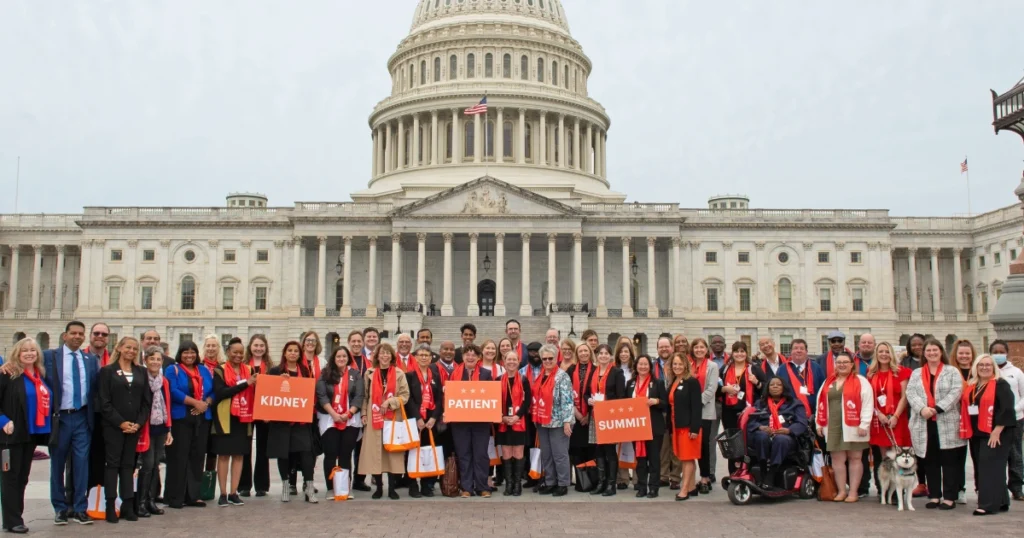
Washington, DC will become a focal point for the future of American kidney care when the Renal Physicians Association brings nephrologists, practice leaders, healthcare administrators and industry professionals together for its 2026 Advocacy and Innovation Weekend on September 25–26.
The two-day gathering at the Washington Marriott Capitol Hill will combine congressional advocacy with a full programme examining artificial intelligence, staffing, healthcare policy, private equity and changing models of nephrology practice.
For Washington’s meetings and professional travel sector, the event will also bring medical specialists and healthcare decision-makers into the US capital for education, networking and direct engagement with policymakers.
The programme reflects a rapidly changing healthcare environment in which kidney specialists must balance patient care with regulatory reforms, new technologies, workforce pressures and evolving reimbursement structures.
Capitol Hill Day puts kidney policy first
Friday, September 25 will open with RPA Capitol Hill Day, giving nephrology professionals an opportunity to take their priorities directly to congressional offices.
After registration and a morning policy briefing, participants are scheduled to conduct Capitol Hill visits through the afternoon.
RPA has identified Medicare Part B payment reform, extension of alternative payment model incentives, improvements supporting living organ donation and stronger prior-authorization protections among its 2026 legislative priorities.
The advocacy programme makes Washington more than simply the host destination.
Its proximity to Congress allows participating physicians and healthcare leaders to combine professional education with direct involvement in the federal policy process.
For delegates travelling from across the United States, this creates a specialised form of meetings travel where policy access, professional networking and healthcare education converge in one destination.
AI takes centre stage in nephrology
Saturday, September 26 shifts the focus toward innovation under the theme “Innovating Nephrology: Leading the Future of Practice, Policy, and Care.”
Artificial intelligence will hold a prominent position in the programme.
One session will examine which AI applications are already working within real nephrology practices. Another will address legal risks, liability and issues healthcare organisations must consider as they introduce AI into clinical and administrative environments.
These discussions arrive as healthcare providers increasingly examine how technology can support workflows, reduce administrative burdens and improve decision-making.
However, the programme also recognises that introducing AI requires attention to governance, professional responsibility and patient care standards.
Workforce and business models face scrutiny
Staffing will form another major element of the conference.
Nephrology practices across the United States are adjusting how physicians, advanced practice providers and administrative teams divide responsibilities.
The RPA programme will examine changing staffing and delegation models, providing participants with opportunities to understand how other practices are adapting.
Sessions will also consider full-risk primary care partnerships and the changing role of private equity in nephrology.
These subjects demonstrate how kidney care is becoming increasingly connected with broader healthcare financing and organisational trends.
For practice managers and physicians, understanding those developments can influence recruitment, operational planning and long-term business sustainability.
CMS changes remain critical for providers
Federal healthcare policy will continue into Saturday’s programme with discussions about upcoming Centers for Medicare & Medicaid Services developments and their potential effect on nephrology practices.
CMS is already implementing changes to its Kidney Care Choices Model for performance year 2026 while extending parts of the initiative through 2027.
The model is intended to encourage coordinated treatment for Medicare beneficiaries with advanced chronic kidney disease, end-stage renal disease or kidney transplants.
Such payment and care-delivery reforms make policy understanding increasingly important for specialist practices.
RPA’s Washington event gives delegates an opportunity to examine those changes alongside colleagues directly involved in kidney care delivery.
Washington strengthens its medical meetings role
Beyond policy and education, the gathering highlights Washington’s importance as a destination for healthcare conferences and association travel.
Medical meetings generate demand for hotels, restaurants, transportation and other visitor services while connecting professional organisations with the federal institutions influencing their industries.
The RPA weekend combines these advantages particularly closely because congressional advocacy is built directly into the programme.
Attendees can therefore participate in professional education while engaging with policymakers within the same trip.
Kidney care leaders prepare for change
The programme concludes with an action-focused discussion designed to turn two days of information into practical steps for nephrology organisations.
Participants will consider changes that practices can begin implementing within the following 90 days, reinforcing the event’s focus on practical outcomes rather than discussion alone.
The RPA Advocacy and Innovation Weekend ultimately places Washington at the intersection of medicine, technology, policy and professional travel.
As AI adoption accelerates, staffing structures evolve and federal payment policies continue changing, the September gathering will provide kidney care professionals with a concentrated opportunity to understand what is coming next.
For America’s nephrology sector, the event could help shape how practices prepare for a future defined by greater technological capability, stronger policy engagement and increasingly complex models of patient care.
For more travel news like this, keep reading Global Travel Wire