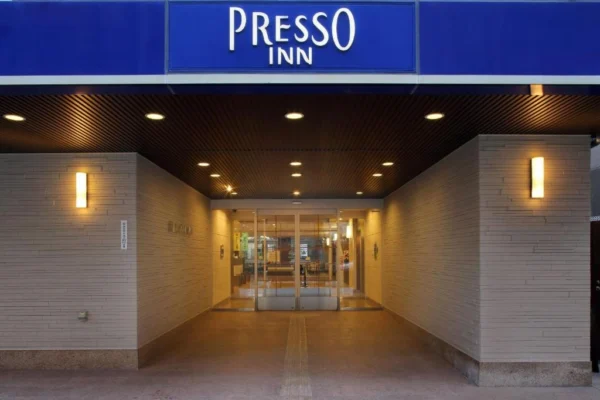
Tokyo’s hospitality landscape is preparing for a notable change as Keio Presso Inn Kanda will permanently end operations on September 13, 2026, removing a long-established accommodation option from one of the Japanese capital’s most conveniently connected central districts.
Keio Corporation and Keio Presso Inn officially confirmed that guests checking out on September 13 will be the property’s final visitors. The companies cited the ageing building and changing market conditions behind the decision, while also revealing plans to redevelop the site as another hotel.
The closure is particularly relevant for business and leisure travellers who have relied on Kanda for easy railway access to Tokyo’s commercial districts, cultural attractions and major transport hubs.
However, the development does not mark the end of hospitality at the location. Keio plans to replace the existing property with a new hotel concept designed primarily for international visitors and younger travellers.
Long-running Kanda hotel reaches final chapter
Keio Presso Inn Kanda opened in June 2003 as the second property in the Keio Presso Inn network.
It subsequently became an important part of the chain’s expansion across central Tokyo. More than two decades later, the operator has concluded that redevelopment is better suited to changing market conditions and future visitor demand.
For travellers, September 13 is therefore the critical date.
Visitors planning Tokyo trips after the closure will need alternative accommodation, while travellers staying immediately before the final operating day should carefully confirm reservation and checkout arrangements.
The change demonstrates how Tokyo’s accommodation market continues evolving even as inbound tourism strengthens demand for centrally located properties.
Kanda remains valuable for Tokyo visitors
The hotel’s location has been one of its greatest advantages.
Tokyo’s official tourism organisation describes Kanda as a convenient base close to Tokyo Station, Ueno, Ochanomizu and Akihabara. Kanda Station is served by the JR Chuo and Keihin-Tohoku lines as well as the Tokyo Metro Ginza Line.
Tokyo Station can be reached from Kanda in around five minutes by rail, while official tourism information estimates journeys of about 35 minutes from Haneda Airport and 90 minutes from Narita Airport.
These connections make the district valuable for visitors balancing sightseeing with business appointments or onward travel.
Kanda itself also offers attractions, restaurants and access to the neighbouring Jimbocho district, famous for bookstores and its distinctive student-town atmosphere.
Travellers have several nearby alternatives
Guests who previously selected Keio Presso Inn Kanda can consider accommodation around Tokyo Station, Akihabara, Nihonbashi and Ueno.
Each area provides different advantages.
Tokyo Station suits visitors requiring Shinkansen connections and access to major commercial districts. Akihabara attracts travellers interested in electronics, anime, gaming and Japanese pop culture.
Ueno combines major railway connections with museums, galleries and Ueno Park. Japan’s official tourism organisation highlights both Ueno and Akihabara as important visitor districts connected by the JR Yamanote Line.
Travellers should compare station distance, room rates, luggage access and transport connections before selecting alternatives.
Replacement hotel targets inbound travellers
The most significant long-term development is Keio’s plan for the site after closure.
Rather than withdrawing from hospitality in Kanda, the company expects to rebuild the property and develop a hotel under a concept different from Keio Presso Inn.
The planned property is expected to feature stronger design elements and primarily target inbound international tourists and younger travellers, although detailed development plans have not yet been announced.
This strategy reflects the changing composition of Tokyo tourism.
Hotels increasingly need to compete not only through practical accommodation and location but also through design, lifestyle positioning and experiences capable of attracting international visitors.
Tokyo hospitality continues to evolve
Keio’s decision also fits within its wider accommodation strategy.
The group has been repositioning the Keio Presso Inn brand while considering how individual properties should respond to changing demand.
For Tokyo visitors, these shifts mean familiar hotels can change, close or undergo redevelopment even within established accommodation districts.
Booking early remains particularly important during major events, holiday periods and seasonal tourism peaks.
Travellers should also check final cancellation conditions and hotel operating information directly before completing reservations.
Closure opens path to a new Tokyo hotel
Keio Presso Inn Kanda’s September 13 closure marks the end of more than two decades of operations, but it also begins another chapter for the site.
Kanda’s combination of railway connectivity, proximity to Tokyo Station and easy access to areas including Akihabara and Ueno means the district remains strategically attractive for tourism accommodation.
Keio’s decision to rebuild with a new hotel aimed at international visitors underscores that potential.
For travellers, the immediate message is clear: anyone planning to use Keio Presso Inn Kanda after September 13 must choose another property.
For Tokyo’s hospitality industry, however, the bigger story is transformation. A familiar business hotel is disappearing, but its replacement could emerge as a new accommodation concept designed around the next generation of visitors to Japan’s capital.
For more travel news like this, keep reading Global Travel Wire