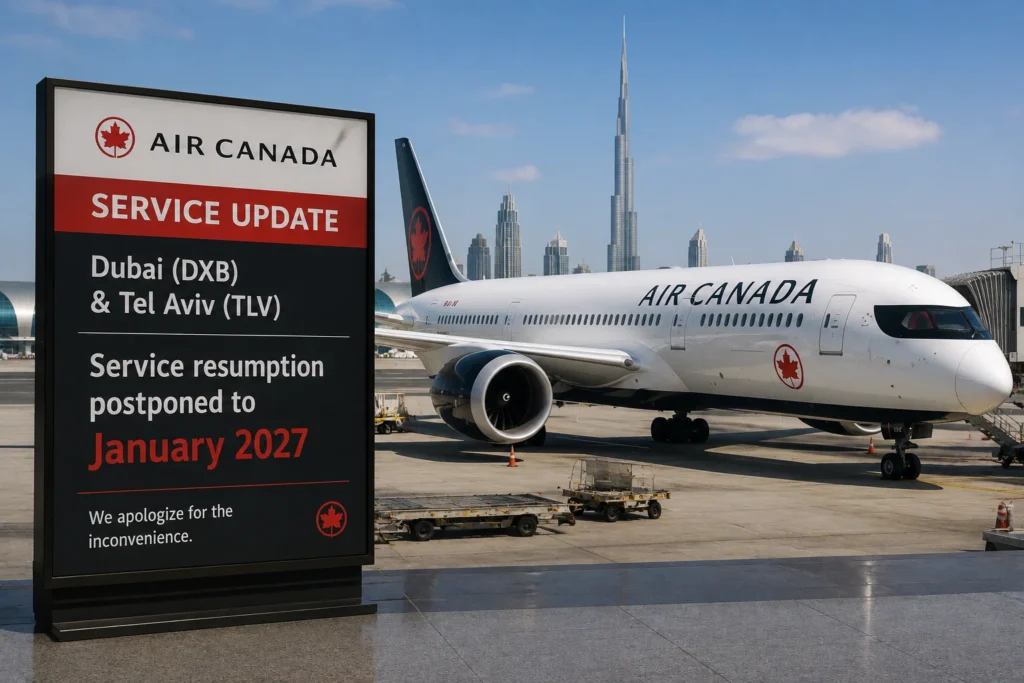
Official flight operational notices from Air Canada confirm that scheduled direct passenger services to Dubai International Airport and Tel Aviv Ben Gurion Airport will remain suspended through mid-January 2027. The decision extends a multi-month flight pause following comprehensive safety evaluations and security risk assessments across Middle East airspace corridors. Originally scheduled to resume operations during the autumn and winter 2026 travel season, the Canadian flag carrier has adjusted its routing network to prioritize passenger and aircrew security amidst ongoing regional instability.
The prolonged cancellation impacts direct long-haul connectivity between North America and key commercial and cultural gateways in the Middle East. With commercial air transit through regional airspace remaining tightly restricted, global airlines are continually reviewing flight paths, insurance coverage parameters, and operational feasibility across affected transit zones.
Official Suspension Logs and Route Adjustment Timelines
Air Canada initially suspended direct long-haul flights linking Toronto Pearson International Airport and Montreal-Trudeau International Airport with Dubai and Tel Aviv in early 2026 as regional security advisories intensified. Subsequent updates extended the suspension window through October 2026, before official corporate operational notices confirmed a further pushback into mid-January 2027.
The following data outlines the affected flight routes, suspension periods, and strategic operational adjustments released under official carrier updates:
| Route Sector | Initial Suspension Date | Revised Resumption Target | Primary Operational Focus |
| Toronto / Montreal to Dubai (DXB) | February 28, 2026 | Mid-January 2027 | Mitigating Gulf airspace transit risks |
| Toronto to Tel Aviv (TLV) | February 28, 2026 | Mid-January 2027 | Avoiding Eastern Mediterranean security hazards |
| Middle East Network (Broader) | Ongoing | Continuous Assessment | Prioritizing passenger and crew safety |
A chronological review of carrier decisions reflects a cautious operational posture adapted to evolving security conditions:
| Aviation Milestone | Published Period | Operational Impact and Directives |
| Route Suspensions Enacted | Late February 2026 | Immediate pause on direct routes to DXB and TLV |
| Initial Extension Notice | Mid-2026 | Service pause extended through October 24, 2026 |
| Extended Postponement | August 2026 | Operations officially delayed until mid-January 2027 |
| Customer Support Policy | Ongoing | Flexible rebooking, ticket credit, and full refund options |
Alternative Transit Routes and Aviation Corridor Logistics
The temporary removal of direct transatlantic capacity requires passengers traveling between North America, Israel, and the United Arab Emirates to utilize alternative travel itineraries. While direct connections on Canadian carriers remain paused, major Gulf airlines, including Emirates and flydubai, continue operating scheduled direct flights from Canadian gateways such as Toronto and Montreal to Dubai International Airport.
For travelers bound for Tel Aviv or secondary regional destinations, European transit hubs offer viable connecting routes. European carriers maintaining active flight corridors into the Eastern Mediterranean permit seamless transfers, provided passengers account for potential transit delays and layover requirements.
Official transit directives highlight key options for passengers navigating Middle East flight schedules:
Gulf Carrier Direct Services: Travelers bound for the United Arab Emirates can utilize non-stop services operated by UAE national carriers from major Canadian gateways.
European Connecting Hubs: Routing through primary airports in Western Europe—including Frankfurt, London Heathrow, and Paris Charles de Gaulle—offers ongoing connectivity to Tel Aviv and Dubai.
Extended Layover Buffers: Flight coordinators recommend booking connecting itineraries with minimum layovers of 3 to 4 hours to accommodate potential security screening delays or international transit adjustments.
Traveler Logistics Guide and Flexible Rebooking Policies
To assist ticketed passengers affected by the extended cancellations, Air Canada has maintained a flexible travel policy allowing customers to alter travel plans without financial penalties. Ticket holders who purchased bookings on or before the initial suspension announcement can access passenger management portals to review their options.
Passenger accommodation guidelines issued by the airline outline several options for ticketed travelers:
Penalty-Free Itinerary Rebooking
Travelers may adjust their departure dates to a later time without paying change fees, provided seats are available in the originally purchased cabin class. Rebooking options apply to future travel dates following the planned resumption of service.
Alternative Destination Routing
Passengers holding tickets for Dubai or Tel Aviv may redirect their travel to alternative destinations served by the carrier across Europe, the United Kingdom, India, or Africa, subject to published fare terms and availability.
Travel Credits and Full Refunds
Customers who prefer to postpone travel indefinitely can convert the value of their unused tickets into digital wallet credits or future travel vouchers. Under official carrier rules, passengers whose flights are canceled directly by the airline remain eligible for full refunds to their original form of payment.
Government Consular Registration
Official diplomatic bodies, including Global Affairs Canada, advise citizens traveling across or residing within the Middle East to register their presence with national consular registration systems. Registering ensures travelers receive real-time security alerts, consular advisories, and administrative notices regarding travel corridor availability.
Long-Term Aviation Logistics and Tourism Sector Resilience
The extended suspension of direct transatlantic routes underscores the complex operational challenges facing international civil aviation during periods of geopolitical uncertainty. Long-haul flight suspensions alter passenger traffic distribution, placing heavier demand on third-country transit hubs while increasing operational costs for airlines compelled to reroute flight paths around restricted airspace.
For the international tourism and hospitality industries, direct air connectivity represents a vital pillar for leisure travel, corporate trade, and cultural exchange. While primary tourism hubs in the Gulf region continue to welcome millions of visitors through active regional airlines, the pause in direct transatlantic links highlights the need for flexible travel planning, robust trip protection, and continuous monitoring of official government travel advisories throughout 2026 and into 2027.
For more travel news like this, keep reading Global Travel Wire