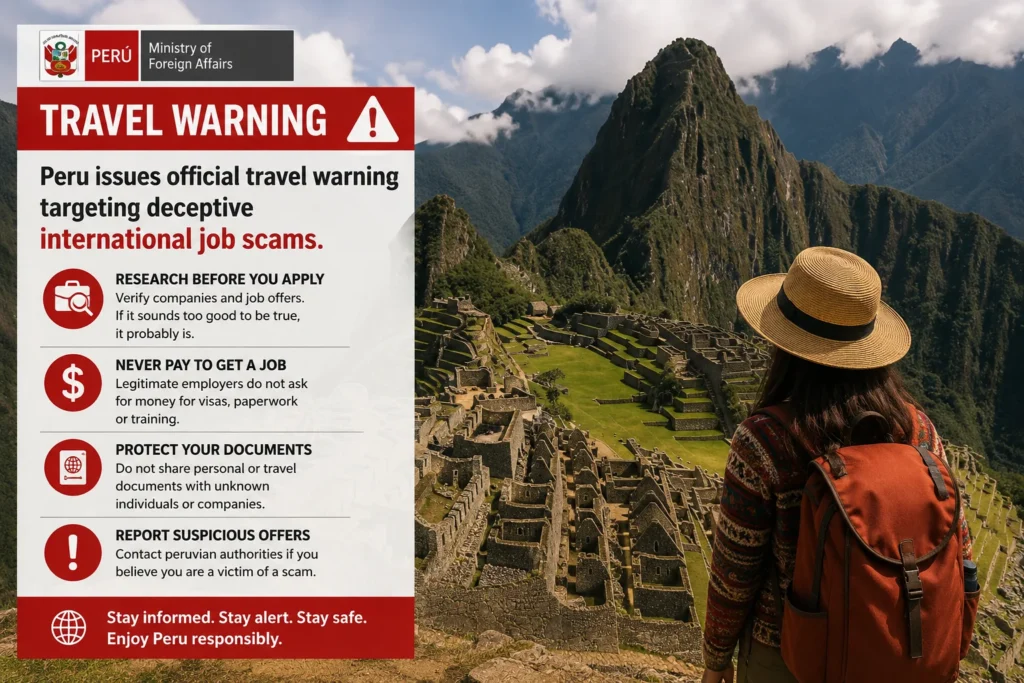
The Ministry of Foreign Affairs of Peru has issued a comprehensive travel warning advising citizens to exercise extreme caution when evaluating overseas employment opportunities, specifically those offering civilian security or technical roles in Eastern Europe. Official government statements confirm that illegal recruitment networks have been luring Peruvian nationals to Russia under false pretenses, where many are subsequently subjected to human trafficking and forced participation in active armed conflict.
According to official consular registries, hundreds of citizens have departed the country without proper constitutional authorization, resulting in multiple confirmed fatalities, missing person cases, and emergency diplomatic repatriations. In response, national authorities and law enforcement agencies have initiated human trafficking investigations to dismantle deceptive recruitment operations operating within Peru.
Consular Data and Official Conflict Participation Metrics
Recent statistical releases from Peru’s Foreign Ministry detail the scale of citizen involvement in the Russia-Ukraine conflict following deceptive recruitment drives. Official consular figures confirm that 459 Peruvian citizens have been identified as having participated in combat operations, with significant casualties and missing person reports registered at diplomatic posts in Moscow and Warsaw.
| Category Indicator | Verified Citizen Metrics | Consular and Legal Tracking Status |
| Identified Participants | 459 citizens | Official Ministry registry |
| Confirmed Fatalities | 11 deaths | Officially verified by foreign ministry |
| Unverified Casualty Claims | Over 150 cases | Family reports pending official verification |
| Missing Persons Reports | 114 citizens | Active tracing via International Committee of the Red Cross |
| Evacuated Nationals | 31 citizens | Repatriation support provided via consular channels |
| Custody in Conflict Zones | 3 citizens | Currently held in Ukrainian custody |
| Diplomatic Repatriations | 4 citizens | Successfully repatriated through embassy procedures |
The Foreign Ministry emphasized that constitutional mandates under Article 118, Paragraph 23 require all Peruvian nationals to obtain explicit, formal government authorization before enlisting or serving in any foreign armed force. Serving without official permission constitutes a violation of national legal frameworks and removes standard consular protections.
Identifying Overseas Recruitment Fraud and Red Flags
Deceptive international recruitment networks often target job seekers through informal social media ads, encrypted messaging channels, and unlicensed employment brokers. Recruiters typically promise lucrative monthly stipends, health benefits, and civilian employment as security guards, drivers, or maintenance staff.
| Red Flag Indicator | Security and Operational Risk | Recommended Verification Protocol |
| Exceptionally High Salary Offers | Conceals deployment to high-risk active combat zones | Cross-check offers with the Ministry of Labor |
| Vague Security Guard Descriptions | Hides forced military enlistment and frontline combat roles | Demand detailed, written contractual job scopes |
| Passport Retention Requirements | Signifies severe human trafficking and forced labor risks | Retain original identification and passport at all times |
| Absence of Formal Contracts | Eliminates legal labor protection and worker rights | Refuse informal job offers made via social media |
Official advisories remind citizens that legitimate international employment contracts must be registered with national labor authorities and comply with formal immigration and work visa regulations in the destination country.
Ground Guidance and Traveler Safety Guidelines
To protect citizens from falling victim to human trafficking schemes, government authorities have outlined critical safety protocols for individuals considering employment travel abroad:
Validate Recruitment Agency Authorization
Job seekers should verify the legitimacy of any recruitment firm through the Ministry of Labor and Employment Promotion. Unlicensed intermediaries operating via private social media channels should be reported immediately to law enforcement authorities.
Maintain Control of Personal Identification
Travelers must never surrender their original passport, national identity card, or travel documentation to an employer, recruitment agent, or transit broker. Passport confiscation is a primary mechanism used by human trafficking networks to restrict freedom of movement.
Consult Government Travel Advisories
Citizens planning international travel should review official travel warnings issued by the Ministry of Foreign Affairs. Government travel advisories emphasize that traveling to active conflict areas carries severe safety risks, including restricted consular assistance and closed airspace.
Access Consular Support and Tracing Networks
Families seeking information regarding missing relatives in conflict zones are advised to submit formal requests to the Foreign Ministry’s Directorate of Peruvian Communities Abroad or register tracing requests through the International Committee of the Red Cross Central Tracing Agency.
Institutional Response and Legal Enforcement
Peru’s Public Prosecutor’s Office, in coordination with the National Police, has launched preliminary criminal investigations into human trafficking networks operating in Lima and surrounding provinces. These operations focus on unauthorized agencies offering deceptive overseas placement services.
Through expanded consular operations in Moscow and Warsaw, the Peruvian government continues to coordinate emergency repatriation procedures, offer administrative support to vulnerable nationals, and demand the immediate, safe return of citizens who departed without official authorization.
For more travel news like this, keep reading Global Travel Wire