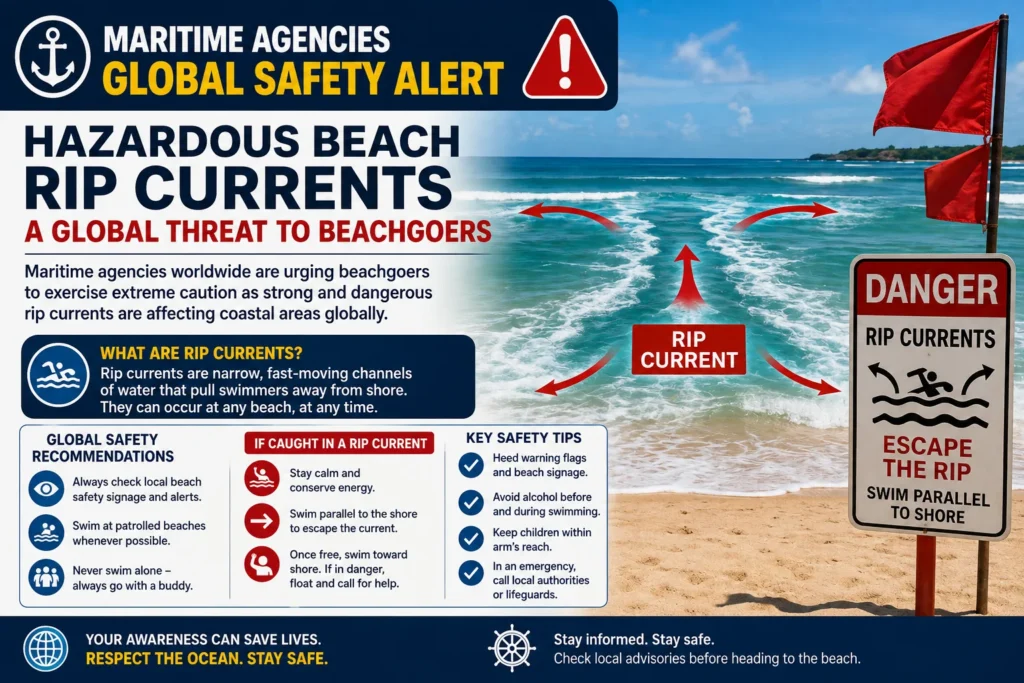
Scenic ocean destinations across the globe continue to draw millions of international vacationers each year, yet underneath picturesque coastlines lie powerful ocean rip currents, steep underwater drop-offs, and unpatrolled surf zones. Official safety advisories from maritime security agencies, national park services, and tourism boards emphasize that even experienced swimmers can quickly find themselves swept out to open water by unseen hydraulic forces.
To minimize water-related accidents and fatalities, organizations including the United States Coast Guard, the Hawaii Department of Land and Natural Resources Division of State Parks, and Australia’s New South Wales National Parks and Wildlife Service are issuing updated safety guidelines. Authorities urge all coastal travelers to review daily surf zone forecasts, understand local flag warning systems, and strictly avoid swimming in unmonitored coastal areas.
Official Maritime Advisories Target Unpatrolled Coastal Hotspots
Tropical shorelines and rugged marine parks present unique hazards that vary based on geography, seasonal swell patterns, and available emergency infrastructure. Public safety statistics published by beach patrols and maritime rescue registries confirm that the majority of ocean rescues stem from swimmers entering strong rip currents—narrow corridors of fast-moving water that flow directly away from the shore.
Without active lifeguard towers and clear emergency access corridors, remote or exposed beaches pose severe risks to unwary bathers. When swimming in areas subject to heavy wave action or sudden bathymetric drops, visitors often underestimate the speed at which shoreline conditions can deteriorate.
Comprehensive Overview of High-Risk Coastal Swimming Destinations
Maritime authorities and local government agencies track ocean safety parameters across widely visited coastal regions. The following breakdown illustrates the specific environmental hazards and safety infrastructure established at notable international locations:
| Destination Beach | Geographical Location | Core Marine Hazards | Local Safety Infrastructure and Patrol Status |
| Condado Beach | San Juan, Puerto Rico | Widespread, powerful rip currents and heavy shorebreak | SwimSafe PR warning system and hotel informational signage |
| Hanakāpīʻai Beach | Kauai, Hawaii | High-velocity rip currents and severe winter swells | Completely unpatrolled with no lifeguard facilities |
| Zenith Beach | New South Wales, Australia | Deep underwater drop-offs and strong offshore pulls | Unpatrolled; official signs redirect to lifeguarded Fingal Bay |
| New Smyrna Beach | Volusia County, Florida, USA | Frequent high-risk rip current formations | Monitored by Volusia County Beach Patrol stations |
| Macassar Beach | Cape Town, South Africa | Severe wave energy and persistent longshore currents | Limited seasonal patrols during peak holiday periods |
Recommended Survival Tactics and Escape Strategies for Ocean Rip Currents
Understanding the physical dynamics of an ocean rip current is the most critical element of survival when caught in a drag zone. Maritime safety experts stress that rip currents do not pull swimmers underwater; rather, they push swimmers away from the beach. Drownings typically occur when individuals attempt to swim directly against the current toward the shore, leading to rapid physical exhaustion.
National life-saving associations and public safety bodies recommend a standardized three-stage survival protocol for individuals caught in offshore currents:
| Emergency Survival Phase | Recommended Action | Physical Rationale | Primary Action to Avoid |
| Initial Pull Phase | Remain calm and float on your back | Conserves oxygen and maintains muscle energy | Do not swim directly against the outward pull |
| Escaping the Drag | Swim parallel to the shoreline | Navigates out of the narrow current channel | Do not fight the current head-on |
| Signaling for Rescue | Wave arms and shout for assistance | Alerts lifeguards, beach patrols, or nearby bystanders | Avoid panicking or hyperventilating |
On-the-Ground Traveler Logistics and Preventive Safety Guidance
For international tourists and coastal recreation coordinators, avoiding ocean hazards requires proactive planning prior to stepping onto the sand. Maritime safety directors recommend adhering to specific ground-level directives across major coastal destinations:
Verify Daily Advisory Systems: In Puerto Rico, visitors should inspect official SwimSafe PR digital boards and hotel warning signs around San Juan beaches before entering the water, ensuring they observe all color-coded hazard flags.
Observe Trail and Beach Warnings: Hikers traversing Kauai’s Kalalau Trail are strongly advised against wading into the ocean at Hanakāpīʻai Beach. The shore experiences unpredictable wave surges and lacks any emergency response infrastructure or cellular connectivity.
Select Patrolled Alternatives: Visitors in Australia’s Port Stephens region should choose lifeguarded options like Fingal Bay rather than unpatrolled spots like Zenith Beach, ensuring immediate access to professional rescue personnel.
Check Marine Weather Forecasts: Beachgoers in Volusia County, Florida, should consult official National Weather Service surf zone forecasts and confine swimming activities to designated areas near active beach patrol stations.
Respect Seasonal Patrol Limits: Travelers along the coastal dunes of Cape Town should restrict swimming strictly to designated, lifeguarded zones during authorized operating hours.
Institutional Safety Measures and Coastal Infrastructure Improvements
The ongoing collaboration between national park management teams, municipal councils, and official tourism bureaus plays a essential role in safeguarding coastal visitors. By deploying standardized flag systems—such as the international red and yellow flags marking safe swimming zones in Australia and the United Kingdom—governments establish recognizable visual cues for global travelers.
Additionally, installing multilingual hazard signage, emergency call boxes, and automated weather monitoring stations near remote access points helps educate the public on local risks. Through continuous public awareness campaigns and expanded lifeguard coverage during high-density holiday seasons, tourism authorities maintain a balance between preserving natural coastal environments and ensuring public safety along popular shorelines.
For more travel news like this, keep reading Global Travel Wire