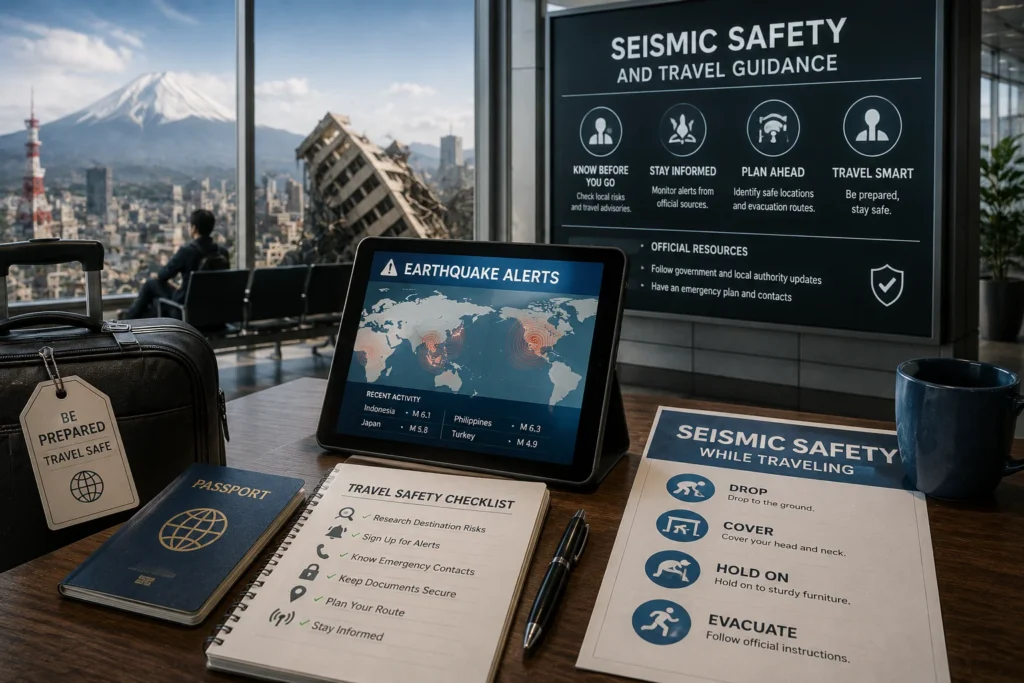
A sequence of significant seismic events across the Pacific Ring of Fire and South America has placed international destination safety under heightened scrutiny. The most recent major event—a 7.4-magnitude earthquake in western Colombia—has directly impacted regional transportation infrastructure and travel confidence in emerging South American destinations.
As tourism ministries and emergency management agencies assess structural impacts, international travelers require accurate, government-verified destination updates to make informed trip adjustments, review insurance coverages, and understand local safety protocols.
Seismic Response Matrix for Travelers
├── Immediate Safety Action (J-Alert / Emergency Broadcasts)
├── Transit Verification (Civil Aviation Authorities & Airport Status)
└── Destination Status (Official Ministry of Tourism Advisories)
Regional Impact Analysis: Colombia, Venezuela, and the Pacific Rim
Seismic monitoring networks recorded major earthquakes in high-traffic and emerging tourism regions throughout the year. Government response frameworks and official tourism communications indicate varying operational conditions across affected destinations.
Colombia and Western South America
The 7.4-magnitude earthquake in western Colombia centered near Cali prompted immediate emergency response protocols. Local civil protection authorities and the Unidad Nacional para la Gestión del Riesgo de Desastres mobilized structural inspection teams across urban centers and transportation corridors.
The Ministry of Commerce, Industry and Tourism (MinCIT) coordinates sector-specific communications, advising visitors to monitor regional safety bulletins. While western Colombia experiences localized recovery operations, northern coastal destinations such as Cartagena and interior hubs like Medellín continue operating under standard travel protocols, reflecting distinct geographical seismic zones across the country.
In Venezuela, a severe 7.5-magnitude earthquake in northern regions activated national emergency management protocols. Official statements from public security authorities emphasize ongoing infrastructure evaluations in affected coastal districts.
Japan and Southeast Asia
In Japan, a 7.5-magnitude earthquake off the Sanriku coast triggered automated warning networks and precautionary transit holds. Japan’s highly integrated disaster prevention infrastructure—operated under the Ministry of Land, Infrastructure, Transport and Tourism—facilitated rapid post-event assessments. Narita International Airport and Haneda Airport completed runway and terminal structural verifications before resuming full flight operations. The Japan Tourism Agency continues issuing real-time safety advisories in multiple languages for foreign visitors.
In Indonesia, an offshore 7.4-magnitude earthquake near North Maluku prompted coastal monitoring by the National Disaster Management Authority (BNPB) and the Ministry of Tourism and Creative Economy. Local tourism boards in the Halmahera archipelago verified marine tourism safety conditions following the clearance of ocean wave advisories.
In Malaysia, a deep offshore earthquake near Sabah prompted precautionary structural reviews along Mount Kinabalu trekking paths and at Kota Kinabalu International Airport. The Sabah Tourism Board confirmed that adventure tourism activities resumed following safety clearances from park rangers and civil engineering units.
Pacific Island Destinations
Recent seismic events measuring above 7.0 magnitude in Tonga and Vanuatu highlighted the importance of localized emergency management in island environments. The Tourism Authority of Tonga and the Vanuatu Tourism Office maintain active communication channels with international civil aviation bodies to provide accurate operational updates for visiting travelers and dive operators.
Essential Infrastructure Recovery Phases for Travelers
Evaluating destination recovery requires understanding how official entities restore transit networks and hospitality services following major natural events.
Air Transit and Civil Aviation
Civil aviation authorities, such as Colombia’s Civil Aeronautics Special Administrative Unit (AEROCIVIL), prioritize runway integrity and air traffic control infrastructure immediately following seismic events. Travelers should verify flight statuses directly through civil aviation announcements and operating airlines rather than unverified commercial streams.
Hospitality Infrastructure
Major international hotel chains and registered local guest accommodations undergo mandatory structural inspections by municipal building safety officers before reopening. Independent properties must receive municipal clearance certificates confirming gas, water, and structural stability.
National Park and Heritage Site Access
Tourism boards and forestry agencies enforce temporary access restrictions at volcanic parks, coastal hiking trails, and historical monuments to evaluate rockfall risks and structural integrity. Visitors should verify site clearances through official park service bulletins.
Traveler Safety Protocols for Seismically Active Regions
Travelers visiting destinations located along active fault lines or the Pacific Ring of Fire should adopt standardized safety preparation steps recommended by global public safety organizations.
Enable Mobile Early Warnings: Ensure cellular devices are configured to receive government emergency broadcasts, such as Japan’s J-Alert framework or equivalent national emergency alert systems.
Verify Specific Regional Advisories: Rely on official government travel advisories and national ministry statements (such as MinCIT in Colombia or the Japan Tourism Agency) to evaluate regional conditions rather than assuming broad nationwide cancellations.
Review Insurance Rider Requirements: Confirm whether standard travel insurance policies include natural disaster coverage riders specifically covering earthquake-related transit delays, medical evacuations, and emergency accommodations.
Identify Emergency Contacts: Note the contact details for local emergency services, national tourist assist centers, and relevant diplomatic missions prior to departure.
Structural Resilience as a Travel Benchmark
The recent global earthquake events demonstrate that institutional preparedness and transparent communication are central to maintaining traveler confidence. Destinations that maintain rigorous building codes, automated public warning systems, and centralized tourism crisis communications demonstrate higher operational resilience, helping international travelers navigate unexpected natural events safely and efficiently.
For more travel news like this, keep reading Global Travel Wire