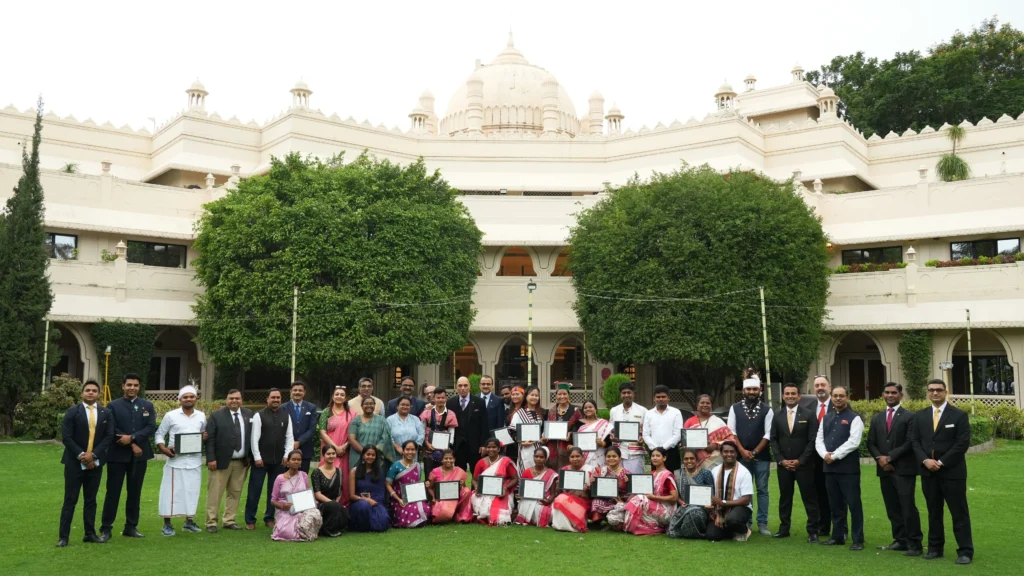
Indian Hotels Company Limited is expanding the social impact of India’s hospitality industry by helping tribal home cooks transform traditional culinary knowledge into stronger livelihood opportunities.
Under IHCL’s ESG+ framework Paathya, the hospitality group has conducted a specialised culinary training programme in collaboration with Tata Steel Foundation and with support from the Institute of Hotel Management, Aurangabad.
The 10-day workshop brought together 20 tribal home cooks from eight Indian states, representing 12 tribal communities. Women accounted for 70% of participants, highlighting the important role they continue to play in protecting traditional food knowledge and creating community-based economic opportunities.
Participants received professional instruction covering food preparation, presentation, hygiene, food safety, hospitality standards and entrepreneurship.
The initiative demonstrates how major hospitality organisations can connect professional hotel expertise with indigenous knowledge while creating pathways toward sustainable employment and enterprise.
Traditional knowledge meets professional hospitality
Tribal cuisines represent generations of knowledge involving local ingredients, seasonal food systems and cooking techniques closely linked with landscapes and communities.
However, transforming those skills into commercial opportunities requires additional capabilities.
The programme therefore combines participants’ existing culinary expertise with professional standards used across the hospitality industry.
Prabhat Verma, Chief People Officer at IHCL, said capability building can enable economic opportunity by strengthening professional skills while building on the culinary knowledge participants already possess.
The approach is particularly important because hospitality careers increasingly require knowledge beyond cooking alone.
Food safety, consistent preparation, presentation, guest interaction and basic business understanding can determine whether a home cook successfully enters professional kitchens, launches an enterprise or participates in premium culinary experiences.
Women emerge as key drivers of culinary preservation
Women form the majority of participants in the latest workshop, reinforcing their central role in preserving indigenous food traditions.
Across many communities, recipes, ingredient knowledge and preparation techniques pass between generations through household cooking.
Professional training can help convert that cultural expertise into economic value without disconnecting it from its origins.
The wider tribal culinary initiative has already trained more than 70 home cooks representing 15 tribal communities across 10 states, with women accounting for more than 60% of participants in that programme.
Tata Steel Foundation’s broader work around tribal cuisine has also connected indigenous cooks with training, entrepreneurship and hospitality platforms over several years.
Tribal cuisine gains tourism potential
The programme has significance beyond employment.
Food has become an increasingly important part of destination discovery. Travellers often seek regional dishes, local ingredients and authentic dining experiences that help them understand the places they visit.
Tribal cuisine can therefore become an important component of experiential tourism.
Indigenous dishes frequently reflect local biodiversity, farming practices, forest produce and seasonal food traditions. Presenting those cuisines responsibly can create distinctive tourism experiences while encouraging visitors to engage more deeply with communities.
For hotels and tourism businesses, such collaborations can also broaden India’s culinary identity beyond familiar regional restaurant menus.
Instead of treating indigenous cuisine as a niche offering, professionally supported tribal cooks could eventually contribute to culinary festivals, curated dining experiences, hospitality events and community-based tourism programmes.
Paathya connects sustainability with livelihoods
IHCL’s Paathya framework places environmental and social priorities alongside hospitality growth.
Skill development programmes such as this illustrate how sustainability within the hotel industry can extend beyond energy, water conservation or waste management.
Social sustainability also depends on livelihoods, inclusion and access to economic opportunity.
By developing capabilities within communities, hospitality businesses can create economic connections that extend beyond hotel properties themselves.
The training approach is particularly valuable because it does not attempt to replace participants’ existing knowledge. Instead, it adds professional skills that can help traditional expertise reach wider audiences.
IHM Aurangabad brings professional expertise
The Institute of Hotel Management, Aurangabad provides an important bridge between traditional cooking and professional hospitality education.
The institute combines culinary and hospitality instruction with practical industry exposure, including training environments designed around real hotel operations.
Dr. Chef Zubin D’Souza, Principal and Dean of IHM Aurangabad, described the programme as an opportunity to rediscover culinary heritage while creating employment possibilities and strengthening appreciation for nature and indigenous ingredients.
That connection between education and community knowledge creates benefits on both sides.
Participants gain professional techniques, while hospitality educators and industry professionals gain exposure to culinary practices that might otherwise remain outside mainstream hotel training.
Responsible tourism creates wider economic opportunities
India’s expanding tourism sector creates an opportunity to connect indigenous cuisine with responsible travel.
Travellers increasingly value experiences that support local communities and preserve destination identity. Culinary tourism can deliver both when programmes are structured around genuine community participation.
For tribal home cooks, professional exposure can potentially lead to stronger incomes, entrepreneurship and new hospitality opportunities.
For visitors, it can create access to food traditions shaped by generations of cultural knowledge.
The IHCL tribal culinary training initiative therefore represents more than a skills workshop. By bringing together Paathya, Tata Steel Foundation and IHM Aurangabad, the programme connects hospitality development with cultural preservation, inclusion and sustainable livelihoods.
As India’s tourism industry expands, initiatives of this kind could help ensure that growth creates opportunities for communities while bringing the country’s diverse indigenous culinary heritage to a wider national and international audience.
For more travel news like this, keep reading Global Travel Wire