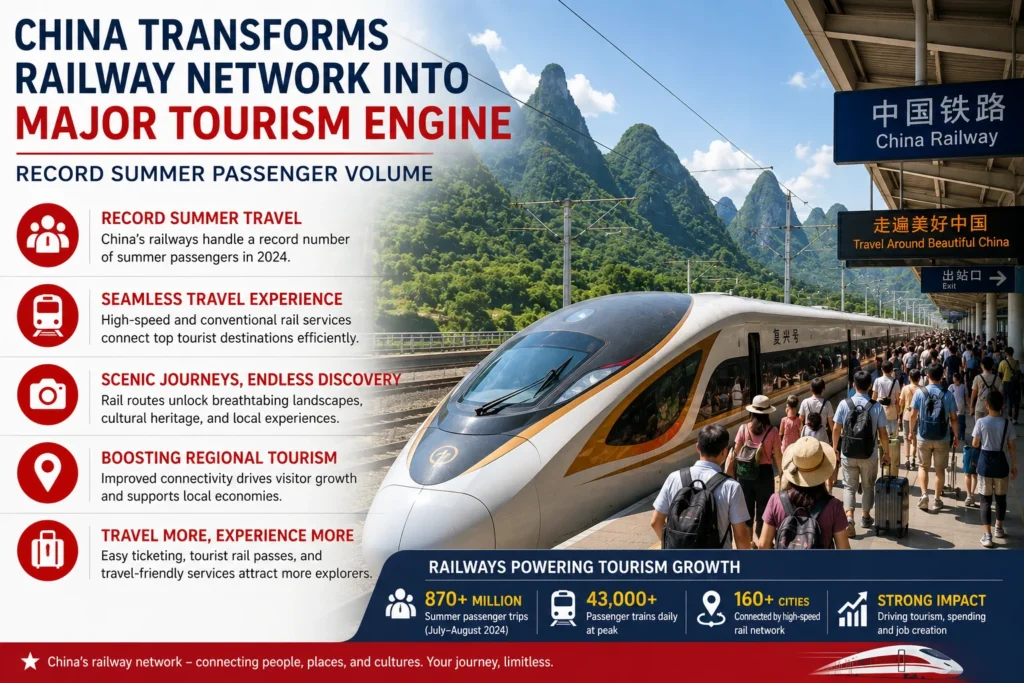
China’s extensive national railway system is driving a massive expansion in domestic tourism, with official projections indicating the network will handle an unprecedented 1.01 billion passenger trips during the peak summer travel season. Data released by China State Railway Group confirms that the 62-day summer travel window is managing an average of over 16.2 million daily passenger journeys, fueled by a surge in family vacations, cultural exploration, and student travel.
Rather than viewing train travel purely as transit, railway operators and tourism authorities are actively positioning the journey itself as a prime holiday attraction. By introducing specialized tourist train units, panoramic observation lounges, and immersive cultural carriages, the national rail network is reshaping how domestic and international travelers explore the country’s diverse landscapes.
Record Summer Travel Season Driven by Specialized Tourist Routes
The record-breaking volume of passenger trips reflects a strategic shift toward diversifying travel offerings across China’s rail corridors. To accommodate peak seasonal demand, railway authorities have scheduled approximately 12,000 passenger trains daily, while introducing specialized services tailored to specific traveler demographics.
Key growth areas within the national rail tourism strategy include:
Cultural and Educational Excursions: Specially curated routes designed for students and history enthusiasts exploring ancient heritage sites.
Scenic Slow-Travel Itineraries: Leisure-focused journeys featuring extended stops at national parks, nature reserves, and rural villages.
Multigenerational Family Packages: Specialized onboard amenities, interconnected sleeper cabins, and family-friendly dining services.
Wellness and Senior Travel: Custom itineraries incorporating health-focused retreats and accessible travel infrastructure.
Immersive Themed Expresses Connect Southwestern Cultural Gateways
A central highlight of the national rail expansion is the deployment of custom “sightseeing trains” that operate as mobile hotels and cultural galleries. Across Southwestern China, specially designed themed trains are connecting major cultural and economic hubs across Guizhou and Sichuan provinces.
Featuring multi-carriage configurations equipped with private sleeper accommodations, dedicated dining cars, and wide-window panoramic viewing lounges, these immersive trains allow passengers to take in mountain landscapes while experiencing regional ethnic traditions onboard. Key destination hubs linked by these scenic rail corridors include Chengdu, Guiyang, and Xichang.
By integrating regional art, local culinary offerings, and heritage displays directly into the train interiors, railway operators have turned long-distance transit into a primary highlight of the overall travel itinerary.
Long-Distance Scenic Expeditions Opening Northwest Travel Corridors
For travelers seeking long-haul adventure, specialized expedition trains are opening access to the vast landscapes of Northwest China. Highlighted itineraries include themed long-distance trains departing from Sichuan and traversing the Xinjiang Uygur Autonomous Region.
Operating under a “mobile hotel” model, these long-haul tourist trains travel primarily overnight, allowing visitors to rest comfortably while moving between distant geographic landmarks. This approach maximizes daytime hours for sightseeing and eliminates the friction of frequent hotel transfers.
Key stops along these extended overland itineraries feature historic Silk Road stops and natural wonders, including Kashgar, Turpan, and Sayram Lake.
High-Speed Rail Integration and Regional Economic Incentives
China’s high-speed rail network—the world’s longest at over 50,000 kilometers—is fundamentally altering short-distance leisure travel and weekend getaway habits. Regional railway groups have implemented time-based travel tiers that categorize destinations by high-speed rail access from major metropolitan centers:
One-Hour Travel Radius: Connects urban centers directly to suburban cultural attractions, nature parks, and day-trip destinations.
Two-to-Three-Hour Travel Radius: Opens access to regional scenic zones, historic townships, and mountain resorts ideal for short holiday stays.
To further stimulate local tourism economies along high-speed rail corridors, local municipal governments and provincial tourism boards are offering direct financial incentives to rail passengers. Travelers who present valid high-speed rail tickets within a designated timeframe can access discounted admission rates at major scenic sites, reduced hotel tariffs, and promotional packages at cultural venues across participating provinces.
Government Directives Target 160 Dedicated Tourist Trains by 2030
The rapid expansion of rail-based tourism is anchored by joint national policy directives. A comprehensive policy document released by eight key government agencies—including the Ministry of Commerce, the Ministry of Culture and Tourism, and China State Railway Group—outlines 15 specific measures to deeply integrate railway infrastructure with regional tourism development.
A central objective of the national framework is to deploy more than 160 dedicated tourist train sets across the country by the year 2030. The initiative includes upgrading historical railway stations, creating dedicated tourist waiting lounges, improving accessible facilities for senior travelers, and enhancing last-mile connections between rail terminals and scenic attractions through dedicated shuttle networks.
Through strategic fleet investments, innovative itinerary design, and seamless regional connectivity, China’s railway network is establishing a powerful model for journey-centric tourism that fuels domestic economic consumption and enriches the traveler experience.
For more travel news like this, keep reading Global Travel Wire