Travelers visiting Japan’s Kanto region are advised to exercise heightened caution and regularly check weather updates following severe downpours, localized flooding, and travel delays across communities east of Tokyo. The Japan Meteorological Agency enacted its highest Level 5 Emergency Warning for heavy rain and landslides in multiple municipalities across Chiba Prefecture, as torrential storms produced record-breaking hourly precipitation across the eastern suburbs of the Greater Tokyo Area.
Official emergency responders and disaster management organizations confirmed widespread flooding, road closures, and localized power disruptions affecting tens of thousands of structures. As regional transit authorities work to restore full operational capacity, official tourism agencies urge international tourists and domestic holidaymakers to prioritize personal safety, follow local municipal guidance, and review official emergency notification platforms before embarking on regional excursions.
Extreme Weather and Torrential Rainfall Challenge Regional Transit Networks
The severe weather event delivered extraordinary precipitation within brief windows, exceeding 100 millimeters of rainfall per hour across Chiba City and surrounding municipalities. The sudden deluge overwhelmed urban drainage infrastructure, leaving major thoroughfares inundated and forcing the temporary suspension or delay of key suburban rail services connecting Tokyo with eastern gateway districts.
Transportation authorities and regional rail operators implemented safety suspensions across impacted lines to inspect track infrastructure and ensure passenger safety. Local emergency response agencies reported significant water accumulation near transit interchanges, such as Ichikawa Station, where flooded streets created substantial obstacles for commuters and sightseers navigating the area.
Disaster management officials issued formal evacuation directives and safety advisories affecting nearly 220,000 residents across Chiba Prefecture, recommending immediate movement to designated municipal shelters or higher floors in sturdy structures. The sudden weather system followed closely behind a separate tropical storm system that moved across northeastern Japan, creating cumulative atmospheric instability across eastern Honshu.
Official Safety Guidelines for Tourists Navigating Weather Disruptions in Japan
In light of the sudden operational impacts on public transit, the Japan National Tourism Organization and regional tourism boards recommend that international visitors utilize official disaster awareness tools and official smartphone applications designed for travel safety.
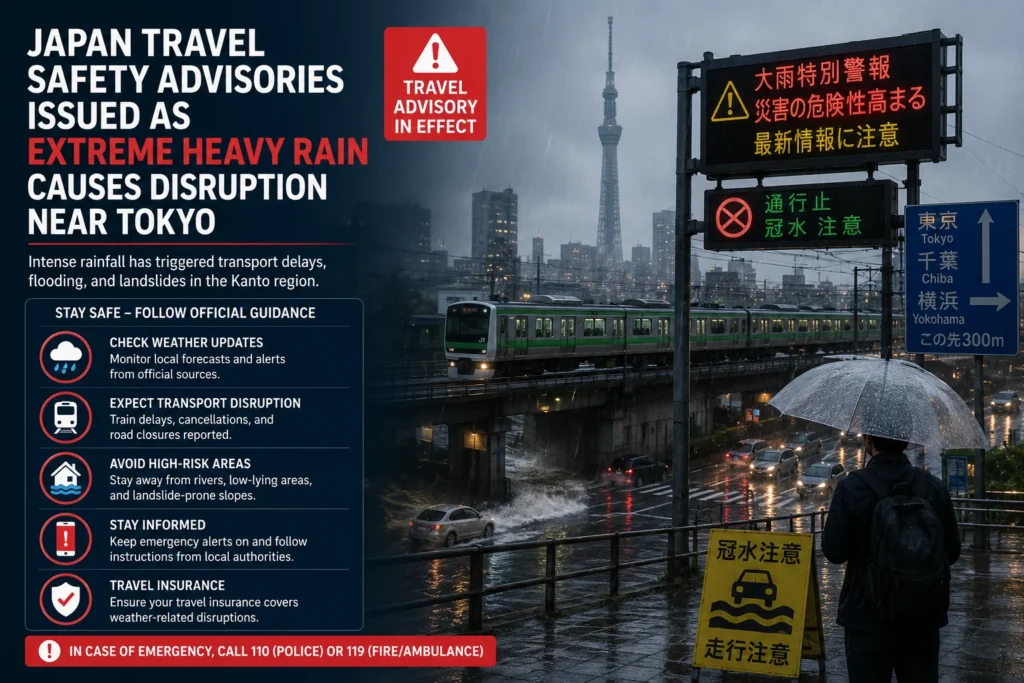
When regional weather warnings are issued, tourist safety agencies advise international travelers to follow five essential steps:
Monitor Official Emergency Alerts: Download official travel safety applications, such as the Safety Tips app supported by the Japan Tourism Agency, which delivers real-time weather alerts, Level 4 Urgent Warnings, and Level 5 Emergency Warnings in multiple languages.
Verify Transit Timetables Before Departure: Check live operational status updates directly from official train operators, regional transit portals, and airport authorities prior to heading to stations or airports in the Tokyo metropolitan area.
Avoid High-Risk Geographic Zones: Refrain from visiting low-lying coastal areas, riverbanks, mountain hiking trails, and steep slopes prone to sudden landslides or rapid flash flooding during heavy rain alerts.
Adhere to Local Municipal Instructions: Follow guidance from hotel personnel, station staff, and municipal evacuation orders immediately. If outdoor movement becomes unsafe due to rising floodwaters, seek shelter on the upper levels of robust concrete buildings.
Keep Communication Channels Open: Ensure mobile devices remain fully charged, store emergency contact numbers for relevant diplomatic missions, and utilize official multilingual helplines provided for overseas visitors.
Infrastructure Restoration and Tourism Facility Operational Status
Regional utility providers, including electric power grid operators, deployed emergency repair crews to restore power to approximately 68,000 households and commercial premises affected by localized blackouts near Tokyo. Municipal teams and transit maintenance workers continue clearing debris and pumping floodwaters from submerged roadways to reactivate public transit arteries.
While primary international transit hubs—including Narita International Airport and Haneda Airport—continue handling international flights, land transportation access routes between central Tokyo and eastern suburban destinations may experience lingering delays or modified service schedules as safety inspections conclude.
Major tourist destinations, cultural sites, and entertainment districts in central Tokyo remain largely operational. However, visitor centers and regional park authorities emphasize that day trips to natural parks, coastal resorts, and historical sites in surrounding prefectures should be re-evaluated until weather conditions stabilize fully and transport connections resume standard schedules.
Maintaining Traveler Preparedness During Japan’s Summer Weather Patterns
Japan possesses one of the world’s most advanced disaster preparation and meteorological early-warning frameworks. The Japan Meteorological Agency continuously updates real-time risk maps for heavy rain, landslides, and river flooding to keep the public informed.
For international travelers exploring Japan, staying informed through official government statements and maintaining flexible travel plans ensures a safe and memorable journey. Tourism officials continue to emphasize that early awareness, adherence to official municipal guidance, and reliance on verified emergency resources are the most effective ways to navigate unexpected weather events while traveling throughout the country.
For more travel news like this, keep reading Global Travel Wire