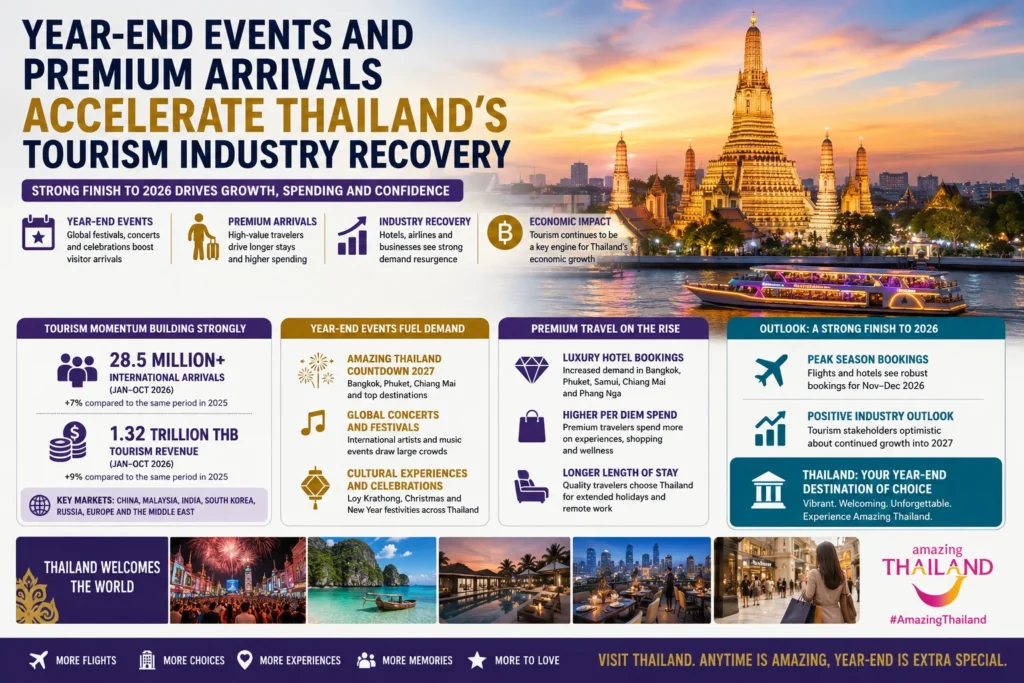
Thailand’s tourism sector is demonstrating clear signs of structural resilience as high-season bookings, major international gatherings, and expanded experiential travel initiatives lift the industry’s year-end outlook. While foreign arrivals recorded a slight 2.9% year-on-year contraction between January 1 and August 8 due to global geopolitical pressures and regional market shifts, economic indicators point toward a robust final quarter.
Financial projections from national tourism authorities estimate that foreign tourism revenue will reach approximately 1.54 trillion Baht for the full year. This momentum is underpinned by a decisive pivot toward high-value travelers, declining international airfares, and a growing consumer preference for immersive, community-based travel experiences across the kingdom.
Navigating Regional Competition and Currency Pressures
Despite optimistic revenue targets, Thailand faces intensifying market competition from neighboring Southeast Asian nations. Destinations like Vietnam, Malaysia, and Indonesia have expanded their regional marketing campaigns and simplified visa access, diverting a portion of short-haul travelers who previously prioritized Thai destinations.
Concurrently, economic developments across primary outbound markets have temporarily dampened arrival volumes. Outbound travel from South Korea experienced a 5.9% decline tied to domestic financial volatility, while a 7% depreciation of the Indonesian Rupiah against the Thai Baht contributed to a 23.2% drop in Indonesian visitor numbers during the first seven months of the year. In response to these currency fluctuations and capacity adjustments, Thai tourism planners are shifting operational focus away from sheer visitor volume toward premium, long-stay traveler segments.
| Operational Metric | Q1–Q3 Performance & Projections | Strategic Focus & Key Drivers |
| Arrival Growth Trend | 2.9% year-on-year decline (Jan 1 – Aug 8) | High-season rebound, lower regional airfares |
| Annual Revenue Target | 1.54 trillion Baht projected | High-value travelers representing 53% of arrivals |
| Average Trip Spending | 49,000 Baht per visitor (2% increase) | Experiential tours and community heritage visits |
| Aviation Capacity | 2.1% schedule adjustment (Aug – Nov) | Focus on premium long-haul European routes |
| Global Conventions | IMF & World Bank Group Annual Meetings | Corporate travel integration & MICE expansion |
| Entertainment & Culture | Tomorrowland Thailand & New Year Events | Premium entertainment & festival tourism |
Premium Spending and Experiential Tourism Drive Sector Revenue
While overall volume growth remains moderate, average expenditure per visitor has expanded by 2%, reaching approximately 49,000 Baht per trip. This increase highlights a broader structural change in international travel behavior, with visitors allocating more capital to authentic cultural encounters, culinary journeys, and wellness retreats rather than standardized commercial tours.
High-value travelers—defined as those who spend significantly above the national average—now account for 53% of all international arrivals, up from 30% in pre-pandemic cycles. Long-haul visitors originating from Europe, the Americas, the Middle East, Australia, and China are leading this spending growth. Their longer average stays and consistent demand for boutique accommodations have maintained steady daily room rates across major hospitality sectors.
International Events and Cultural Festivals Headline Q4 Growth
The upcoming high season, commencing in November, will be anchored by a high-profile calendar of international events and cultural festivals. The nation will serve as the global host for the 2026 Annual Meetings of the International Monetary Fund and World Bank Group, drawing thousands of government delegates, financial executives, and international media representatives.
Complementing corporate travel, major entertainment events—such as Tomorrowland Thailand—alongside traditional nationwide New Year celebrations are projected to attract substantial numbers of high-spending lifestyle travelers. Regional tourism boards are coordinating with local operators to package these flagship events with regional excursions, ensuring economic benefits extend into peripheral provinces.
Traveler Guidelines for the Year-End High Season
For travelers planning trips during the peak winter months, strategic preparation is essential to secure logistics and maximize cultural engagement:
Advance Booking Requirements: Reserve accommodations and regional rail passes early, particularly around primary event venues in Bangkok and major island destinations, to secure preferred availability during the November-to-January peak window.
Flight Schedule Verification: Monitor direct and connecting flight schedules carefully, as regional carriers have adjusted frequencies on specific short-haul corridors while expanding long-haul European links.
Support Community-Based Tourism: Allocate travel spending directly to local homestays, licensed regional guides, and traditional craft cooperatives in northern and central provinces to support sustainable rural livelihoods.
Respect Cultural Etiquette: When exploring sacred sites such as Wat Phra Kaew or participating in traditional festivals, adhere to dress codes by keeping shoulders and knees covered, and follow local guidelines for respectful photography.
By linking international conventions with sustainable regional tourism initiatives, Thailand continues to reinforce its position as a premier global destination committed to quality, heritage, and economic resilience.
For more travel news like this, keep reading Global Travel Wire