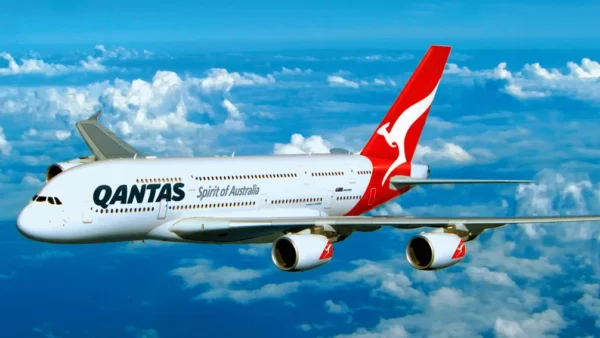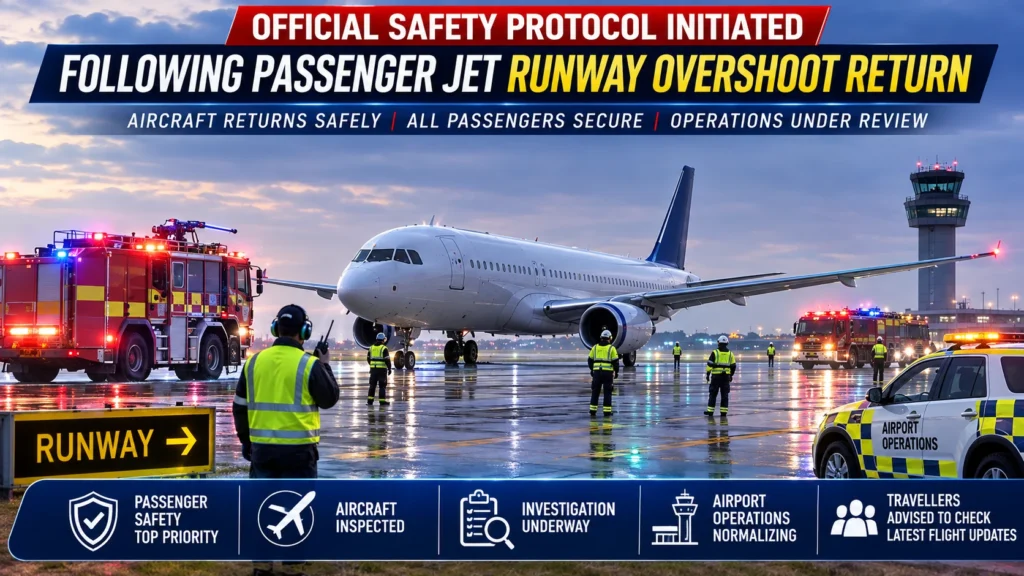
Global civil aviation regulatory frameworks prioritized operational safety on August 17, 2026, when a long-haul commercial passenger jet executed a precautionary return to its departure airport. The incident unfolded after an extended ground roll during takeoff resulted in the airframe overrunning standard runway markers before achieving lift-off. In accordance with standard international safety guidelines established by civil aviation governing bodies, the flight crew aborted the scheduled route to conduct immediate structural and landing gear assessments.
Automated cockpit monitoring systems and initial flight deck observations indicated that the aircraft exceeded standard distance thresholds before rotating into climb phase. While the airframe successfully entered controlled airspace, potential contact with grassy overrun areas or perimeter equipment necessitated an immediate operational pause. Civil aviation safety standards require flight crews to treat any deviation from calculated takeoff parameters as a critical event, ensuring that suspected structural impacts are rigorously evaluated on the ground rather than during long-distance transit.
SEO Headline: Flight Operational Sequence: Low-Altitude Holding and Weight Management Procedures
To ensure a safe approach and touchdown, the flight crew executed standard risk-mitigation protocols immediately following departure. Rather than proceeding along the planned air corridor, the aircraft entered a low-altitude holding pattern within the airport’s terminal control area. This controlled maneuver allows flight crews to burn off excess jet fuel, reducing total aircraft weight to meet structural landing weight limits mandated by aviation regulatory authorities.
The operational breakdown of the return procedure followed strict international standards:
Holding Pattern Execution: The aircrew maintained a low-altitude orbit within designated airspace to burn fuel, ensuring the landing gear and braking systems would not be subjected to excessive stress during touchdown.
Precautionary Ground Support: Airport operational teams deployed standard emergency response vehicles along the landing strip prior to final approach, providing immediate safety coverage.
Controlled Runway Exit: The aircraft landed safely using conservative speed parameters, vacated the active runway under its own power, and was taxied directly to an isolated stand for visual and mechanical inspection.
Passenger Disembarkation: All passengers disembarked safely via standard gate procedures and were provided assistance by ground service teams while the airframe was grounded for technical clearance.
SEO Headline: Passenger Rights and Legal Entitlements During Safety-Related Returns
Mid-journey returns generated by technical inspections or flight safety events trigger clear regulatory protections for affected travelers. Public aviation governance frameworks set binding guidelines regarding passenger treatment, accommodation, and financial remedies during major operational disruptions.
For flights operating within or departing from European jurisdictions, passenger rights frameworks mandate immediate care services. Operating carriers are required to provide meal vouchers, refreshments, and communication access during extended delays. If an emergency return requires an overnight wait for secondary transportation, the airline must arrange hotel accommodations and ground transit at no additional cost to the passenger. While carriers may cite extraordinary safety circumstances regarding financial compensation claims, regulatory bodies require full transparency and documented evidence detailing the root operational cause.
Under United States jurisdiction, passenger protection guidelines focus primarily on the airline’s published contract of carriage. In the event of a safety-mandated return that significantly alters a travel schedule, regulatory policies entitle passengers to prompt rebooking on the next available flight or a full refund for the unused portion of the ticket. Aviation authorities advise travelers experiencing major schedule interruptions to retain all receipts for out-of-pocket expenses incurred during transit delays.
SEO Headline: Comprehensive Technical Investigation Underway by Civil Aviation Authorities
National transportation safety boards and civil aviation accident investigation bureaus have initiated formal reviews to determine the operational factors behind the takeoff roll deviation. Safety investigators are analyzing flight data recorders and cockpit voice recorders to evaluate crucial performance metrics, including aircraft gross weight, environmental temperatures, engine thrust parameters, and rotation speed calculations.
The primary focus of the inquiry centers on verifying whether pre-flight performance calculations matched actual environmental conditions and runway surface friction. Aviation safety experts emphasize that executing a precautionary return after an extended ground roll demonstrates a robust safety culture, ensuring that potential airframe or landing gear anomalies are thoroughly inspected by certified maintenance engineers before the aircraft is cleared to resume commercial service. Official investigation updates will be published by aviation governing bodies upon completion of the technical analysis.
For more travel news like this, keep reading Global Travel Wire