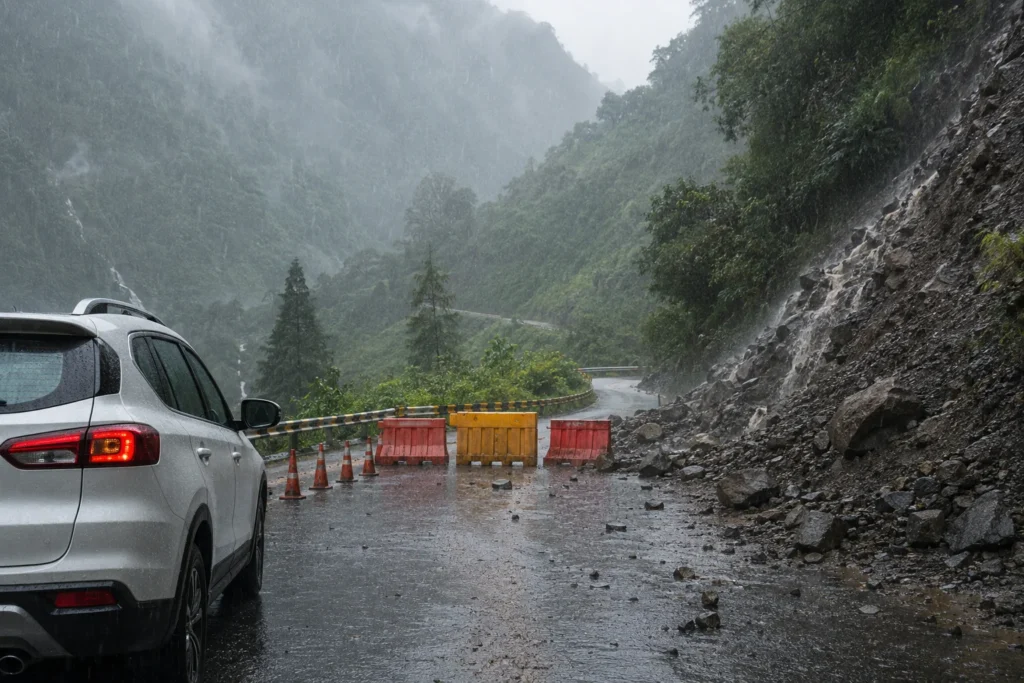
Heavy precipitation across the mountainous region of West Sikkim has activated significant slope instability, prompting emergency administrative actions in Gyalshing district. Government inspections by the Sub-Divisional Magistrate of Yuksam and the District Collector led to immediate relocation orders for households in the 11-Rimbi Timbrong Gram Panchayat Unit. With residential structures in Rimbi and Singlitam villages experiencing severe ground movement, regional authorities are prioritizing emergency evacuations while advising international tourists and domestic travelers to adhere strictly to monsoon travel protocols.
The localized geological activity underscores the broader environmental challenges faced across the Himalayan belt during peak rainy cycles. Rather than halting regional travel entirely, government departments are focused on providing real-time data to help visitors navigate mountain corridors safely. Tourists planning travel to high-altitude destinations in Northeast India must review local weather forecasts, monitor administrative releases, and adjust their itineraries to account for potential transport disruptions.
Government Interventions and Emergency Relocation Operations
The Gyalshing district administration has mobilized joint disaster management units to assess structural risks in vulnerable communities. Following sustained earth displacement over a two-week period, official directives mandated the swift transfer of affected families to temporary relief shelters. Field inspections involving district line departments continue to evaluate slope stability to prevent casualties and safeguard property along critical river valleys.
Disaster mitigation protocols in Sikkim have shifted toward proactive emergency management. Early evacuation procedures, continuous terrain monitoring, and localized safety warnings allow administrative teams to secure high-risk zones before major landslips occur. For the regional hospitality sector, this proactive administrative response provides a clear structure for managing tourist arrivals and ensuring guest safety during periods of severe weather.
Managing Travel and Transportation Across Mountain Circuits
Geological disruptions along mountain routes frequently affect arterial highways, leading to sudden road closures and transit delays. Popular tourism destinations surrounding Yuksam and Pelling depend on mountain corridors that require diligent maintenance during heavy downpours. When local authorities initiate emergency slope clearing or structural assessments, traffic flow is restricted to protect motorists from falling rocks and mudslides.
To maintain passenger safety without compromising broader transport connectivity, regional transport authorities coordinate alternative transit routes. Tour operators and travelers are instructed to verify highway conditions before embarking on inter-district journeys. Maintaining close communication with local homestays, licensed transport providers, and municipal administrative desks ensures that travelers remain informed of active detours and temporary travel halts.
Essential Safety Rules for Monsoon Travel in West Sikkim
Visitors traveling through mountainous terrain during the monsoon season should follow official safety guidelines established by state disaster authorities:
Monitor Official Bulletins: Regularly review updates released by the Sikkim State Disaster Management Authority and the Information and Public Relations Department for accurate information on road status and weather warnings.
Build Buffer Days into Itineraries: Design flexible travel schedules with spare days to accommodate unexpected road blockages or travel advisories. Avoid driving after dusk or during intense rainstorms when visual clarity and traction are reduced.
Utilize Experienced Local Drivers: Hire licensed mountain drivers who possess specialized knowledge of high-altitude terrain hazards, seasonal river rises, and regional bypass routes.
Prepare Emergency Supplies: Keep mobile devices charged and carry portable battery banks, basic first-aid supplies, emergency rations, and essential personal medications during long road transits.
Avoid High-Risk Geological Zones: Exercise heightened caution on roads running parallel to swollen riverbeds or steep, unstabilized rock slopes that are susceptible to sudden flash floods and landslips.
Official Helplines, Transit Routes, and Cultural Experiences
Navigating West Sikkim during seasonal rains requires access to verified public contacts and an understanding of alternative transportation corridors. Travelers experiencing transit delays can sample authentic Sikkimese culinary items at verified local eateries. Warm dishes such as thukpa, freshly prepared vegetable momos served with traditional dalle khursani chili, and nutrient-rich gundruk soup offer comfort while waiting out weather delays at registered accommodations.
In the event of travel interruptions or emergency situations, visitors should contact official state emergency lines. Important contact numbers include the State Emergency Operations Centre at 03592-201145, the national disaster helpline at 1070, and the general emergency dispatch at 112. For real-time updates regarding arterial highway clearing, travelers can reach the Border Roads Organisation information desk at 03592-203241.
Travelers moving between Siliguri, Gangtok, and border transit points should prepare for periodic diversions along National Highway 10 due to Teesta River water levels and slope conditions. When main highways experience temporary closures, official traffic advisories direct passenger vehicles through established alternate routes via Kalimpong, utilizing the Mongpong, Lava, Kalimpong, and Rangpo corridor. Travelers heading toward Yuksam are advised to confirm road status at administrative checkpoints in Jorethang or Pelling prior to departure.
Long-Term Infrastructure Resilience and Sustainable Himalayan Tourism
The future of tourism across Sikkim rests on developing climate-resilient transport infrastructure while protecting sensitive mountain ecosystems. The Sikkim Tourism Development Corporation and the Land Revenue and Disaster Management Department continue to work alongside structural engineers to strengthen key highway corridors.
Long-term sustainability projects focus on installing automated early-warning landslide sensors along key transit routes, implementing bio-engineering solutions to stabilize vulnerable slopes, and expanding community-based tourism initiatives in lower-risk valleys. By combining modern warning systems with eco-friendly infrastructure planning, Sikkim aims to safeguard its resident population while offering international and domestic visitors a secure, high-quality travel experience.
For more travel news like this, keep reading Global Travel Wire