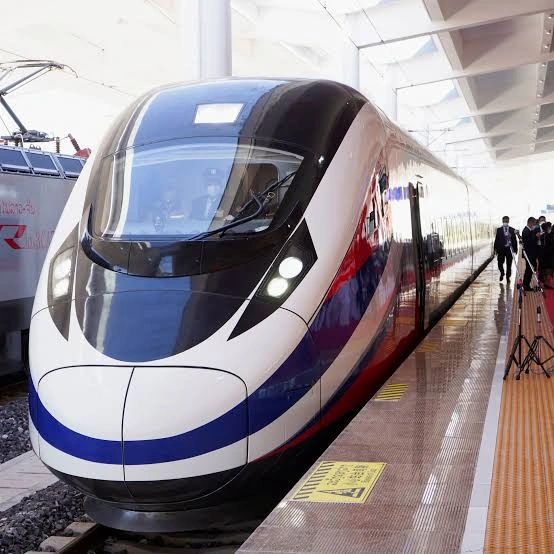
Thailand is emerging as a major gateway for a new era of Southeast Asian slow travel as cross-border trains, high-speed railway development and expanding regional connections make overland journeys increasingly attractive to international visitors.
The transformation is particularly visible between Thailand and Laos. Direct passenger trains now connect Bangkok’s Krung Thep Aphiwat Central Terminal with Vientiane’s Khamsavath Station, allowing travellers to cross the Thai-Lao border by rail instead of relying entirely on buses or flights.
At the same time, Thailand is developing its Bangkok–Nong Khai high-speed railway, while Laos already operates its modern railway between Vientiane, Luang Prabang, Vang Vieng, Boten and China.
Together, these projects are gradually creating the foundations for stronger Pan-Asian railway connectivity.
However, travellers should note that there is not yet a seamless high-speed railway connecting Thailand, Laos, Cambodia and Vietnam. The emerging network remains a combination of operating conventional trains, the Laos-China Railway, developing high-speed projects and separate national railway systems.
Bangkok-Vientiane trains transform cross-border travel
The direct Bangkok-Vientiane passenger service represents one of the most important recent changes for regional rail tourism.
Thailand and Laos launched passenger trains between Krung Thep Aphiwat and Khamsavath in July 2024. The route was introduced to facilitate cross-border travel while supporting tourism, trade and economic connectivity between the neighbouring countries.
For travellers, the service creates an appealing alternative to flying.
Passengers can leave central Bangkok by train, cross the Mekong frontier and arrive in the Lao capital while experiencing the changing landscapes of northeastern Thailand and Laos along the way.
The journey also suits the growing slow-travel market, where visitors increasingly value the experience between destinations rather than treating transportation simply as a way to arrive faster.
Laos railway opens mountains and heritage destinations
Once inside Laos, modern rail infrastructure has dramatically changed domestic travel possibilities.
The Vientiane-Boten section of the Laos-China Railway connects the capital with destinations including Vang Vieng and UNESCO-listed Luang Prabang before continuing north toward the Chinese border.
This railway has reduced journeys through Laos’ mountainous interior from lengthy road trips to comparatively fast rail connections.
For tourism, the impact is significant.
Travellers can combine Vientiane’s cultural attractions with Vang Vieng’s dramatic limestone scenery and Luang Prabang’s heritage environment on a rail-focused itinerary.
Instead of flying over the landscape, visitors move through valleys and mountains while stopping at destinations where tourism spending can support hotels, restaurants, guides and local attractions.
Thailand high-speed railway strengthens future connectivity
Thailand’s long-term railway strategy could strengthen this regional network considerably.
The first section of the Thai-Chinese high-speed railway is being developed between Bangkok and Nakhon Ratchasima.
Meanwhile, Thailand approved the second phase from Nakhon Ratchasima to Nong Khai in 2025. Nong Khai sits directly across the Mekong from the Lao capital, making the project strategically important for future cross-border connectivity.
Thai authorities have also discussed new infrastructure linking the railway systems on both sides of the border.
One important objective is improving connections between Khamsavath Station and the Laos-China Railway’s Vientiane station. At present, these are separate railway systems and passengers cannot simply remain aboard one high-speed train from Bangkok through Laos.
Future infrastructure could make transfers significantly easier.
Slow travel encourages deeper destination exploration
The railway expansion has tourism implications beyond journey times.
Rail travellers often experience destinations differently from airline passengers.
Stations typically place passengers closer to urban communities, while overland journeys expose visitors to changing landscapes, provincial towns and regional cultures.
Thailand provides particularly strong opportunities for this style of travel. Visitors can combine Bangkok with historic centres, northeastern communities and the Lao border before continuing into Laos.
The slower pace can encourage longer itineraries, additional overnight stays and spending across a wider range of destinations.
That could distribute tourism benefits beyond traditional aviation gateways and major resort centres.
Cambodia and Vietnam add wider overland possibilities
Cambodia and Vietnam strengthen the broader slow-travel appeal of mainland Southeast Asia, although their railway systems are not currently integrated into one continuous Pan-Asian passenger route with Thailand and Laos.
Cambodia’s rail network serves domestic destinations, while Vietnam operates extensive north-south passenger services linking cities and tourism regions across the country.
Vietnam’s railway journeys are particularly attractive for visitors exploring destinations such as Hanoi, Hue and Da Nang, including the scenic central coastline around Hai Van Pass.
Travellers can combine these national rail networks with cross-border road connections to build multi-country overland itineraries.
Therefore, Southeast Asian slow travel is expanding even before a completely integrated international railway exists.
Sustainable rail tourism gains regional momentum
Rail connectivity also supports Southeast Asia’s wider move toward more sustainable tourism.
Trains can provide an alternative to short-haul aviation while encouraging visitors to stay longer and explore secondary destinations.
For Thailand, the opportunity is especially important.
Its established tourism industry, central geographic position and developing rail infrastructure place the country at the heart of emerging mainland Southeast Asian overland travel.
As Bangkok-Nong Khai high-speed construction progresses and cross-border connections improve, travelling through Thailand and Laos by rail could become increasingly straightforward.
The result is a different vision of Southeast Asian tourism: one where the journey becomes part of the holiday and travellers experience temples, markets, mountains, communities and regional landscapes at ground level.
Rather than replacing aviation, the expanding railway network gives visitors another choice — a slower, more immersive way to discover one of the world’s most diverse tourism regions.
For more travel news like this, keep reading Global Travel Wire