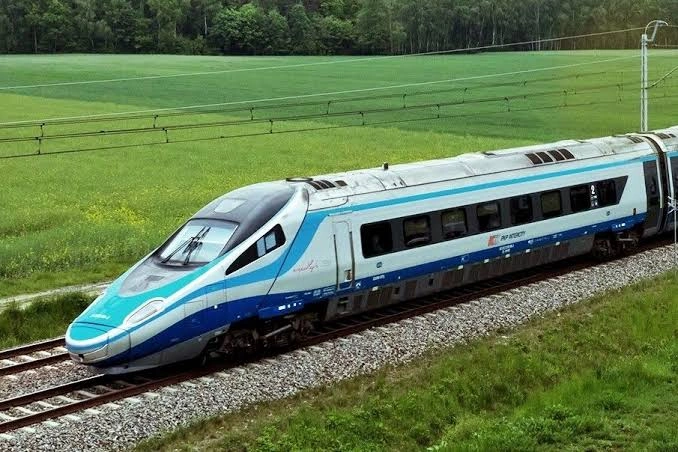
Poland is strengthening its position as one of Europe’s increasingly convenient rail-tourism destinations as faster intercity services make it easier to combine Warsaw, Kraków, Gdańsk and other major cities within a single trip.
PKP Intercity remains at the centre of this transformation. Its long-distance network links Poland’s principal tourism, cultural and business centres while investment in rolling stock and passenger services continues to expand capacity.
For international visitors, the growing network creates an important alternative to domestic flights and long road transfers.
Instead of treating Warsaw, Kraków or Gdańsk as separate city-break destinations, travellers can increasingly build multi-stop itineraries connected by fast rail.
Warsaw to Kraków Becomes a Rail City-Break Corridor
The Warsaw–Kraków corridor is among the most useful routes for international tourists.
Selected Express InterCity Premium services can cover the journey in approximately two hours and 20 minutes, making it practical to visit both cities during a relatively short holiday.
Warsaw offers its reconstructed Old Town, museums, parks, modern architecture and expanding dining scene.
Kraków provides a different experience through the Main Market Square, Wawel Castle, Kazimierz and an extensive collection of historic attractions.
Fast rail effectively allows visitors to combine Poland’s capital with one of its most important heritage destinations without losing much of a day to transportation.
PKP Intercity operates Express InterCity Premium services with its Pendolino fleet, providing the operator’s premium high-speed intercity product on major domestic corridors.
Gdańsk Connects Warsaw With the Baltic Coast
The Warsaw–Gdańsk corridor opens another major tourism route.
Selected services can complete the journey in approximately two and a half hours, connecting Poland’s largest city with its Baltic coast.
Gdańsk adds historic waterfront districts, the Long Market and access to the wider Tri-City area of Gdańsk, Sopot and Gdynia.
This creates an attractive tourism triangle.
International visitors can experience Warsaw for urban culture, Kraków for history and heritage, then travel north to Gdańsk for a Baltic coastal stay.
Rail makes that itinerary possible without repeated airport transfers, additional flights or lengthy car journeys.
PKP Intercity Passenger Demand Keeps Growing
The scale of rail demand demonstrates how important long-distance trains have become to Polish mobility.
PKP Intercity expected to carry more than 88 million passengers during 2025 as demand continued reaching record levels.
The operator is responding with an extensive investment programme.
Its official development strategy includes more than PLN 20 billion of investment between 2026 and 2030, primarily focused on new and modernised rolling stock alongside the infrastructure required to operate and maintain a larger fleet.
That long-term investment could improve the tourism experience through greater capacity, newer trains and stronger service frequency.
For destinations, more seats and better connections can expand the number of visitors who consider rail when planning holidays across Poland.
Wrocław and Poznań Expand Multi-City Options
Tourists are not limited to Poland’s three best-known city destinations.
Wrocław and Poznań can easily become part of broader rail itineraries.
Wrocław attracts travellers with its historic market square, bridges, river islands and cultural attractions. Poznań combines an important historic centre with museums, restaurants and one of western Poland’s strongest urban tourism economies.
Long-distance rail services connect both cities with Warsaw and other major centres.
A traveller can therefore arrive internationally in Warsaw before moving towards Poznań, Wrocław and Kraków without needing a domestic flight.
This flexibility supports longer holidays and spreads visitor spending across a wider range of destinations.
Lublin Opens Eastern Poland to More Visitors
Lublin adds another dimension to rail-based tourism.
Its Old Town, castle and multicultural history offer travellers a contrasting experience to Poland’s larger western and central cities.
Rail connections with Warsaw allow visitors to extend a capital-city stay into eastern Poland without arranging separate aviation or long-distance road transport.
Better accessibility is particularly important for secondary tourism destinations because transport convenience strongly influences itinerary decisions.
As travellers become more confident using Poland’s rail network, cities outside the most established international tourism circuit can gain greater visibility.
Modern Rail Supports Lower-Emission Tourism
Poland’s railway investment also aligns with wider European efforts to strengthen lower-emission transport.
Modern electric trains can reduce dependence on short domestic flights and lengthy road journeys, particularly on corridors where city centres are connected directly by rail.
PKP Intercity is investing heavily in new and modernised rolling stock, including projects supported by European funding.
For tourists, however, the advantage extends beyond sustainability.
Railway stations are usually located within or close to city centres. That reduces airport transfers and allows travellers to move directly between accommodation areas, attractions and public transport networks.
Faster Rail Changes How Visitors Explore Poland
The most important tourism effect of Poland’s rail development is greater itinerary flexibility.
Warsaw, Kraków, Gdańsk, Wrocław, Poznań and Lublin can increasingly function as connected components of one national holiday rather than isolated destinations.
Travellers can combine culture, food, heritage, business and coastal experiences while spending less time changing between transportation systems.
Poland’s railway transformation is therefore not simply about faster trains.
It is making multi-city travel easier, giving secondary destinations stronger access to visitors and helping position rail as one of the most practical ways for international travellers to experience Poland in 2026.
For more travel news like this, keep reading Global Travel Wire