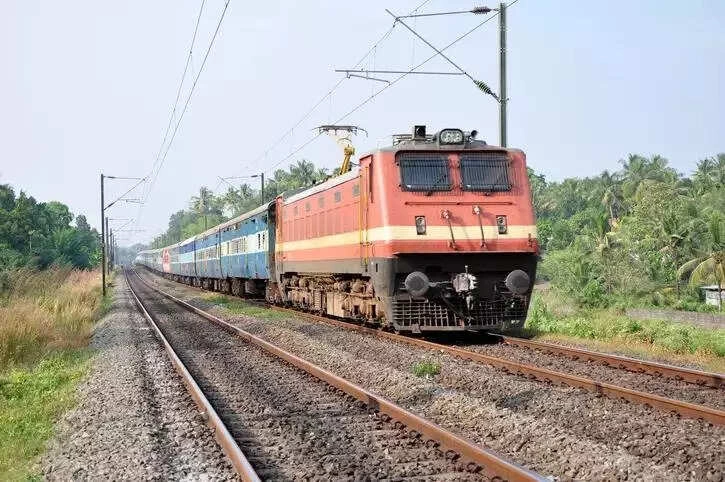
Regional rail travel around Delhi-NCR is gaining stronger connections as Indian Railways expands important local services beyond Palwal towards Mathura and Kosi Kalan.
The changes cover four passenger services used along the busy corridor linking Delhi, Haryana and western Uttar Pradesh. Train Numbers 64016 and 64019 now connect through to Mathura, while Train Numbers 64082 and 64051 extend connectivity to Kosi Kalan.
For commuters in Palwal, Hodal and surrounding communities, the wider service pattern provides more convenient access to employment centres, educational institutions, markets and major railway interchanges.
Northern Railway operational notices in July 2026 identify Train 64016 as the Shakurbasti–Mathura Junction service and Train 64019 in the reverse direction. They also identify Train 64082 as operating between New Delhi and Kosi Kalan and Train 64051 between Kosi Kalan and Ghaziabad.
Mathura Connection Opens Wider Travel Opportunities
Extending local connectivity towards Mathura creates benefits beyond everyday commuting.
Mathura is one of northern India’s important religious and cultural destinations. Improved links from Palwal make it easier for residents of Haryana and Delhi-NCR to reach the city while also providing connections towards the broader railway network.
Passengers travelling for pilgrimage, family visits or short leisure journeys can potentially complete more of their trip using direct rail services instead of changing trains at Palwal.
The corridor also serves Hodal and other communities between Haryana and Uttar Pradesh.
For regional tourism, stronger local rail connections can help make short-distance trips more practical and affordable, particularly for passengers who depend on public transport rather than private vehicles.
Kosi Kalan Gains Stronger Delhi-NCR Access
The service changes also strengthen Kosi Kalan’s relationship with the National Capital Region.
Train 64082 connects New Delhi with Kosi Kalan, while Train 64051 links Kosi Kalan with Ghaziabad. Northern Railway’s July operational information confirms these regular route endpoints, although temporary short termination at Palwal occurred during specific disruption periods.
For travellers, the wider network creates connections with major urban centres without requiring every journey to begin or end at Palwal.
This is particularly useful for workers and students who make frequent journeys between smaller towns and Delhi-NCR.
Kosi Kalan also sits on an important regional corridor serving communities travelling between Haryana, the National Capital Region and the Mathura area.
Evening Commuters Could See Greater Convenience
The expanded services are particularly important during busy commuting periods.
Evening journeys can become difficult when passenger demand increases and available public transport becomes crowded. Extending existing local trains gives passengers additional opportunities to continue beyond Palwal without arranging another road or rail transfer.
For regular commuters, fewer changes can mean a simpler journey.
Reliable local trains are especially important because thousands of passengers use regional rail to reach workplaces, schools, colleges, markets and healthcare services.
Affordable rail mobility can therefore influence daily life as much as tourism.
Rural Communities Gain Better Regional Mobility
The changes could have an even greater impact on smaller settlements surrounding Palwal, Hodal and Kosi Kalan.
Many rural residents rely on public transport to reach larger towns. Wider railway access can connect these passengers with employment opportunities and commercial centres that would otherwise require longer road journeys.
Farmers and small businesses may also benefit from improved personal mobility between markets and regional centres.
For students, stronger connections can expand practical access to educational institutions outside their immediate communities.
The result is a railway improvement that links transport policy with broader regional development.
Delhi and Ghaziabad Connections Strengthen Travel Network
Another advantage is integration with major railway hubs.
Services towards New Delhi, Shakurbasti and Ghaziabad give passengers access to wider local and long-distance transport networks.
This can support travellers continuing towards other parts of Delhi-NCR or connecting with longer-distance Indian Railways services.
Rail connectivity is particularly valuable around the National Capital Region because large numbers of passengers cross state boundaries every day.
The Haryana-Uttar Pradesh corridor demonstrates how suburban and local railway operations can complement larger national routes.
Local Rail Supports Regional Tourism Growth
For the travel sector, improved connectivity can encourage more short-duration journeys.
Residents of Delhi-NCR and Haryana can use rail for visits towards Mathura and nearby religious destinations, while travellers from Uttar Pradesh gain stronger access towards Palwal and the capital region.
Better local rail can also reduce dependence on road transport for some journeys.
That matters during weekends, festivals and pilgrimage periods when highways and other transport services can face significant demand.
Passengers should nevertheless check current operating information before travelling. Northern Railway advises travellers to use official railway information services such as NTES or the 139 enquiry service for operational updates, particularly when temporary changes affect train routes.
The Palwal service expansion shows how relatively targeted railway changes can produce meaningful improvements across a much larger travel corridor.
By extending connectivity towards Mathura and Kosi Kalan, Indian Railways is creating easier links between Haryana, Uttar Pradesh and Delhi-NCR while supporting commuters, regional travellers and communities dependent on affordable everyday rail transport.
For more travel news like this, keep reading Global Travel Wire