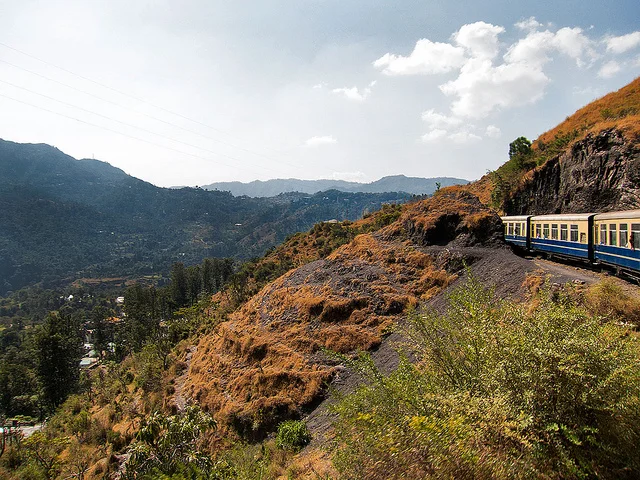
Heavy rainfall across Himachal Pradesh’s Kangra Valley has forced the temporary suspension of passenger services on sections of the Pathankot–Jogindernagar narrow gauge railway, as railway teams carry out safety inspections in vulnerable mountainous areas.
The disruption affects services linked with Baijnath-Paprola and Jogindernagar, with four passenger trains cancelled until further notice. Continuous rain has increased concerns over waterlogging, debris accumulation, unstable slopes and possible landslides along sensitive sections of the route.
Railway authorities are prioritising passenger safety before allowing services to resume. Inspection teams are examining track conditions, drainage channels and hillside sections where rainwater or falling debris could create operational hazards.
For travellers and local communities, the suspension affects one of Himachal Pradesh’s most distinctive rail connections. The narrow gauge route serves daily passengers while also attracting visitors seeking a scenic journey through the Himalayan foothills.
Baijnath-Paprola services face disruption
Among the affected services are trains operating between Baijnath-Paprola and Jogindernagar.
The disruption also extends to services connecting Baijnath-Paprola with Pathankot, affecting passengers travelling through different sections of the Kangra Valley railway system.
Indian Railways officially lists Baijnath Paprola as a Northern Railway station in Kangra district, confirming its importance within the regional rail network.
The Pathankot–Jogindernagar corridor also includes scheduled narrow gauge services connecting Pathankot with Baijnath Paprola and Jogindernagar.
For residents, these trains provide links between smaller settlements and larger transport centres. Their temporary suspension can therefore have a broader impact than a typical tourism disruption.
Passengers may need to depend on road transport until railway authorities determine that the affected sections are safe.
Heavy rain raises mountain railway risks
Railways running through mountainous terrain face particular challenges during prolonged rainfall.
Water flowing rapidly down slopes can weaken track foundations, while loose soil and rocks may fall onto railway lines. Blocked drainage can also cause water accumulation around tracks and nearby structures.
In steep areas, landslides remain one of the most serious risks.
Even relatively small debris deposits can interfere with narrow gauge operations, making physical inspection essential before services restart.
Railway teams therefore need to assess more than the visible track surface. Drainage systems, embankments, retaining structures and surrounding slopes must also be checked for instability.
Any damaged sections may require clearance, repair or additional reinforcement before passenger trains are permitted to operate.
Scenic rail journey important for Kangra tourism
The disruption also has implications for tourism in the Kangra region.
The Pathankot–Jogindernagar narrow gauge line travels through a landscape of valleys, mountain communities and Himalayan foothills, creating an experience that differs significantly from conventional mainline rail journeys.
Visitors travelling toward destinations around Kangra, Palampur and Baijnath can use the railway as part of a slower, scenic journey through Himachal Pradesh.
Baijnath itself is known for its historic temple and mountain setting, while the wider Kangra Valley attracts travellers interested in nature, culture and hill tourism.
Temporary rail suspensions can therefore influence local itineraries, particularly for visitors planning to use trains as part of their travel experience.
Hotels, homestays and tourism operators in affected areas may also need to advise guests about alternative transport arrangements while rail services remain unavailable.
Travellers should verify services before departure
Passengers planning journeys on the narrow gauge route should verify operational information before travelling.
Weather-related suspensions can change depending on rainfall intensity, track inspections and restoration progress.
Travellers should also allow additional time for road alternatives, especially during heavy rain when highways in mountainous areas can face their own delays.
Visitors heading toward Kangra Valley destinations should avoid assuming that a scheduled train will operate until official railway information confirms restoration.
Flexibility is particularly important during the monsoon period, when conditions can change rapidly.
Safety takes priority over rapid restoration
The suspension demonstrates the operational challenges faced by railway networks in Himalayan regions.
Restoring a service quickly can be important for communities and tourists, but railway authorities must first ensure that the entire affected section is safe for trains.
That means clearance work alone may not be sufficient.
Officials may need to inspect drainage, track alignment, soil stability and structures before approving normal passenger operations.
Continued rainfall could also delay restoration if fresh debris or slope movement occurs after inspections.
Kangra Valley connectivity awaits clearance
The Pathankot–Jogindernagar railway remains an important transport link within northern India’s mountain rail network.
Its stations, including Baijnath Paprola, support local mobility while the scenic character of the route contributes to the visitor experience in Himachal Pradesh.
The current disruption underlines how closely mountain tourism and transport depend on weather conditions.
Once railway inspections confirm that vulnerable sections are secure and any required maintenance is completed, services can gradually return.
Until then, passengers travelling through Kangra Valley will need to monitor official rail updates and prepare alternative arrangements.
The temporary suspension may inconvenience visitors, but the decision reflects a clear safety priority: protecting passengers and infrastructure before trains again move through rain-affected sections of one of Himachal Pradesh’s most scenic railway corridors.
For more travel news like this, keep reading Global Travel Wire