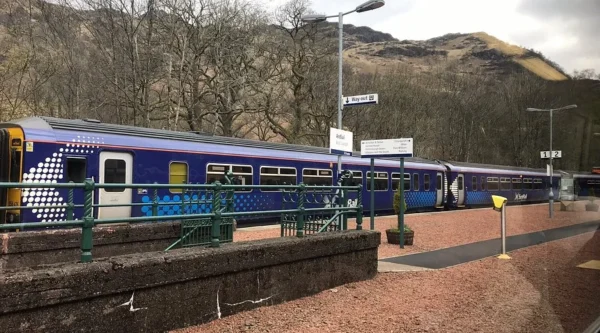
ScotRail recorded more than 8.4 million passenger journeys in July 2026, marking an all-time monthly high as major events, additional capacity and permanently lower peak-time fares strengthened rail demand across Scotland.
A total of 8,423,512 journeys were made during the month, up by 897,359 compared with July 2025. That represents annual growth of 11.9%, highlighting the important role rail played during one of Scotland’s busiest summer travel periods.
The surge coincided with the Glasgow 2026 Commonwealth Games, which officially ran from July 23 to August 2. The 11-day event brought athletes, spectators and visitors into Glasgow for competitions across major venues including Scotstoun Stadium, the Scottish Event Campus, Glasgow International Arena and Tollcross International Swimming Centre.
For Scotland’s tourism economy, the rail increase demonstrates how major international sporting events can stimulate demand across public transport while connecting visitors with hotels, attractions and entertainment districts.
Commonwealth Games drive exceptional rail demand
The Glasgow 2026 Commonwealth Games provided one of the strongest catalysts for July passenger growth.
Thousands of visitors travelled through Glasgow during the event period, while residents, volunteers and event workers also relied heavily on public transport.
ScotRail responded by adding more capacity, including over 1,400 additional carriages during the Games period.
The strongest seven-day period came between July 26 and August 1, when more than 2.1 million journeys were recorded. This represented ScotRail’s busiest week since the railway returned to public ownership in April 2022.
Passenger numbers remained high as the Games approached their conclusion. On Sunday, August 2, around 212,000 journeys were recorded, creating a new Sunday record for the publicly owned operation.
The figures underline the importance of rail in moving large volumes of spectators between transport hubs, accommodation districts and sporting venues.
Major events strengthen Scotland tourism travel
The Commonwealth Games were not the only contributor to stronger rail activity.
Scotland’s summer events calendar brought concerts, festivals and other major gatherings that encouraged visitors to use trains for leisure journeys.
Rail can become particularly attractive during large events because travellers avoid road congestion and city-centre parking while gaining direct access to central stations.
This has wider tourism implications.
Visitors arriving in Glasgow or Edinburgh can use the wider ScotRail network to extend their trips into other Scottish destinations. Rail services connect major cities with coastal areas, historic towns and tourism gateways across the country.
Strong event-driven demand therefore has the potential to generate additional spending beyond the immediate host location.
Permanent peak fare removal improves affordability
Passenger growth is also taking place against a significant change in Scotland’s rail pricing system.
Peak fares were permanently removed from ScotRail services from September 1, 2025.
The Scottish Government introduced the policy to reduce the cost of travelling during traditionally expensive periods, make rail easier to use and encourage more people to consider trains as an alternative to private cars.
The permanent change followed an earlier peak-fare removal pilot.
Official evaluation of that pilot found some increase in passenger demand, although its effect on shifting journeys away from cars was limited. The permanent policy was subsequently introduced when funding became available.
For travellers, removing peak fares means eligible ScotRail off-peak products can effectively provide greater flexibility throughout the day.
That can be particularly useful for tourists whose itineraries do not follow traditional commuting patterns.
Fare freeze adds further certainty
Scotland has also moved to provide additional price stability for rail passengers.
ScotRail fares were frozen for 12 months from April 1, 2026, supporting the wider objective of keeping public transport affordable.
The combination of permanent peak-fare removal and the fare freeze gives passengers greater certainty over travel costs during the 2026 tourism season.
However, July’s 11.9% growth cannot be attributed to fares alone.
Major events, summer leisure travel, added train capacity and the exceptional scale of the Commonwealth Games all influenced demand.
This makes future passenger figures particularly important for determining whether stronger rail usage continues after the event-driven summer period.
Rail supports Scotland’s event tourism strategy
Glasgow 2026 demonstrated how transport planning can influence the visitor experience surrounding a major global event.
The Games featured 10 sports and six Para sports, with competition concentrated within a relatively compact area of Glasgow.
That created substantial travel demand between railway stations, hotels and venues throughout the 11-day programme.
Additional rail capacity helped support this movement while reducing dependence on private vehicles.
For tourism destinations, reliable public transport is increasingly important when bidding for and hosting major international events.
Visitors require simple connections from airports and railway hubs, while organisers need transport systems capable of handling concentrated passenger flows.
Passenger growth signals wider opportunity
ScotRail’s July performance provides an important benchmark for Scotland’s rail recovery and tourism connectivity.
More than 8.4 million journeys in a single month show that trains can absorb substantial visitor demand when major events and supportive fare policies coincide.
The next challenge will be sustaining that momentum when exceptional sporting events are no longer influencing passenger numbers.
Future performance will depend on tourism activity, service reliability, affordability, economic conditions and the strength of Scotland’s events calendar.
Nevertheless, July 2026 has demonstrated the scale of demand that can emerge when rail becomes central to a destination’s visitor transport strategy.
For Scotland, the record month reinforces the value of an accessible railway network that connects communities while supporting tourism, major events and everyday travel.
For more travel news like this, keep reading Global Travel Wire