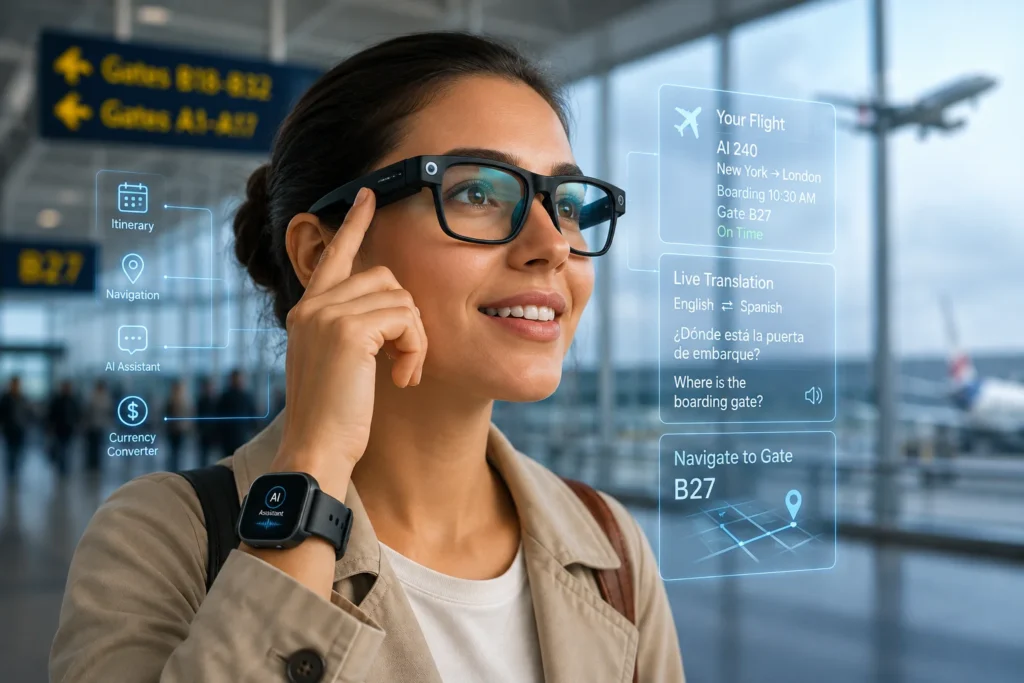
For over a decade, global tourism leaders have invested millions of dollars in custom mobile applications to manage boarding passes, mobile room keys, and digital itineraries. Yet travelers face application fatigue, struggling to download, update, and manage multiple software tools for every phase of a trip.
A major hardware evolution is now replacing this mobile-first model. The rapid acceleration of intelligent eyewear marks a transition away from handheld screens toward ambient, spatial computing.
The Shift Toward Ambient Computing
Industry data highlights rapid adoption in this sector. Millions of smart glasses equipped with conversational artificial intelligence are entering everyday use across international flight hubs, hotels, and urban destinations. Industry forecasts indicate that shipments across the smart glasses category will expand significantly through the end of the decade, signaling a broad consumer shift.
For hospitality technology officers and transportation executives, this evolution marks a crucial phase of infrastructure adaptation. Tourism brands are shifting focus from standalone smartphone applications to background API architectures capable of serving travelers wearing hands-free devices.
Defining Modern Intelligent Eyewear
Unlike bulky virtual reality headsets used for gaming or virtual site tours, the hardware driving live travel experiences is sleek and unobtrusive.
Current intelligent eyewear generally fits into two main tiers:
Audio-First Wearables: Lightweight frames equipped with directional micro-speakers, dual-microphone arrays, and point-of-view sensors without embedded visual displays.
Heads-Up Display Eyewear: Advanced frames featuring non-intrusive micro-displays designed for glanceable text, navigation cues, and instant notifications.
Both hardware formats remove the friction of retrieving a smartphone from a pocket or bag to check updates in complex or unfamiliar environments.
Data Privacy and Edge Processing Infrastructure
Integrating optical sensors and microphones into public travel spaces requires strict operational safeguards. The global travel industry has successfully managed similar technological updates in past years, including the introduction of guestroom voice assistants and smartphone registration.
Modern wearable technology addresses privacy concerns through specialized hardware design and decentralized software architectures:
Visible Capture Indicators: Physical light indicators signal actively functioning sensors to ensure transparency in public spaces.
Ephemeral Data Edge Processing: Visual and audio data is processed locally on the wearable device to perform an immediate task—such as recognizing flight details or local signage—and is deleted immediately rather than stored on external servers.
Geofenced Sensor Networks: Travel operators can establish precise network boundaries to restrict automated sensor interactions, maintaining hyper-personalized service while reducing data retention risks.
Transforming the Passenger Experience
Wearable AI facilitates seamless touchpoints across every phase of the guest journey, creating intuitive interactions for both travelers and service employees.
Aviation and Airport Logistics
Travelers equipped with intelligent eyewear receive dynamic, glanceable notifications for gate updates, step-by-step terminal navigation, and hands-free boarding passes upon entering an airport. Flight crews using enterprise-grade smart glasses receive discreet visual or audio notifications regarding passenger meal preferences or elite loyalty tiers, allowing airlines to deliver attentive service without consulting handheld tablets.
Local Sightseeing and Guided Tours
Online distribution channels and tour operators are transitioning toward screen-free urban exploration. Instead of looking down at handheld mapping software, visitors interact with an ambient, location-aware audio guide. Pointing visual sensors toward historical landmarks triggers instant audio historical background, while viewing foreign-language menus produces real-time translated speech.
Hospitality and Resort Management
Hotel guests can link their personal wearables to a property’s digital ecosystem through secure, temporary authentication tokens upon check-in. The eyewear functions as an intuitive concierge—providing room directions, delivering venue updates near spa facilities, or offering instant spoken translation when communicating with staff. Property managers can simultaneously alert sommeliers or dining teams regarding guest dietary choices before seating, creating proactive, highly responsive service.
Enterprise Productivity and Operational Impact
In addition to enhancing guest services, wearable devices provide measurable operational efficiency for tourism service providers:
Quality Control: Hotel managers conduct verifiable facility reviews, capturing timestamped visual records against standardized brand metrics.
Fleet Maintenance: Ground transport teams review rental vehicles using hands-free, point-of-view video capture, instantly logging damage records to central management software without manual data input.
Staff Onboarding: Operations crews keep their hands free for active maintenance tasks rather than tapping screens, accelerating training timelines and lowering system downtime.
The future of tourism technology relies on invisible, intuitive systems. Competitive advantages will no longer depend on complex smartphone applications, but on the ability of travel providers to build connected, context-aware digital networks ready for the expansion of wearable AI.
For more travel news like this, keep reading Global Travel Wire