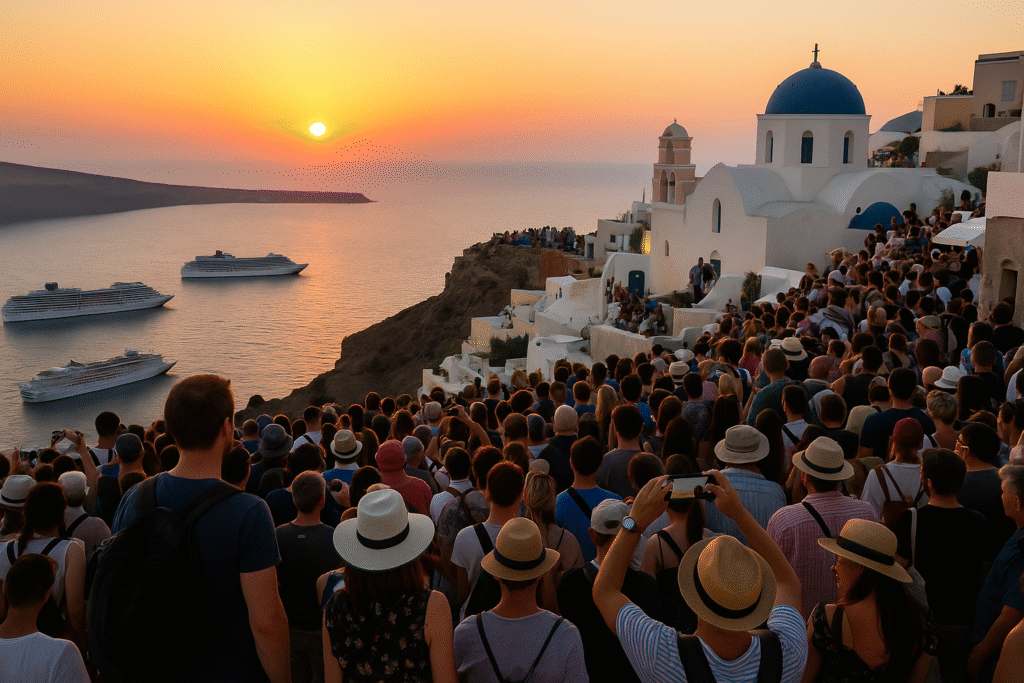
Greece, a country long celebrated for its sun-kissed beaches, archaeological marvels, and island charm, is now facing a growing tourism dilemma. An unprecedented surge in international visitors—driven largely by a record influx of travelers from the United Kingdom—is placing immense pressure on Greece’s most iconic destinations, particularly the Cycladic Islands. This tourism boom, while economically lucrative, is testing the very sustainability of the nation’s treasured landscapes and local way of life.
According to projections from the Greek National Tourism Organisation (GNTO), over 3.4 million tourists are expected to visit the Cycladic archipelago in 2025 alone. Comprising global favorites like Santorini, Mykonos, and Paros, these islands are experiencing a critical tipping point, with concerns mounting over environmental degradation, cultural erosion, and the displacement of local residents due to unchecked development and overtourism.
Fragile Ecosystems Under Pressure
The Cycladic Islands, known for their pristine beaches, whitewashed architecture, and postcard-perfect views, are ill-equipped to handle such high tourist densities during peak summer months. Nikos Zorzos, former mayor of Santorini, recently issued a stark warning about the future of these islands if rampant construction and infrastructure expansion are not brought under control.
“We are on the edge of losing what makes these islands special,” Zorzos stated. “If we continue with unrestricted development, we will destroy the very charm that draws tourists here.”
Zorzos’ concerns are not unfounded. In recent years, islands like Santorini have witnessed a construction boom aimed at accommodating rising visitor numbers. However, this development comes at a cost—putting fragile ecosystems, natural water sources, and local biodiversity at risk.
Economic Ambitions vs Environmental Reality
Tourism is a cornerstone of the Greek economy, contributing over 20% of GDP and employing one in five Greeks, according to data from the Hellenic Statistical Authority. The government’s strategic plan aims to welcome nearly 40 million visitors annually by 2028, nearly quadrupling the country’s population.
But while the revenue inflow from tourism has lifted local economies, it’s also intensifying calls for more balanced and sustainable planning. Experts warn that many island destinations are already at capacity, with overburdened waste systems, rising housing costs, and seasonal water shortages becoming increasingly common.
Local Communities Sound the Alarm
In 2023, Greek islanders staged widespread protests over illegal occupation of public beaches by commercial sunbeds and bars. Residents of Paros, Naxos, and Mykonos took to the streets, demanding the protection of natural coastal spaces and greater transparency in tourism licensing.
The protests, dubbed the “Free the Beaches” movement, spotlighted how public spaces are being privatized for profit, often at the expense of community access and environmental integrity. This year, similar demonstrations are already brewing as more islanders push back against the creeping commercialization of their towns and beaches.
UK Tourists Drive Seasonal Surge
British travelers remain one of the largest demographics visiting Greece, with over 4 million UK nationals expected to visit in 2025, according to VisitBritain. While this influx reflects Greece’s popularity as a summer escape, it’s also a driving force behind many of the pressures the islands are currently facing.
Airlines and cruise operators are ramping up services to Greece, with direct flights from major UK cities to islands like Santorini and Mykonos at near-full capacity from June to September. The rise of short-term rental platforms like Airbnb has only worsened the housing crunch, pricing out locals and transforming traditional neighborhoods into transient zones.
Turning Toward Sustainable Tourism
In response to growing alarm, Greek tourism authorities are now exploring sustainability reforms aimed at mitigating overtourism. Proposed measures include:
- Daily visitor caps at highly trafficked islands and archaeological sites
- Tax incentives for promoting off-peak travel and lesser-known destinations
- Stricter construction regulations to preserve island aesthetics and ecology
- Enhanced public transport and ferry systems to reduce traffic congestion
The Ministry of Tourism has also launched educational campaigns targeting visitors and stakeholders, advocating for eco-conscious travel and respect for local communities.
A Crossroads for Greece’s Tourism Future
As summer 2025 reaches its peak, Greece finds itself at a pivotal crossroads. The country must choose between continuing down a path of unchecked growth or embracing a more measured, sustainable model that safeguards its landscapes and communities for future generations.
“The goal isn’t to stop tourism—it’s to make it work for everyone,” says environmental planner Eleni Papageorgiou. “We want visitors to experience the beauty of Greece, but not at the cost of destroying it.”
With the world’s eyes on Greece as a bucket-list destination, the coming months could define the trajectory of its tourism legacy. Will Greece rise to the challenge and lead the Mediterranean in sustainable travel? Or will it become the next cautionary tale of paradise lost to overtourism?
For more travel news like this, keep reading Global Travel Wire