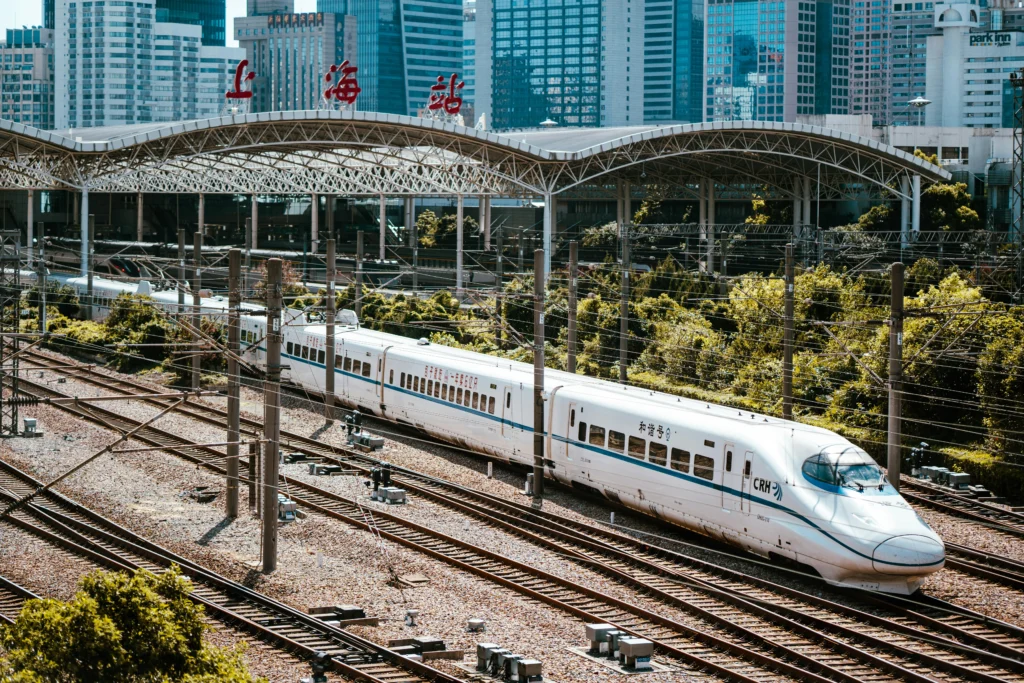
The landscape of urban exploration in mainland China has reached a historic milestone as official government statistics confirm the nation’s metro networks have surpassed a staggering total length of 10,004.8 kilometers. By the end of 2025, the rapid expansion of rail infrastructure has solidified China’s position as a global leader in urban mobility, offering domestic and international tourists an unprecedented level of access to the country’s diverse cultural and economic hubs.
Throughout the previous year, construction efforts were relentless, with 44 separate lines seeing new developments totaling over 730 kilometers of fresh track. This expansion is not merely a feat of engineering; it represents a significant shift in how visitors experience Chinese cities. For the modern traveler, the metro is the primary artery of tourism, providing a cost-effective, high-speed, and reliable alternative to traditional surface transport, effectively shrinking the distance between historical landmarks and modern commercial districts.
The Pulse of Major Tourism Hubs: Shanghai, Beijing, and Beyond
While the established giants of Shanghai and Beijing saw a slight stabilization in ridership—recording 3.72 billion and 3.58 billion passengers respectively—the numbers remain a testament to the sheer scale of these networks. These cities continue to serve as the primary gateways for international arrivals, where a single metro ticket grants access to world-class museums, ancient temples, and futuristic skylines.
However, the real story of the year lies in the surging popularity of China’s emerging tourism powerhouses. Guangzhou, a city renowned for its culinary heritage and vibrant trade, saw its metro ridership climb by 4.51%, handling 3.4 billion passengers. Similarly, the tech-forward metropolis of Shenzhen experienced a growth of nearly 6%, while Chengdu—the gateway to the panda sanctuaries of Sichuan—welcomed 2.26 billion riders.
For tourists, these statistics translate to a high-frequency service environment where “waiting for a train” is a concept of the past. In Guangzhou, specifically, lines 1, 2, and 8 have become the backbones of the city’s visitor economy, moving millions of people daily toward key scenic spots and transport interchanges.
Seamless Connectivity: The Tourist’s Competitive Edge
The density of the networks in cities like Xi’an, Changsha, and Shenzhen ensures that tourism is no longer confined to city centers. The ability of these systems to move between 2.14 and 2.65 million passenger-kilometers daily per line indicates a robust infrastructure capable of supporting large-scale holiday crowds without the gridlock associated with road travel.
In Xi’an, the metro system acts as a time machine, whisking visitors from the modern high-speed rail terminals to the ancient City Walls and the Terracotta Army outskirts with ease. In Shenzhen, the expansion has integrated the coastal areas with the bustling electronics markets, allowing a traveler to experience the full spectrum of the city’s offerings within a single afternoon.
A Glimpse into the Future of Chinese Urban Travel
The momentum of China’s rail development shows no signs of slowing. As of the start of 2026, over 2,544 kilometers of new infrastructure are currently under construction across 35 different cities. This massive undertaking ensures that the “tourism map” of China will continue to expand, bringing previously hard-to-reach districts into the fold of accessible urban exploration.
Future-oriented travelers can look forward to even more comprehensive networks in the coming years. Shanghai and Shenzhen are both planning an additional 400 kilometers of lines, while Beijing and the mountain-clad city of Chongqing are set to add 300 kilometers each. Coastal favorites like Ningbo, Xiamen, and Qingdao are also slated for significant expansions, with 150 kilometers of new lines planned for each. These developments are expected to further decentralize tourism, encouraging visitors to explore boutique hotels, local eateries, and suburban parks that were previously off the beaten path.
Economic Sustainability and Government Support
From a structural perspective, the operation of these massive networks involves complex economic considerations. Official data indicates that the national average operating cost stands at approximately 35.28 Yuan per vehicle-kilometer. While operating costs currently outpace direct fare revenue—with the cost per passenger-kilometer reaching 1.63 Yuan—the Chinese government continues to provide significant subsidies to maintain these services.
For the tourism sector, this government backing is vital. It ensures that fare prices remain affordable for travelers and that the quality of service remains high, regardless of immediate profitability. The focus remains on the “social and economic dividend”—the idea that a world-class metro system drives retail spending, increases hotel occupancy, and boosts the overall attractiveness of a city as a global destination.
Navigating the New Era of China Metro Tourism
As China enters 2026, the integration of digital payment systems and English-language navigation within these metro apps has made the record-breaking 10,000km network more user-friendly than ever for international guests. Whether it is navigating the multi-level stations of Chongqing or the sleek, automated lines of Shanghai, the metro has become an inseparable part of the Chinese travel experience.
The commitment to expanding these “underground cities” reflects a broader national strategy to promote sustainable, high-efficiency urban growth. For the global traveler, the message is clear: the best way to see China is from the vantage point of its record-breaking rail network, where the future of tourism is arriving exactly on schedule.
For more travel news like this, keep reading Global Travel Wire