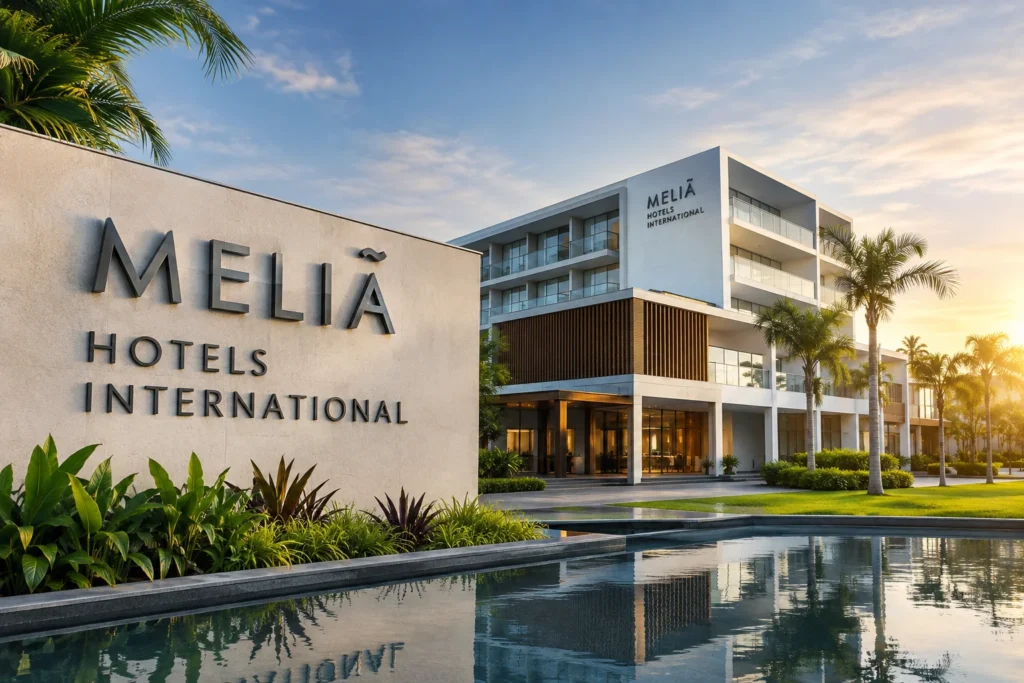
The global hospitality sector is observing a steady phase of consolidation, marked by the resilient market position of Melia Hotels International. Trading close to its EUR 10 benchmark as of late August 2026, the Spanish hospitality major maintains a closing share price around EUR 10.34. Investors and industry analysts are carefully balancing long-term equity performance against the company’s continuous resort portfolio expansion and pioneering environmental initiatives.
While financial performance over the past decade has reflected structural challenges, including a nominal ten-year loss on capital investments, the current operational outlook is defined by robust asset-light expansion in high-growth travel destinations. The broader travel sector continues to watch how global hotel operators convert new room inventory and sustainability credentials into long-term enterprise value.
Expanding the Global Resort Footprint in High-Growth Destinations
A cornerstone of the growth strategy for Melia Hotels International is the systematic expansion of its leisure resort portfolio, particularly across the Asia-Pacific region. Official portfolio disclosures highlight the group’s strategic entry and consolidation within key Asian travel hubs. A primary example of this asset growth is the debut of Meliá Aurea Nha Trang along the central coast of Vietnam.
Situated in a scenic coastal corridor between landmark geography such as Turtle Island and Fairy Mountain, the newly opened retreat features 207 rooms and suites equipped with private balconies, open-plan layouts, and extensive ocean views. Located just 15 minutes from the Nha Trang city center and 48 kilometers from Cam Ranh International Airport, the resort adds scale to the brand’s regional operating network.
By introducing over 200 high-end keys into a premier Southeast Asian leisure destination, the company strengthens its capacity to capture international tourist arrivals. Modern travel markets prioritize upper-upscale accommodations that blend local cultural aesthetics with comprehensive wellness, spa, and culinary amenities. Expanding room capacity in established destinations provides cross-marketing opportunities, enhances brand awareness, and optimizes operational efficiency across regional operations.
Through management and franchise agreements, this operational model permits rapid brand expansion while preserving capital flexibility. Over time, securing key room counts in growing tourist destinations serves to build stable management fee structures that contribute to the group’s underlying revenue base.
Embedding Sustainability and Eco-Restoration into Operations
Parallel to physical expansion, sustainability programs have become a central pillar of corporate identity and guest experience across international hospitality brands. Melia Hotels International has integrated regional environmental initiatives directly into property-level operations to support ecological conservation and local biodiversity.
In Southeast Asia, initiatives such as the Meliá Go Green campaign demonstrate the practical implementation of these environmental commitments. Operating out of properties like Meliá Chiang Mai in northern Thailand, official program disclosures report the successful restoration of more than seven acres of seasonally dry tropical forest. Through active staff and local community participation, the initiative has planted 6,650 native trees to assist in natural habitat regeneration.
Such nature-based restoration projects move beyond symbolic corporate targets by delivering quantifiable ecological benefits in critical destinations. Sustainable operations are increasingly recognized as a key factor in attracting environmentally conscious international travelers. Destinations and resort properties that emphasize eco-friendly management, habitat conservation, and local resource stewardship frequently gain a competitive edge in long-haul leisure travel markets.
While environmental investments shape brand reputation rather than immediate quarterly financial returns, strong commitment to corporate responsibility enhances overall brand equity. Over the long term, sustainable practices foster higher guest satisfaction, encourage brand loyalty, and align corporate strategy with global destination management goals.
Financial Context and Future Market Outlook
Market trading figures reveal a period of relative equity stability. The share price of Melia Hotels International traded around EUR 10.34 before adjusting slightly to EUR 10.27 in subsequent sessions, demonstrating short-term market stability despite daily sentiment adjustments.
Long-term financial evaluations provide a sober perspective for market participants. Data tracking a hypothetical EUR 10,000 investment made ten years prior shows a current valuation of EUR 9,286.04 at the EUR 10.34 price point, representing a nominal capital contraction of over EUR 700. This historical trend emphasizes that portfolio physical expansion does not automatically ensure capital growth during challenging macroeconomic cycles.
Nevertheless, the hospitality sector’s post-recovery landscape presents new opportunities. Management continues to focus on optimizing RevPAR (Revenue Per Available Room) metrics through premium brand positioning, asset-light growth, and disciplined cost control. By pairing luxury and lifestyle resort openings in Asia with proactive sustainability frameworks in established markets, the group aims to capture high-margin leisure tourism demand.
As global tourism continues to evolve, the combination of targeted geographical expansion, asset optimization, and verified environmental leadership provides the structural framework for Melia Hotels International to navigate ongoing global market developments.
For more travel news like this, keep reading Global Travel Wire