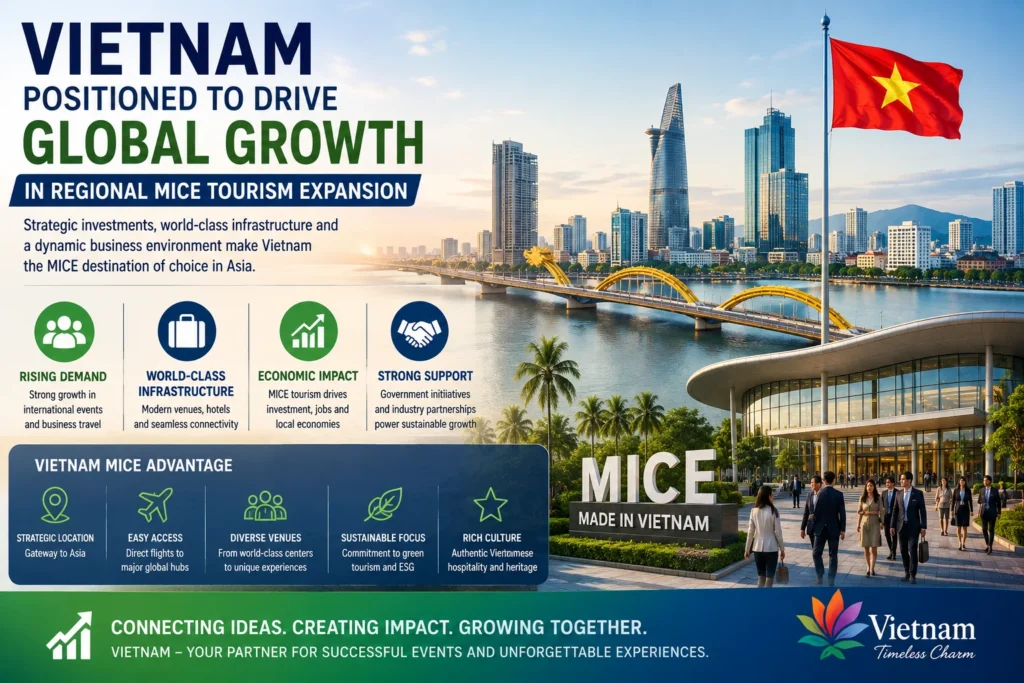
Government officials, international travel delegates, and global hospitality leaders convened in Ho Chi Minh City to map out the future of Meetings, Incentives, Conferences, and Exhibitions (MICE) travel. Speaking at a dedicated industry forum hosted during the 20th International Travel Expo Ho Chi Minh City, Deputy Prime Minister Pham Thi Thanh Tra outlined national plans to elevate MICE travel into a strategic driver of economic growth, high-value investment, and international competitiveness.
Addressing regional delegates, the Deputy Prime Minister emphasized that Vietnam is fully prepared to collaborate with foreign governments, international development agencies, and private industry partners to build sustainable momentum across the global travel sector. Under national development frameworks, business event travel is recognized not merely as a high-margin tourism product, but as a critical economic bridge connecting trade networks, technological innovation, cross-border investment, and cultural diplomacy.
Elevating High-Yield Travel Across the Mekong Subregion
National economic policy has consistently designated tourism as a primary spearhead economic sector. As Vietnam advances into a new development era focused on rapid, sustainable expansion, government strategies are prioritizing high-yield travel segments over sheer visitor volumes. Official statements underline that the true measure of a successful conference or trade exposition lies in the long-term commercial agreements, corporate ventures, and regional partnerships forged in its aftermath.
Central to this strategy is the recognition that Southeast Asia and the Greater Mekong Subregion hold exceptional geographic and cultural advantages for hosting large-scale corporate events. However, state leadership noted that individual destination advantages alone are insufficient in an increasingly competitive global marketplace. To capture larger shares of the global business travel market, regional economies must integrate venue supply chains, align cross-border visa facilitation, and present a unified regional value proposition.
Key operational focus areas driving Vietnam’s strategic positioning include:
Integrated Venue Infrastructure: Developing purpose-built convention centers, modern exhibition halls, and multi-functional event spaces equipped with high-capacity digital connectivity.
Public-Private Investment Corridors: Aligning municipal development authorities with private hotel operators to streamline event management, ground transport, and hospitality services.
Targeted Commercial Matching: Transforming international trade expositions into catalytic platforms for venture capital, foreign direct investment, and inter-regional commerce.
Private Sector Alignment and Economic Fundamentals
Economic analysts and private sector executives attending the summit echoed the government’s positive outlook. Financial sector representatives highlighted that Vietnam has successfully built a powerful international destination brand, providing a resilient foundation for attracting major corporate gatherings, association meetings, and international trade fairs.
Major domestic hospitality groups noted that iconic leisure destinations across the country are already firmly established on the global travel map. The immediate strategic priority is expanding the supporting ecosystem—including specialized event management talent, luxury room capacity, and flight connectivity—to compete directly with established international event hubs.
To translate industry recommendations into actionable policy, the Ministry of Culture, Sports and Tourism confirmed plans to draft specialized regulations supporting MICE product development. Minister Lam Thi Phuong Thanh stated that municipal authorities and local provincial leadership will play a central role in driving innovation, incentivizing venue construction, and establishing integrated supply chains that meet strict international operational standards.
Strategic Outlook for Regional Tourism Competitiveness
Positioning business travel at the heart of national tourism policy aligns with broader economic trends across the Asia-Pacific region. High-spending conference delegates typically generate significantly higher daily expenditures than traditional leisure visitors, while stimulating demand across secondary services including urban transit, fine dining, cultural excursions, and retail trade.
By establishing high-level policy frameworks and fostering cross-border alliances, Vietnam aims to transform its major urban centers—including Ho Chi Minh City, Hanoi, and Da Nang—into primary gateways for global business gatherings. As public agencies and private enterprises synchronize operations, the country reinforces its reputation as a modern, reliable, and highly competitive destination for global commerce and international event management.