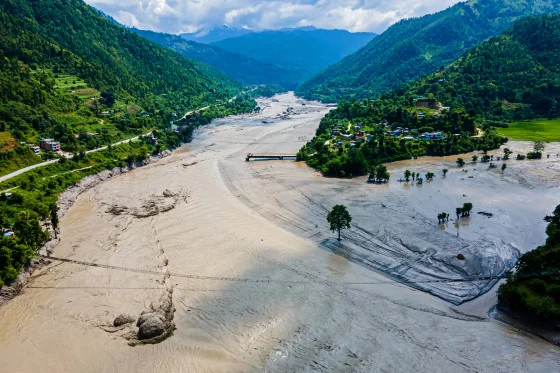
Maharashtra has intensified emergency coordination for seven residents caught in Nepal’s devastating flash floods and landslides. Six tourists have been located and confirmed safe, while officials continue working to establish contact with the remaining traveller.
The operation comes as damaged roads, bridges and communication networks create serious obstacles across affected parts of Nepal. These disruptions have complicated tourist movement, delayed rescue access and left some families waiting for verified information.
Among those confirmed safe are two tourists from Mumbai and two from Pune. Authorities are collecting further details about the entire group while coordinating with Indian and Nepalese agencies.
The Maharashtra government has assured families that assistance will continue until every affected resident is contacted and receives the required support.
Emergency helplines activated for families
The state administration has established a dedicated emergency response system for residents stranded in Nepal. A round-the-clock State Control Room is gathering information, verifying travellers’ locations and sharing confirmed developments with their relatives.
Families seeking assistance can call the state emergency helpline at 1070. They can also contact the State Control Room at 022-69107600.
Officials have asked relatives to provide accurate names, contact numbers, travel itineraries and last-known locations. These details can help response teams identify tourists and coordinate with agencies operating near disaster-affected destinations.
The control room also creates a single channel for verified updates. This is particularly important when unstable mobile networks and widespread online speculation can cause confusion during a fast-moving emergency.
Flood damage disrupts Nepal tourism
Severe flooding and landslides have caused widespread transport disruption across Nepal. Damage to roads and bridges has restricted access to some locations, while communication failures have made it difficult for travellers to contact families or authorities.
Nepal’s mountain terrain can make rescue operations especially challenging after extreme rainfall. Landslides may block highways, isolate settlements and interrupt connections between tourism centres, airports and border crossings.
The crisis therefore has significant consequences for Nepal’s visitor economy. Tour operators may struggle to maintain itineraries, while hotels and transport providers face sudden cancellations, extended stays and growing demand for emergency assistance.
Travellers in affected areas may also encounter route diversions, delayed departures and limited access to essential services. Visitors should remain in secure accommodation whenever local authorities advise against unnecessary movement.
Tourism officials order continuous monitoring
Maharashtra Tourism Minister Shambhuraj Desai has directed officials to maintain regular coordination and take every possible step to assist affected tourists.
State disaster management officials are working with district administrations, the Tourism Department and other agencies. Their immediate priority is confirming the location and safety of every Maharashtra resident reported stranded in Nepal.
The government is also maintaining contact with the Central Government, the Indian Embassy in Nepal and Nepalese authorities. This multi-agency network supports information sharing and can help arrange local assistance when confirmed circumstances require intervention.
Such coordination is essential during an international tourism emergency. State officials depend on diplomatic channels and local rescue teams because conditions, access rules and transport availability can change quickly.
Remaining traveller becomes central priority
Establishing contact with the remaining tourist is now the central focus of Maharashtra’s response. Officials are reviewing information supplied by relatives and checking it against updates received from agencies in Nepal.
A lack of communication does not automatically indicate physical danger. Floods can disable mobile towers, interrupt electricity supplies and prevent travellers from charging their devices. However, officials must verify each person’s status before providing reassurance.
Authorities have urged families and members of the public to avoid relying on unverified social media messages. Official updates remain the safest source of information about rescue efforts, road access and traveller locations.
Tourists urged to follow official guidance
Indian visitors currently in Nepal should closely monitor directions from local authorities and the Indian Embassy. Travellers should avoid flooded roads, unstable slopes, damaged bridges and waterways with strong currents.
They should also keep identity documents, medicines, drinking water, power banks and emergency contacts readily available. Where communications remain functional, tourists should inform relatives and accommodation providers about their location.
Visitors planning imminent journeys to Nepal should confirm road conditions, local transport availability and accommodation access before departure. Flexible bookings can provide additional protection when weather disruption threatens established itineraries.
Maharashtra’s response highlights the growing importance of coordinated traveller assistance during overseas climate emergencies. As Nepal continues rescue and relief operations, officials remain committed to locating every affected resident, supporting their families and facilitating safe onward movement when conditions permit.
For more travel news like this, keep reading Global Travel Wire