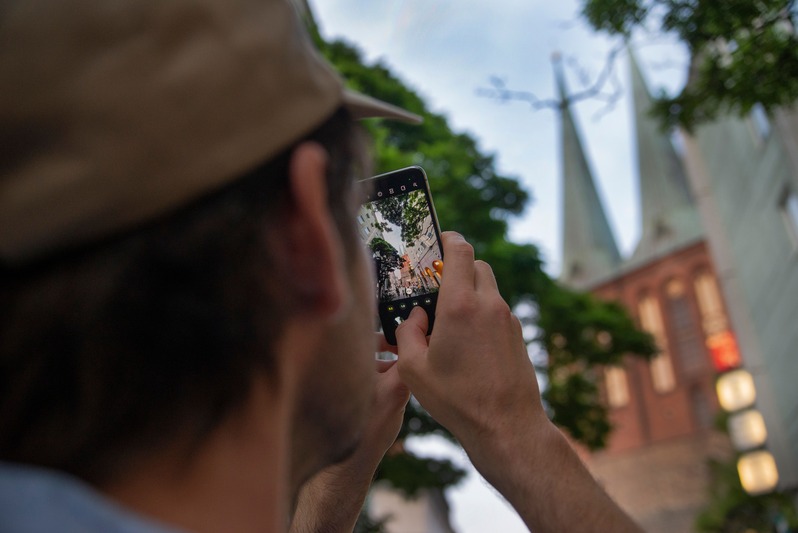
Technology is becoming an increasingly natural part of the travel experience, from the moment a visitor starts planning a trip to the time they navigate a new city. Artificial intelligence, digital platforms and data-driven travel services are now helping destinations make tourism more accessible, personalised and efficient, while also opening new ways for visitors to connect with local communities and culture. These trends were highlighted at the World Conference on Tourism Cooperation and Development 2026 in Beijing.
Yet the next chapter of digital tourism may not be about replacing the human experience with technology. Instead, industry leaders are increasingly looking at how AI, smart tourism platforms and data analytics can make it easier for travellers to discover authentic places, communicate across languages and build meaningful connections with destinations. Participants at the Beijing conference stressed that technology should ultimately strengthen tourism’s human dimension rather than diminish it.
Smart Tourism Becomes a Growth Driver
Themed “Smart Tourism, Shared Prosperity,” the World Conference on Tourism Cooperation and Development 2026 brought together representatives of tourism cities, international organisations, travel businesses, diplomatic missions and industry experts from more than 50 countries and regions.
The conference, hosted by the World Tourism Cities Federation (WTCF) and co-organised by the Beijing Municipal Bureau of Culture and Tourism, is taking place alongside the 2026 China International Fair for Trade in Services. Discussions have focused on how technology can support tourism growth while addressing issues such as accessibility, cultural preservation, safety and cooperation between destinations.
Olaf McKay, mayor of Valletta, Malta, highlighted the potential of digital platforms to improve accessibility, multilingual information and journey planning. Such tools can be particularly useful for international travellers who may be unfamiliar with local transport, services, payment systems or languages.
Artificial intelligence is also becoming more visible across the travel journey. Ben Montgomery, vice-chairwoman of the Pacific Asia Travel Association, pointed to AI, data analytics and digital platforms as technologies reshaping the way travellers discover, book and experience destinations worldwide. At the same time, she emphasised that tourism ultimately depends on people and the relationships created between visitors and local communities.
Beijing Pushes AI-Powered Visitor Services
Beijing is emerging as an example of how smart tourism technology can be integrated into destination management and visitor services. According to the conference discussions, the city has introduced several AI-supported initiatives designed to make travel more convenient for international visitors.
One example is the use of digital services for cross-regional tax refunds, while other initiatives focus on providing travellers with more accessible information and smoother journey planning. These applications demonstrate how AI in tourism can move beyond experimental technology and become part of practical visitor infrastructure.
The conference also saw the launch of the “China Bound·Beijing” English cultural tourism platform, jointly introduced by China Daily and the Beijing Municipal Bureau of Culture and Tourism. The platform functions as a one-stop digital gateway for international visitors, combining itinerary planning with AI-powered assistance through an English-language website and dedicated Alipay and WeChat mini-program pages.
The goal is not simply to help tourists find attractions. The platform is also intended to encourage longer and deeper stays by introducing overseas visitors to Beijing’s cultural heritage, including immersive experiences connected with intangible cultural heritage.
Technology Meets Authentic Travel
This shift is important because today’s traveller increasingly expects convenience without sacrificing authenticity. A visitor may rely on an AI-powered itinerary planner to organise a journey, but the memorable part of that journey could still be a conversation with a local resident, a traditional meal or an encounter with a city’s cultural heritage.
That balance is becoming central to the future of smart tourism. Digital tools can remove friction from travel, but destinations still need compelling cultural experiences and strong local communities to give visitors a reason to stay longer.
The World Tourism Cities Development Report 2025-26, unveiled during the conference, examines several of these interconnected issues, including technology adoption, safety governance, cultural heritage, destination branding, industrial integration and regional coordination. Its top 10 cities include New York, Tokyo, Paris, London, Beijing, Shanghai, Hong Kong, Milan, Istanbul and Dubai.
Digital Growth with a Human Purpose
The rapid development of AI in travel and tourism is likely to change how destinations communicate with visitors, manage services and promote local experiences. But the message emerging from Beijing is more nuanced than simply “technology will transform tourism.”
The real opportunity lies in using digital innovation to make travel easier while giving people more opportunities to engage with places, cultures and communities. When AI helps a traveller understand a destination rather than simply move through it, technology becomes more than a convenience—it becomes a bridge.
As destinations worldwide compete for international visitors, the strongest tourism strategies may therefore be those that combine smart technology with authentic human experiences. For the travel industry, the future is not necessarily a choice between digital innovation and human connection. Increasingly, it appears to be about making the two work better together.