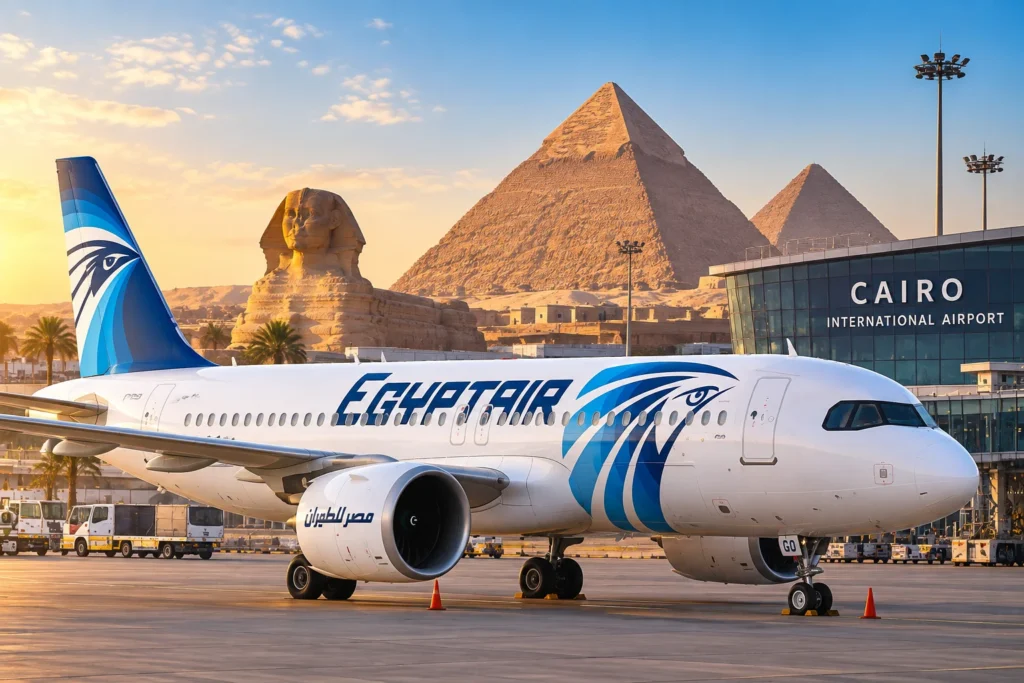
Official aviation announcements confirmed at the El Alamein International Airshow 2026 outline a fundamental shift in Egyptian commercial aviation strategy. Egyptian flag carrier AIRCAIRO has finalized a firm order for 15 Airbus A320neo aircraft, marking the airline’s initial direct purchase agreement with the manufacturer. This acquisition serves as a central pillar in the carrier’s broad operational roadmap to scale its operational fleet to over 130 aircraft by 2034.
The agreement introduces direct asset ownership alongside existing aircraft leasing structures, granting the airline enhanced operational agility. Having grown rapidly from seven operational aircraft five years ago to a current active fleet exceeding 45 aircraft, the airline’s expanded capacity aims to support rising international inbound passenger traffic to Egypt’s premier cultural and coastal destinations.
Operational Flexibility and Strategic Asset Ownership
Official statements from corporate leadership detail the financial and structural rationale behind incorporating manufacturer-owned airframes into the carrier’s fleet balance sheet. By pairing direct capital investments with established aircraft leasing agreements, civil aviation authorities aim to maximize route efficiency and mitigate operational expenditures as passenger traffic scales across regional networks.
The introduction of the modern single-aisle jets provides crucial seat capacity to address expanding passenger demand. This expanded operational footprint aligns directly with national civil aviation goals designed to strengthen air links between main domestic hubs, coastal Red Sea resort districts, and major international feeder markets across Europe, Africa, and the Middle East.
Environmental Performance and Next-Generation Aircraft Metrics
According to official technical specifications released by commercial aircraft manufacturers, the A320neo variant incorporates advanced aerodynamic designs, high-efficiency engines, and modern cabin configurations. These technical advancements yield operational and environmental benefits across short and medium-haul flight segments:
Fuel Efficiency: Delivers a minimum 20% reduction in overall fuel consumption compared to previous-generation single-aisle jet aircraft.
Emissions Reduction: Achieves a corresponding 20% drop in carbon dioxide emissions per flight hour, supporting national green aviation benchmarks.
Noise Footprint Reduction: Implements updated engine technologies that significantly diminish acoustic impact around airport departure and arrival corridors.
Passenger Experience: Integrates expanded cabin width and modern overhead storage facilities to improve overall passenger comfort.
Boosting Regional Air Connectivity and Tourism Development
Ministry statements and aviation board releases emphasize that route connectivity remains vital to sustaining national tourism growth targets. Broadening direct air access reduces transit complexity for international visitors, facilitating multi-destination itineraries that combine historic heritage sites along the Nile Valley with leisure destinations along the Mediterranean and Red Sea coasts.
Airbus commercial representatives noted that expanding direct aircraft ownership strengthens Egypt’s strategic position as a global aviation crossroad. The deployment of fuel-efficient narrow-body aircraft grants the carrier flexibility to open new secondary markets and increase flight frequencies on high-density international routes.
As civil aviation infrastructure undergoes continuous modernization, the integration of next-generation aircraft ensures Egypt’s air transport sector maintains the capacity, safety standards, and operational resilience needed to accommodate future global travel demand.
For more travel news like this, keep reading Global Travel Wire