Official shipbuilding announcements and corporate fleet disclosures confirm a major milestone in marine environmental engineering following the official float out of the Viking Astrea. Built at Fincantieri’s Ancona Shipyard in Italy, the vessel represents the cruise operator’s second ocean-going passenger ship designed to utilize liquefied hydrogen fuel cells for zero-emission operations.
The traditional float out ceremony signifies a ship’s transition into its final phase of construction. The milestone commenced when a ceremonial cord was cut to allow water to flood the building dock. Following the two-day dock-flooding process, the vessel is scheduled to be towed to an adjacent outfitting berth, where shipyard technicians will complete interior construction, stateroom assembly, and final propulsion integration.
Scheduled for commercial delivery in May 2027, the vessel will spend its inaugural summer season operating luxury itineraries across the Mediterranean and Northern Europe.
Advanced Fuel Cell Engineering and Zero-Emission Propulsion Capabilities
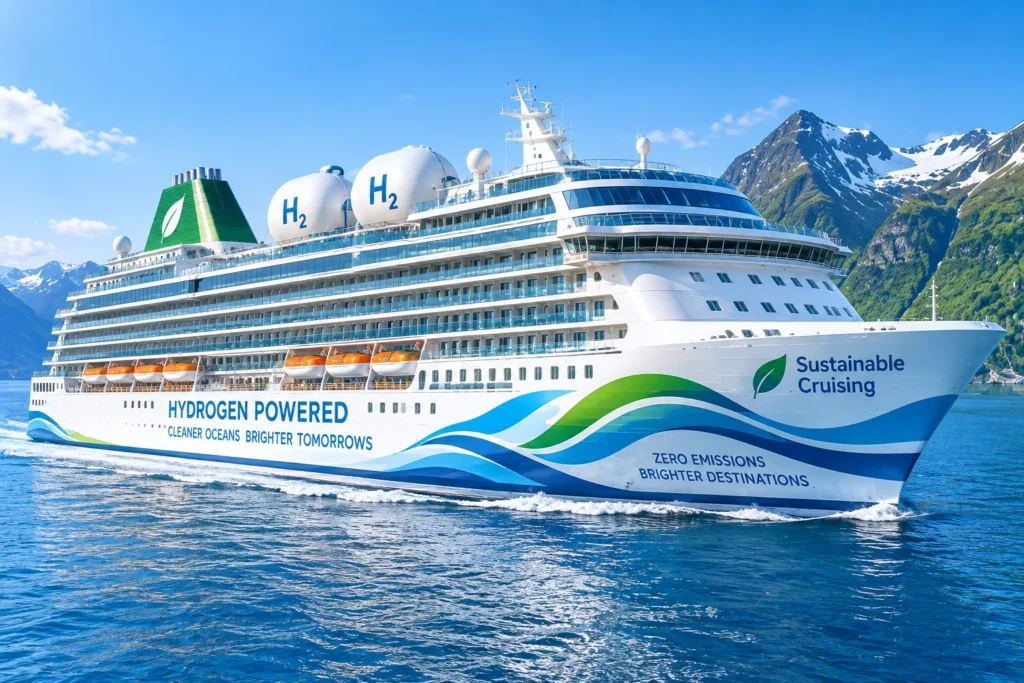
Public technical specifications released by naval engineering division Isotta Fraschini Motori—a specialized subsidiary of shipbuilder Fincantieri—detail the state-of-the-art propulsion infrastructure onboard. The propulsion setup combines traditional power systems with advanced fuel cells and stored liquefied hydrogen, generating up to six megawatts of auxiliary electric power.
This hybrid technology architecture enables the ship to navigate and maintain onboard operations in sensitive marine ecosystems with zero localized exhaust emissions. Operating on hydrogen fuel cells eliminates sulfur oxides, nitrogen oxides, and particulate matter while docked or sailing through environmentally protected coastal zones.
Official engineering benchmarks for the small-ship ocean class include key design parameters:
Gross Tonnage: Approximately 54,300 gross tons, maintaining a compact small-ship profile.
Passenger Capacity: 499 guest staterooms designed to accommodate up to 998 travelers.
Power Output: Advanced hydrogen fuel cell arrays capable of supplying up to six megawatts of zero-emission energy.
Ecosystem Access: Zero-emission operating capability designed to comply with strict environmental regulations across pristine Norwegian fjords and coastal marine sanctuaries.
Strategic Fleet Expansion and International Itinerary Roadmap
Corporate executive statements highlight that the introduction of hydrogen-powered vessels reflects a broader commitment to long-term environmental stewardship and fleet efficiency. The Viking Astrea serves as a direct sister ship within the company’s small-ship ocean fleet, following the Viking Libra—the world’s first hydrogen-powered ocean vessel—which remains on track for official delivery in November 2026.
The deployment of small-capacity ocean ships aligns with growing demand among travelers seeking culturally focused, experiential journeys with a reduced environmental footprint. By utilizing clean energy systems, operators can access historic ports and protected marine corridors that enforce stringent environmental access controls.
Following its spring 2027 delivery, the Viking Astrea will embark on inaugural sailing schedules connecting major historic ports in the Western Mediterranean before repositioning north for seasonal summer routes through Scandinavian waterways, the Baltic Sea, and Northern European coastlines.
Environmental Transformation in the Global Maritime Travel Sector
Official port authority guidelines and international maritime regulations continue to implement tighter emission controls across global shipping lanes. Coastal tourism boards and maritime authorities in Europe have welcomed technological investments that accelerate the decarbonization of international passenger transport.
The integration of hydrogen fuel technology into commercial cruise fleets demonstrates the technical viability of alternative fuels for large-scale passenger transport. As marine infrastructure evolves to support hydrogen storage and bunkering facilities at major port terminals, sustainable cruise tourism initiatives are expected to play a central role in preserving delicate coastal habitats while maintaining global maritime travel links.
For more travel news like this, keep reading Global Travel Wire