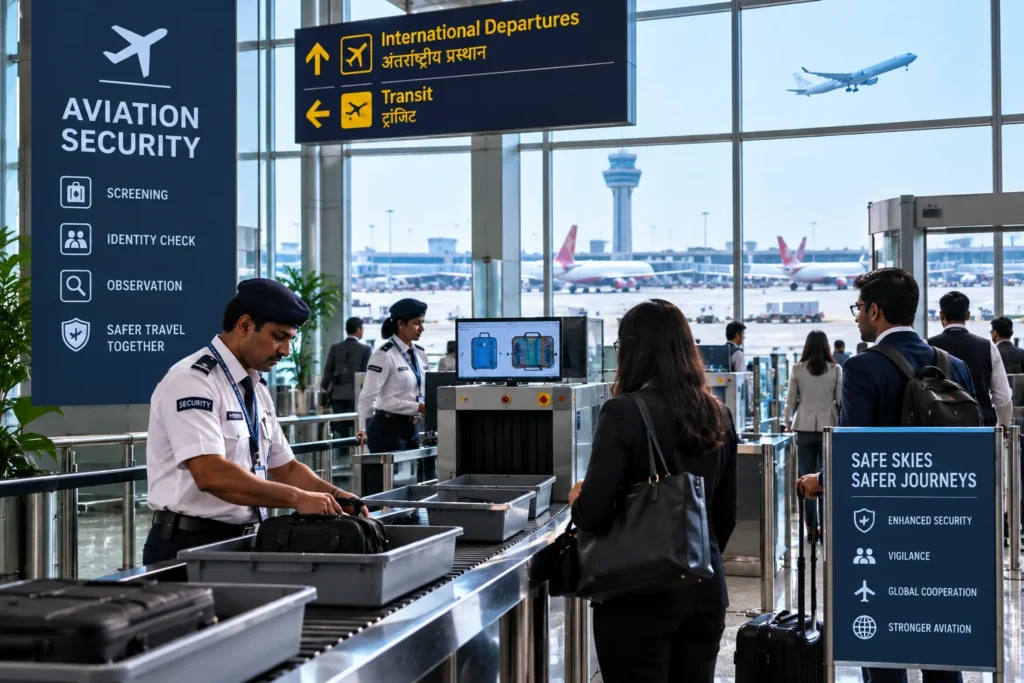
A critical operational lapse within airport transit infrastructure has heightened scrutiny over international passenger handling protocols and cross-border security procedures. Following a recent transfer breakdown at Indira Gandhi International Airport in New Delhi, regulatory authorities initiated an official review into hub-and-spoke transfer procedures to prevent unauthorized transit flows and enforce strict compliance across global air transport networks.
The breach occurred when international travelers arriving on a domestic feeder flight managed to proceed directly onto an outbound European flight without completing mandatory exit border checks. The oversight highlights systemic vulnerabilities in multi-stage transit environments where domestic and international passenger flows converge.
Technical Breakdown in Domestic-to-International Transfer Flow
The operational breakdown originated during the initial leg of a domestic feeder route connecting regional airports to major international gateways. Under established hub-and-spoke frameworks, airlines transport passengers from regional destinations to major hub airports, where travelers must clear exit formalities before proceeding to international departure gates.
During the incident in question, travelers arriving on an early-morning domestic flight were mistakenly routed directly into an International-to-International transit area rather than being directed toward mandatory immigration control checkpoints. Because the passengers possessed valid onward boarding documents for a connecting European flight, ground personnel transferred them straight into the international departure concourse, effectively bypassing border security personnel altogether.
The systemic failure went unnoticed during initial boarding and gate verification steps, coming to light only during routine post-departure manual reconciliation procedures. Official oversight bodies are currently evaluating how multiple physical control points—including transfer desks, security barriers, and gate access systems—failed to isolate domestic transit arrivals from cleared international departure zones.
Regulatory Authorities Order Review of Airline Operating Procedures
In response to the procedural failure, civil aviation regulatory authorities issued formal notices demanding a detailed accounting of passenger-handling practices, staff deployment, and compliance monitoring mechanisms. Government oversight agencies established a strict seven-day window for transport stakeholders to detail the breakdown of operational safeguards.
Regulatory inquiries are focusing heavily on several key compliance vectors:
The unauthorized issuance of onward international boarding documentation at regional spoke airports in violation of established standard operating procedures.
The failure of ground handling staff and airport transfer agents to verify passenger clearance status prior to granting access to international departure lounges.
Inadequate physical segregation between incoming domestic transit passengers and cleared international outbound flows.
The operational effectiveness of dedicated supervisory teams and 24-hour nodal monitoring officers assigned to hub airport transit corridors.
Delays in transmitting passenger manifests, General Declarations, and Advance Passenger Information data to border enforcement officials.
Civil aviation authorities emphasized that strict adherence to hub-and-spoke operating standards is non-negotiable, noting that failure to segregate passenger streams introduces severe border control risks and compromises international transport protocols.
Strengthening International Border Compliance and Airport Safeguards
The incident underscores the operational complexity of managing high-volume international transfer hubs. Modern aviation infrastructure relies on precise physical separation, digital tracking systems, and multi-layered verification protocols to ensure that every outbound passenger completes mandatory customs, security, and immigration formalities.
When domestic and international streams mix without proper checks, global security frameworks face significant risks. International border control systems rely on accurate exit records to verify visa compliance, trace movement patterns, and maintain law enforcement databases. Passengers departing a country without official exit validation can encounter severe administrative complications upon arrival at foreign destinations or during future international travel attempts.
To restore operational integrity, aviation authorities and airport management agencies are reviewing physical barriers, automated access control gates, and biometric verification systems across primary international terminals. Mandatory retraining programs for ground handling staff and third-party logistics partners are also under consideration to guarantee strict adherence to passenger segregation rules.
As international air travel continues to expand, maintaining seamless yet secure transit corridors remains vital for global tourism stability. By enforcing stringent oversight, implementing automated tracking, and holding operating carriers accountable for handling lapses, civil aviation authorities aim to reinforce passenger trust, safeguard border integrity, and ensure that hub-and-spoke operations function safely and efficiently across global aviation networks.
For more travel news like this, keep reading Global Travel Wire