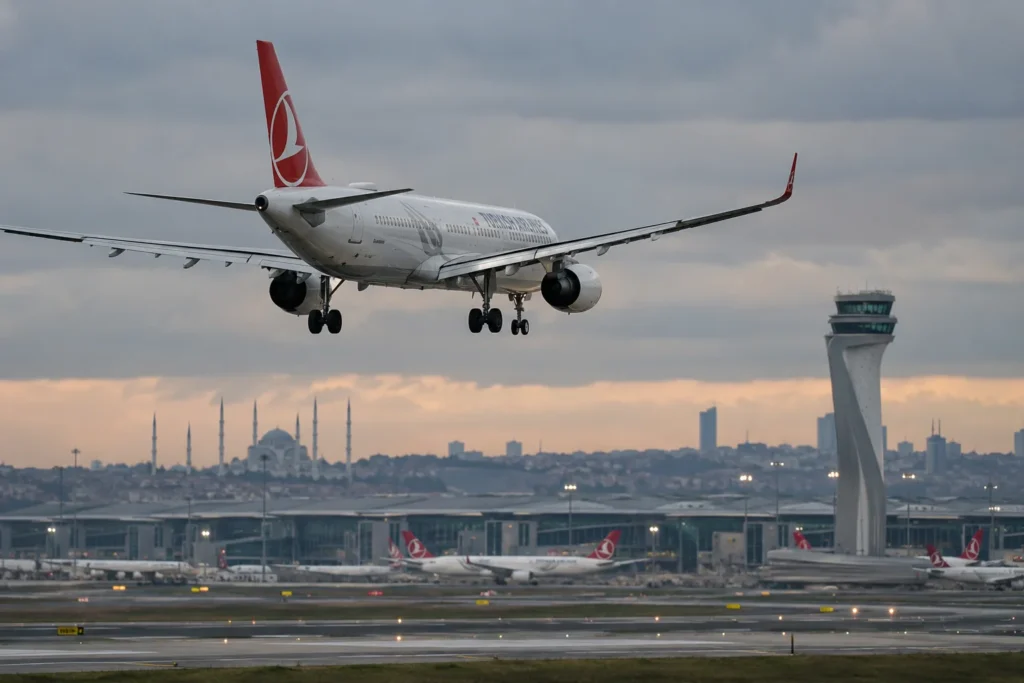
A single report of a bird strike on 14 September 2026 triggered a precautionary return to Istanbul for a Turkish Airlines flight bound for Algiers. The incident underscores the strict safety frameworks governing international aviation corridors between Türkiye and Algeria. While the flight crew executed standard risk mitigations, the absence of publicly indexed flight numbers or passenger counts from carrier manifests suggests a localized operational decision rather than a widespread network disruption.
The Mechanics of a Precautionary Air Return
The flight departed Istanbul Airport and subsequently encountered wildlife during its initial climb or early cruise phase toward the Algerian capital. In commercial aviation, a turn back is a calculated operational safety procedure. When flight crews suspect a bird strike—where avian wildlife makes impact with an engine intake, wing structure, or fuselage—they immediately evaluate real-time engine performance metrics and instrument telemetry. If any parameter shows an irregularity, standard procedure requires prioritizing ground-based engineering reviews over continuing long-distance overwater or international segments.
For this specific journey, the decision to return to Istanbul allowed engineers to conduct a full technical inspection using specialized hangar infrastructure. Under the safety guidelines established by the International Civil Aviation Organization (ICAO), these precautionary maneuvers serve as routine safety mitigations. The lack of emergency declarations, structural failure, or reported passenger injuries indicates that the flight crew handled the encounter purely as a preventive measure.
Operational Risk Breakdown and Route Impact Analysis
Because official manifests were not published alongside initial field telemetry, the broader impacts of this disruption can be evaluated across key operational dimensions:
| Analysis Category | Impact Weight | Verified Status | Traveler Implication | Oversight Authority |
| Aviation Safety | 45% | Wildlife encounters represent known operational risks | Justifies precautionary turns and technical reviews | ICAO Guidelines |
| Incident Verification | 25% | Flight number unconfirmed in initial public logs | Requires checking verified official carrier channels | Civil Aviation |
| Passenger Protection | 20% | Commercial flight regulations apply | Entitlement to rerouting, meals, or refunds | Civil Aviation Standards |
| Route Tourism Impact | 7% | No route-wide flight suspensions declared | Isolated to a single scheduled service | National Transport Agencies |
| Border Protocol | 3% | Entry protocols remain completely unchanged | Standard immigration rules remain in effect | Border Authorities |
The analytical breakdown reveals that while safety considerations account for the primary operational weight (45%), the overall impact on the Türkiye–Algeria tourism market remains negligible (7%). The event represents an isolated operational event affecting a single airframe rather than a systemic issue requiring route-level intervention.
Managing the Hidden Impact of Wildlife Hazards
For international travelers navigating hub networks between Istanbul and North Africa, the primary consequence of an air return is potential schedule rotation displacement. When a commercial airframe unexpectedly returns to its primary hub, it alters the downstream flight schedule for that specific aircraft tail number. If technical personnel must perform detailed engine intake inspections or swap components, subsequent scheduled departures may experience minor timing adjustments or airframe substitutions.
Cost dynamics surrounding wildlife risk mitigation remain an ongoing focus for global aviation infrastructure. Recurring wildlife activity near major flight corridors prompts international airports to expand investment in automated bird strike avoidance systems, including acoustic deterrents, habitat modification, and specialized radar tracking. While airport authorities absorb initial capital expenditures, these operational safety enhancements maintain high safety standards across global air networks.
Statistical records published by international civil aviation bodies emphasize the scope of wildlife management in modern air travel. Global data repositories document over 200,000 wildlife encounter reports submitted by participating member states over recent multi-year reporting cycles. These statistics confirm that bird strikes represent predictable environmental factors in commercial aviation rather than unexpected anomalies. A flight crew choosing to return an airframe to base demonstrates that airport and airline safety management systems are operating as designed.
Essential Summary for International Travelers
Safety Priority: The decision to turn back to Istanbul on 14 September 2026 served as a precautionary response to a suspected wildlife strike, adhering to standard safety mitigations.
Controlled Scope: Official aviation releases confirm no route cancellations, airport closures in Algiers, or structural disruptions to international flights.
Passenger Safeguards: Travelers affected by wildlife-related delays remain covered under standard civil aviation passenger protection frameworks, which provide duty of care, rebooking onto alternate flights, or ticket processing.
Managed Risk: Global aviation data tracks tens of thousands of wildlife reports annually, confirming that bird strike operational protocols successfully protect passengers daily.
Official Information Channels: Passengers traveling on North African corridors should monitor direct airline notifications and official carrier status tools for accurate itinerary updates.
Frequently Asked Questions
What happens when an aircraft returns to its origin due to a bird strike?
When an airframe returns to origin following a suspected bird strike, ground crews perform thorough visual, sensor, and internal engine inspections to verify operational integrity before returning the aircraft to active service.
Are flights between Istanbul and Algiers operating normally?
Yes. Scheduled air service between Türkiye and North Africa operates under standard timetables, as precautionary turn-backs affect only the specific airframe involved in the incident.
What assistance do airlines provide during wildlife-related flight returns?
Under international civil aviation guidelines and national carrier policies, airlines provide passenger care including meals, hotel accommodations if overnight delays occur, and immediate rebooking on the next available flight to the destination.
For more travel news like this, keep reading Global Travel Wire