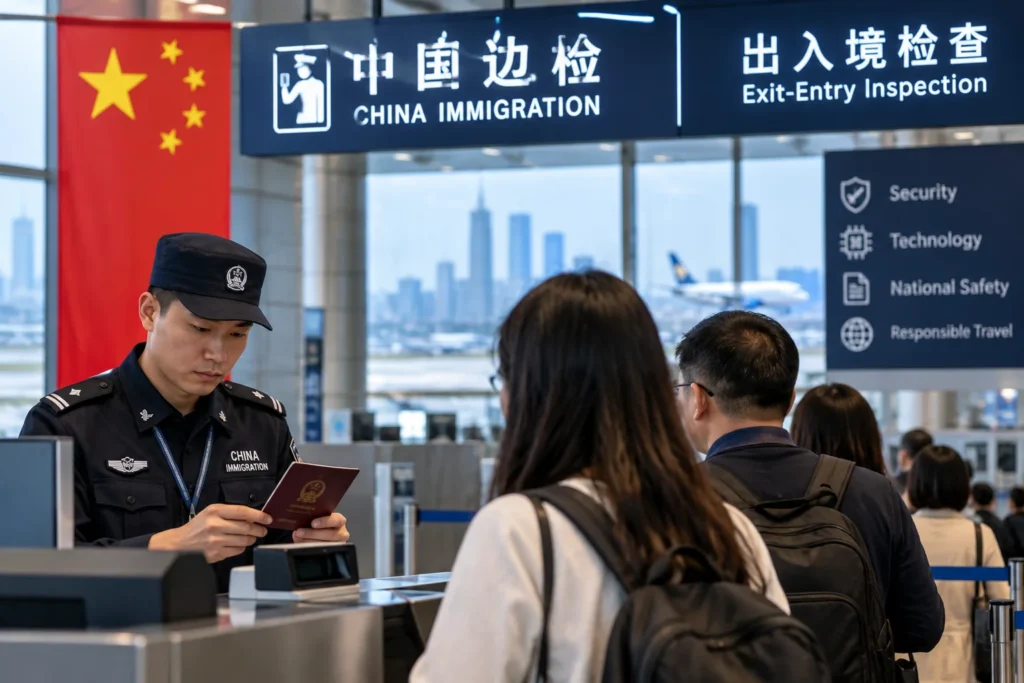
Government authorities have formally implemented comprehensive updates to national exit and entry frameworks, establishing tightened border controls aimed at safeguarding domestic technology infrastructure and industrial security. Under State Council regulations, new measures empower border control agencies to issue targeted departure bans against citizens whose travel activities could pose risks to critical technology assets or violate core export control frameworks.
The updated statutory framework codifies administrative procedures for reviewing cross-border movement across multiple traveler demographics. While national policy continues to facilitate standard international tourism and legitimate business exchanges, the codified rules establish explicit regulatory boundaries for individuals involved in sensitive technical sectors, research development, and international trade operations.
Codified Enforcement Framework and Departure Restrictions
Under the official directives, individuals implicated in breaches of technological import-export laws or export control compliance standards face formal travel restrictions. The regulations outline specific administrative durations for exit prohibitions, allowing state authorities to restrict outbound travel for periods ranging from six months up to three years.
| Restriction Category | Administrative Standard | Regulatory Scope | Targeted Compliance Metric |
| Technology Security Exit Bans | Six months to three years | Citizens violating export controls or technology transfer rules | Industrial and technological security safeguarding |
| Overseas Security Violations | Mandatory administrative review | Returning citizens engaged in activities harming national interests | Post-travel security verification |
| Foreign National Entry Denials | One to five years entry restriction | Non-citizens submitting fraudulent visa documentation | Border application authenticity and compliance |
| Institutional Oversight | Strict pre-clearance procedures | Personnel in state enterprises, civil service, and research | Pre-departure foreign connection review |
Official statements from the Ministry of Public Security and the National Immigration Administration outline that these parameters ensure legal standardized procedures while preventing unauthorized technology transfers abroad. The legal updates also mandate that individuals applying for international travel documentation must submit fully verified credentials, establishing clear legal liabilities for fraudulent submissions.
Border Integrity Measures and Foreign National Compliance
In addition to outbound travel mandates for domestic citizens, the updated administrative decree introduces expanded entry criteria for foreign nationals seeking access to mainland trade corridors. Non-citizens who submit false documentation, misrepresent travel purposes, or provide inaccurate background details during visa application processes face formal entry bans spanning from one to five years.
The regulations establish stricter verification requirements for corporate invitations and institutional sponsorships. Entities hosting foreign delegates or organizing international commercial symposiums are legally accountable for the authenticity of documentation provided to immigration authorities. National border agencies hold clear statutory authority to deny entry at international airports and land ports of entry whenever application materials fail to satisfy verification audits.
Expanded Security Scrutiny for Institutional Travelers
The administrative framework reinforces pre-existing oversight mechanisms governing civil service personnel, military staff, and state-owned enterprise workers. Employees maintaining access to confidential technical data or critical industrial processes remain subject to formal internal authorization procedures prior to securing international transit arrangements.
Government directives mandate institutional reporting mechanisms requiring state agencies, public research facilities, and state-affiliated enterprise boards to maintain updated rosters of international travel requests. These internal oversight procedures cross-reference planned overseas travel itineraries against national strategic security priorities, ensuring that proprietary technical knowledge and strategic enterprise data remain fully protected under domestic law.
Key Compliance Takeaways for International Travel Operations
Formalized Departure Regulations: Executive decrees establish strict exit parameters lasting from six months to three years for individuals involved in technology export violations.
Enhanced Visa Scrutiny: Foreign visitors face entry prohibitions of up to five years if visa applications contain fraudulent documentation or false representations.
Institutional Accountability: Host organizations, state enterprises, and travel agencies face expanded compliance responsibilities regarding traveler credentials and foreign invitations.
Codified Risk Mitigation: National immigration authorities retain expanded legal mandate to issue advance travel advisories and evaluate individual travel clearance based on technological security metrics.
Frequently Asked Questions
What are the core parameters of the China exit-entry travel restrictions?
The updated regulations establish clear legal grounds to restrict outbound travel for citizens who violate technology export controls or endanger industrial security, while also imposing entry bans on foreign nationals who provide inaccurate visa documentation.
How long can an exit ban remain in effect under the new regulations?
For individuals determined to have breached technology transfer controls or engaged in activities harming security interests, administrative exit prohibitions can be imposed for durations ranging between six months and three years.
What penalties apply to foreign nationals submitting inaccurate travel documents?
Foreign nationals who present false statements, invalid sponsorship credentials, or fraudulent application materials during visa processing face mandatory entry denials lasting from one to five years.
For more travel news like this, keep reading Global Travel Wire