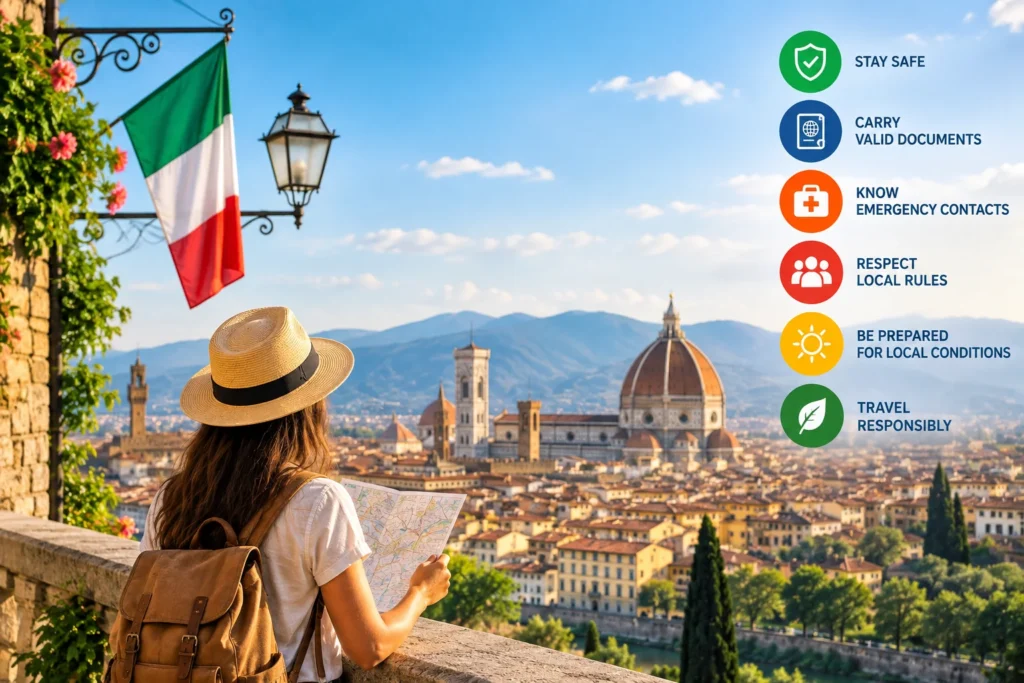
Official travel advisories and government updates continue to provide strategic guidance for international tourists visiting the Italian peninsula. Frameworks published by foreign ministries and civil security agencies emphasize that while major cultural destinations remain open and accessible, visitors are advised to practice structured risk management throughout their stay.
Navigating high-density urban centers, international transport corridors, and historic landmarks requires clear awareness of local security regulations and entry documentation standards. Government authorities maintain active monitoring to safeguard civilian infrastructure, historic sites, and major transit gateways.
Regulatory Framework of Foreign Travel Directives
The United States Department of State maintains a Level 2 travel advisory for Italy, recommending that international travelers exercise increased caution across the country. This regulatory classification highlights ongoing monitoring regarding potential security risks, including opportunistic petty crime and broader regional security considerations.
Government security briefs emphasize that heightened vigilance is particularly relevant in crowded environments, such as major international airports, railway hubs, central shopping districts, and high-profile public gatherings. Rather than restricting travel, official advisories outline preventive measures to help visitors protect personal belongings and navigate transit networks safely.
Complementing security guidance, the Italian Ministry of Foreign Affairs and International Cooperation enforces entry regulations for non-Schengen arrivals. Key administrative entry guidelines require travelers to present:
A valid passport with required post-departure validity periods.
Documented evidence of sufficient financial means for the duration of stay.
Proof of confirmed accommodation or official hosting documentation.
Complete return or onward transportation itineraries.
Security Considerations Across Major Tourist Corridors
Public safety reports indicate that security considerations vary across primary urban centers and regional destinations. High visitor density in landmark zones creates specific operational challenges for local law enforcement and transit managers.
In Rome and Milan, municipal authorities maintain strong security presences around major transport stations, historical monuments, and commercial centers. Similarly, unique pedestrian environments such as Venice require travelers to remain attentive in high-traffic plazas and ferry terminals. In southern regions, including Sicily, regional authorities manage both urban security and natural hazard monitoring near active volcanic zones.
Primary focus areas for visitor vigilance across urban hubs include:
Maintaining awareness on public subways, buses, and intercity passenger trains.
Securing high-value personal items in crowded public squares and outdoor dining venues.
Utilizing verified, licensed taxi services and official ground transport operators.
Following local municipal ordinances regarding public decorum near historic monuments.
Operational Logistics and Transport Management
State aviation bodies and international transport authorities maintain continuous monitoring across Italian air space and railway networks. Civil defense agencies coordinate closely with transportation operators to ensure real-time communication during localized disruptions, such as extreme weather events or administrative transport strikes.
Official transport updates confirm that main transport arteries connecting major metropolitan areas operate under standardized safety protocols. Emergency services and local law enforcement maintain dedicated tourist assistance units across major cities to support foreign nationals requiring administrative or protective services.
Insurance regulatory bodies recommend that international visitors secure comprehensive travel protection policies covering unexpected trip interruptions, medical emergencies, and logistical delays before departure.
Strategic Safety Protocols for International Travelers
Government civil defense departments and diplomatic missions provide actionable recommendations to assist travelers in maintaining personal safety while exploring regional destinations.
Official state department guidance suggests the following practical protocols:
Register travel itineraries with home country diplomatic portals to receive real-time security alerts.
Monitor verified local news outlets and municipal notifications for breaking safety updates.
Maintain digital and physical duplicates of vital travel documents stored in separate locations.
Comply immediately with instructions issued by local law enforcement and civil protection officers.
National tourism portals continue to publish updated visitor guidelines to ensure international guests remain informed. By adhering to official administrative advice and practicing sensible safety precautions, travelers can experience Italy’s cultural heritage while prioritizing personal security.
For more travel news like this, keep reading Global Travel Wire