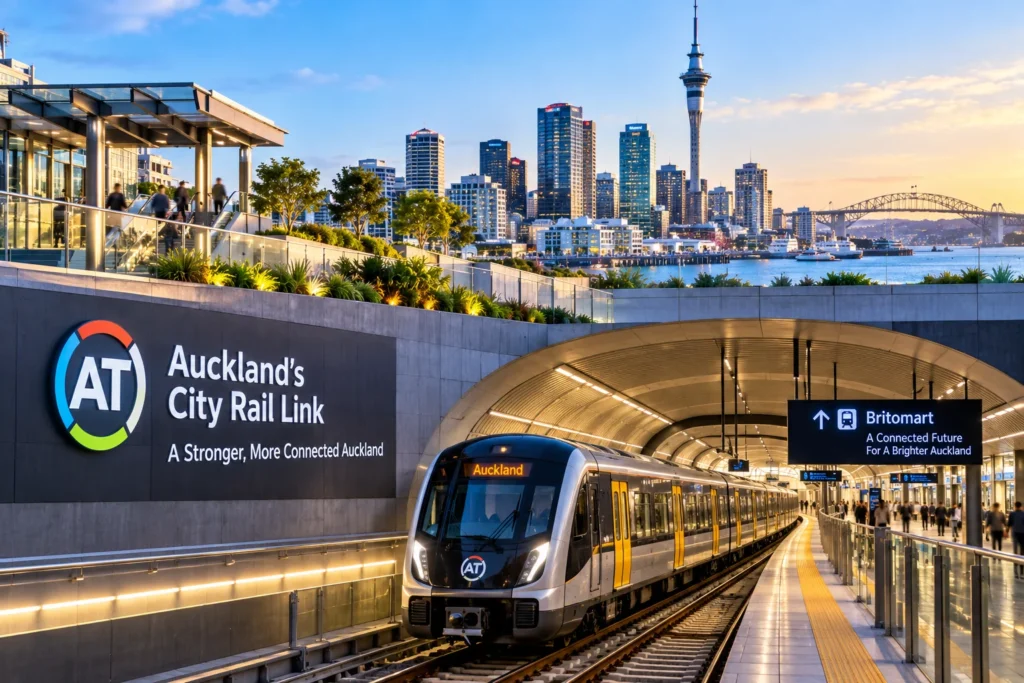
New Zealand has marked a historic milestone in its urban transport history with the official public opening of the City Rail Link. Serving as the nation’s first underground passenger railway and its largest municipal infrastructure investment to date, the subterranean network introduces a modern transit backbone to the country’s largest urban center.
By linking downtown central districts directly to suburban rail arteries, civic leaders and transport authorities anticipate a permanent evolution in how residents and international visitors navigate the city. The project addresses long-standing urban congestion while increasing total rail system efficiency, accessibility, and passenger throughput.
Modern Underground Corridor Expands Rail System Capacity
The centerpiece of the underground development comprises twin 3.45-kilometer tunnels constructed beneath the city center. This key subterranean connection links the waterfront terminal at Waitematā Station directly to an upgraded junction at Maungawhau Station in Mount Eden.
Designed to support high-frequency urban transit, the dual-tunnel alignment converts a previously restrictive dead-end rail terminal into a continuous, high-capacity loop. Official engineering specifications confirm that the reconfigured network is built to accommodate up to 54,000 passengers per hour during peak travel windows, effectively doubling the carrying capacity of the broader rail grid.
To support this expanded capacity, the project introduces two custom-designed underground stations that serve major commercial, academic, and cultural precincts:
Te Waihorotiu Station: Positioned in midtown, this underground facility provides direct access to the central business district, civic venues, and major retail corridors.
Karanga-a-Hape Station: Situated near Karangahape Road, this deep-level station connects vibrant entertainment, dining, and residential neighborhoods directly to the passenger network.
Official Data Highlights Record Passenger Engagement
Public releases from regional transport agencies indicate immediate, widespread adoption of the new rail services following their initial public launch. According to operational figures released by transport executives, network usage surged during the opening days of passenger service.
On the first full business day of operations, regional authorities recorded an estimated 90,000 total train boardings across the network. Official monitoring revealed that the largest percentage increase in passenger travel occurred during off-peak windows, demonstrating strong engagement from leisure travelers, off-peak commuters, and senior concession cardholders exploring the new underground facilities.
The operational success of the opening phase reflects years of rigorous network integration. Delivery bodies utilized advanced digital building information modeling, virtual reality scenario testing, and extensive emergency drills to optimize station wayfinding, ensure full passenger accessibility, and fine-tune central control operations prior to welcoming the public.
Sustainable Design Sets International Infrastructure Benchmarks
Beyond its operational impact, the underground rail project has achieved significant national recognition for environmental standards and sustainable construction. Infrastructure rating bodies have awarded the development two Leading As-Built Infrastructure Sustainability ratings, marking a first for major public works projects in New Zealand.
Architectural planning prioritized sustainability, cultural narrative integration, and long-term durability. The subterranean stations incorporate energy-efficient lighting, advanced ventilation systems, and intuitive layout designs that minimize operational environmental footprints while providing intuitive navigation for high volumes of daily commuters.
Key design and operational features include:
Integrated fire safety, emergency exit, and real-time public communication systems tested across simulated operational environments.
Barrier-free station environments equipped with modern elevator networks, tactile paving, and wide concourses to support passengers with accessibility needs.
Seamless physical connections between underground rail platforms, surface bus routes, and pedestrian zones.
Architectural elements reflecting local indigenous heritage and urban design identity.
Strategic Economic Benefits for Urban Tourism and Local Business
Government statements and municipal releases emphasize that the underground link serves as a primary driver for urban economic renewal. By dramatically reducing transit times across the city core, the rail network enhances access to primary hotel districts, dining quarters, convention facilities, and tourist destinations.
Local business organizations report that enhanced station proximity and increased foot traffic are creating fresh commercial opportunities for retail, hospitality, and cultural enterprises located near station entrances. Shorter journey times from regional suburbs to the city center allow visitors to move effortlessly between commercial districts and coastal ferry terminals.
The completion of the project aligns with broader national strategies to build resilient, low-emission transport infrastructure. By offering a rapid, high-capacity alternative to private motor vehicles, the underground network supports sustainable urban development while positioning the city as a modern, accessible destination for international travelers. Official transport bodies confirm that ongoing schedule monitoring and service adjustments will continue to ensure seamless network performance as passenger numbers grow.
For more travel news like this, keep reading Global Travel Wire