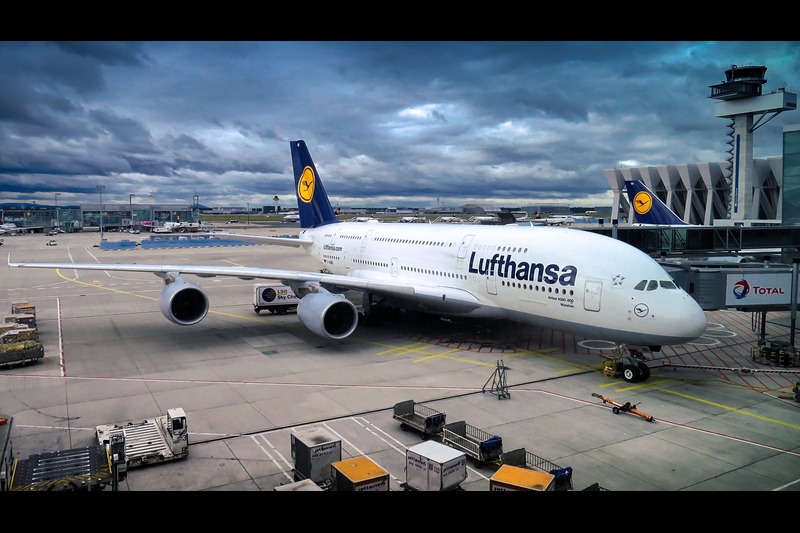
Europe’s aviation industry is entering another major phase of fleet renewal, with Lufthansa Group moving ahead with additional aircraft purchases as airlines across the region prepare for long-term passenger growth. Lufthansa has exercised options for 20 Boeing 737 MAX 10 aircraft, with deliveries expected to begin in the early 2030s as part of its wider fleet-modernisation programme.
The move places Lufthansa alongside carriers such as Ryanair, easyJet and International Airlines Group (IAG), which are also investing heavily in next-generation aircraft. Lufthansa expects to receive more than 250 new aircraft by 2035, highlighting the scale of Europe’s airline fleet expansion and the industry’s focus on fuel efficiency, capacity and replacing older aircraft.
Lufthansa Strengthens Boeing 737 MAX Fleet
The 20 Boeing 737 MAX 10 aircraft represent Lufthansa Group’s first firm commitment to the MAX 10 variant. The aircraft were secured through options included in the German airline group’s 2023 Boeing agreement, which originally covered 40 Boeing 737 MAX 8 aircraft and purchase options for a further 60 aircraft from the MAX family.
The new aircraft are expected to gradually replace older Airbus A320 family aircraft operating across the Lufthansa Group. At the end of June 2026, the group had 334 A320ceo-family aircraft in its fleet, with some of the aircraft now averaging more than two decades in service.
According to Lufthansa, the Boeing 737 MAX 10 will provide greater seating capacity than the MAX 8 aircraft already on order. Compared with the older aircraft it is intended to replace, Lufthansa says the MAX 10 can consume around 30% less fuel, while its higher seating capacity can reduce unit costs by approximately 20%.
More Aircraft for Lufthansa’s Long-Term Network
The MAX 10 order is only one element of Lufthansa Group’s broader fleet strategy. In May 2026, the company approved orders for 20 additional long-haul aircraft comprising 10 Airbus A350-900s and 10 Boeing 787-9s. Those aircraft are scheduled for delivery between 2032 and 2034 and are intended to replace older long-haul models.
Lufthansa Group currently has 232 next-generation aircraft on its order list, including 107 long-haul aircraft, according to its investor-relations information. The group has said that fleet standardisation should also help reduce operational complexity, maintenance costs and spare-parts requirements while improving flexibility across its airlines.
The emphasis on newer aircraft also reflects the changing economics of European aviation. Airlines are looking for aircraft capable of carrying more passengers while consuming less fuel and generating lower emissions than previous generations.
Ryanair Also Targets Major Capacity Growth
Lufthansa’s expansion comes as Ryanair continues with one of Europe’s largest aircraft acquisition programmes. The Irish low-cost carrier has an agreement with Boeing for up to 300 Boeing 737 MAX 10 aircraft, consisting of 150 firm orders and 150 options. Deliveries are scheduled between 2027 and 2033.
Ryanair expects a portion of these aircraft to replace older aircraft, while the remaining deliveries will support traffic growth. The airline’s existing plan targets approximately 300 million passengers annually by fiscal 2034.
The airline is also expanding its presence in the Baltic region. Ryanair announced plans in September to increase annual capacity in Latvia, Estonia and Lithuania, with its regional fleet expected to grow from seven to 16 aircraft by 2031.
European Airlines Focus on New-Generation Aircraft
The wider European market is seeing similar investment. Airlines are increasingly turning toward aircraft such as the Airbus A320neo/A321neo family, Boeing 737 MAX, Airbus A350 and Boeing 787 as they seek to combine network expansion with lower operating costs.
For passengers, fleet renewal could gradually translate into newer cabins, additional seating capacity and changes to route networks as airlines receive their aircraft. However, the impact on ticket prices will depend on several factors, including demand, airport charges, fuel prices and available capacity on individual routes.
At major European hubs where airport slots remain limited, larger and more efficient aircraft can also allow airlines to increase the number of seats offered without necessarily adding more flights. This makes fleet planning increasingly important as carriers compete for capacity at congested airports.
What Lufthansa’s 2035 Fleet Plan Means for European Travel
Lufthansa’s latest Boeing order provides another indication of how European airlines are preparing for the next decade. Rather than relying solely on existing fleets, carriers are securing aircraft years ahead of delivery while gradually phasing out older models.
For travellers, the changes will unfold gradually rather than overnight. Lufthansa’s MAX 10 deliveries are not expected until the early 2030s, while its broader programme will bring hundreds of new aircraft into the group by 2035.
As European aviation moves toward 2035, the competition is increasingly being shaped not only by destinations and fares, but also by the aircraft airlines can secure, the capacity they can deploy and how efficiently they can operate. Lufthansa’s latest order, together with major commitments from Ryanair and other European carriers, signals that the continent’s fleet transformation is already well underway.