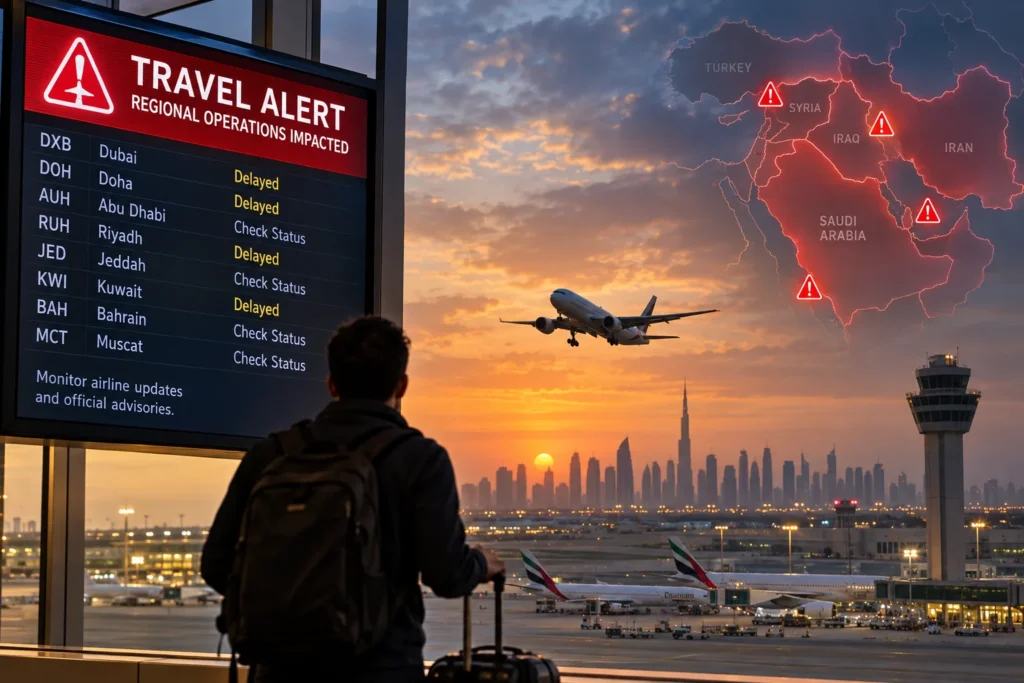
Global tourism sectors and international transportation networks are adjusting operations following official official security statements regarding regional travel conditions across the Middle East. High-level security alerts released through official diplomatic communications indicate that recent military developments have heightened security precautions throughout the region. The security warning emphasizes significant concerns regarding unexpected operational shifts that could directly impact international commercial aviation, transit corridors, and regional visitor itineraries.
Diplomatic updates highlight that security circumstances across multiple popular transit destinations remain dynamic, creating the potential for sudden policy shifts, revised route planning, and unexpected flight modifications. Officials urge international travelers currently residing in or planning transit through affected destinations to maintain constant communication with commercial airlines and monitor real-time passenger transport status updates.
Comprehensive Regional Travel Guidance Updated Across Key Destinations
The geographic scope of the official regional advisory includes major tourism hubs, transit centers, and cultural destinations. Travel advisories apply across a broad group of regional locations, covering Bahrain, Egypt, Iran, Iraq, Israel, the occupied West Bank and Gaza, Jordan, Kuwait, Lebanon, Oman, Qatar, Saudi Arabia, Syria, the United Arab Emirates, and Yemen.
Governments and transportation departments advise citizens traveling to or through these regions to reevaluate non-essential journeys and prepare for potential operational changes. With major aviation hubs operating in key Middle Eastern transit points, passenger travel guidance reinforces the need for flexibility, comprehensive travel insurance coverage, and direct coordination with official aviation authorities.
While primary international airports continue supporting scheduled commercial passenger services, authorities emphasize that security conditions can evolve rapidly. Consequently, flight paths and airport operational statuses may be adjusted on short notice to safeguard international passengers and commercial air transportation networks.
Potential Flight Disruptions and Airspace Management Protocols
A central concern highlighted in official statements involves potential disruptions to international commercial aviation. Due to heightened regional security operations, authorities warn that temporary airspace closures, sudden flight cancellations, and extensive schedule delays could affect regional carrier operations.
Major international airlines operating out of key Middle Eastern hubs are actively monitoring national airspace notifications and official security bulletins. Travelers planning connections through international aviation hubs in the region are encouraged to check departure status boards frequently via official airline mobile applications or official airport authority portals.
Aviation authorities recommend several immediate steps for international travelers handling dynamic booking itineraries:
Confirm all departure flight statuses directly with the operating air carrier prior to embarking for the departure terminal.
Ensure personal traveler profiles in official reservation platforms contain current contact details to receive real-time schedule alerts.
Review destination-specific security guidelines released by official foreign ministry and embassy consular affairs offices.
Verify that travel insurance packages provide explicit policy provisions for regional travel disruptions, trip cancellations, or rebooking expenses resulting from unexpected security developments.
Impact on Regional Tourism and International Visitor Contingencies
The tourism and hospitality industries across affected destinations are evaluating the operational implications of these revised security advisories. Many regions across the Middle East rely heavily on international transit passengers, luxury hospitality, cultural heritage tourism, and business travel. The issuance of formal safety cautions often leads to increased booking cancellations, altered itineraries, and modified tour schedules as visitors prioritize personal safety and transit predictability.
Tour operators, cruise lines, and hospitality providers operating in the affected countries are urged to maintain flexible cancellation policies and maintain transparent lines of communication with prospective visitors. Tourism boards in major destination hubs emphasize that destination management organizations are closely aligning operations with national security guidance to ensure local hospitality infrastructure remains secure and compliant with safety protocols.
Foreign consular services and government agencies continue advising international visitors to enroll in official traveler enrollment programs. These programs allow diplomatic missions to send emergency notifications, safety guidance, and updated transit advice directly to citizens overseas during times of operational disruption.
Heightened Vigilance Recommended for Global Travelers
Diplomatic advisories caution that safety considerations extend beyond airport operations, urging increased personal awareness near official diplomatic buildings and public transit networks. International visitors currently staying within the affected Middle Eastern territories are instructed to exercise heightened vigilance, stay well-informed through official news channels, and adhere strictly to instructions issued by local municipal and security authorities.
As diplomatic agencies and aviation regulators monitor ongoing regional developments, international tourism stakeholders are preparing for ongoing adjustments to transit schedules. Global travelers planning journeys involving Middle Eastern airspace are strongly advised to remain proactive, build extra flexibility into prospective travel schedules, and prioritize official government announcements when evaluating upcoming travel plans.
For more travel news like this, keep reading Global Travel Wire