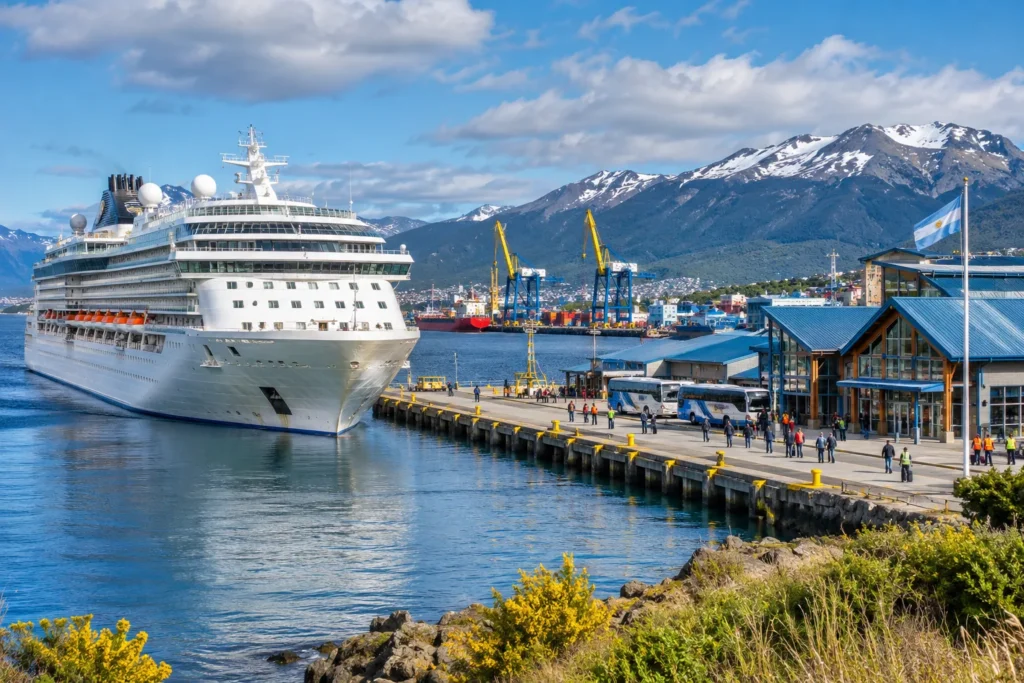
Maritime tourism operations are entering an active phase across Argentina as federal port administrations, provincial tourism boards, and maritime authorities finalize operational plans for the 2026–2027 cruise cycle. The scheduled berthing of large international passenger liners across key maritime hubs signals the renewal of commercial, logistics, and tourist momentum along the South Atlantic coastline. Beyond offering memorable voyages through southern latitudes, the arrival of modern fleets reactivates a wide-reaching economic network, connecting local service providers, harbor operators, and hospitality businesses with the global travel market.
Official maritime and tourism trade assessments confirm that cruise tourism serves as a powerful economic catalyst for coastal economies. Every vessel docking at an Argentine quay triggers a coordinated series of ground and maritime operations. The operational chain encompasses harbor pilots, tugboat crews, stevedores, customs agents, refueling technicians, and provisioning suppliers. On shore, passenger disembarkation translates directly into foot traffic for licensed tour guides, transport operators, family-run craft markets, regional culinary establishments, and cultural institutions, driving municipal employment and economic diversification across port districts.
Strategic Gateways: Buenos Aires, Puerto Madryn, and Ushuaia Anchor National Itineraries
The cruise network across Argentina is anchored by three strategic maritime destinations, each delivering specialized infrastructure and distinctive visitor offerings across the country’s geography.
Buenos Aires operates as the primary sovereign gateway and the central embarkation and disembarkation base for premier South Atlantic passenger routes. The national capital’s modern passenger terminals process large international ocean liners, providing high passenger throughput for urban hospitality operators. Visitors arriving by sea frequently extend their itineraries across metropolitan hotels, exploring historic tango neighborhoods, world-class gastronomy, museums, and architectural landmarks before departure or after concluding coastal voyages. This turnover generates substantial demand for land transportation networks, boutique lodging, and municipal retail districts.
Further south along the Patagonian coast, Puerto Madryn stands as the maritime gateway to Atlantic Patagonia. Framed by the protected waters of the Golfo Nuevo, the port serves as the launch point for excursions to Península Valdés, a designated UNESCO World Heritage Site renowned for exceptional marine biodiversity, elephant seals, sea lions, and migrating cetacean populations. Provincial tourism secretariats emphasize that cruise port calls in Chubut create indispensable commercial opportunities for regional excursion planners, nature guides, and local craft producers.
At the southernmost extremity of the continent, Ushuaia maintains an unparalleled position on the global maritime map. Situated along the Beagle Channel in Tierra del Fuego, the city functions as the foremost planetary gateway for polar expedition vessels navigating to the Antarctic Peninsula. In addition to hosting polar exploration fleets, Ushuaia accommodates large transoceanic vessels circumnavigating Cape Horn and traversing the southern channels. The port’s unique geography makes it a vital logistical hub for scientific expeditions, specialist marine maintenance, and high-value eco-tourism.
Local Economic Integration and Repeat Visitation Dynamics
The structural value of cruise tourism lies in its ability to connect international consumers directly with regional production centers. As large vessels complete port calls, passengers purchase regional wines, artisanal goods, leathercraft, and traditional food specialties, infusing foreign expenditure directly into micro-enterprises and local cooperatives.
Tourism statistics and visitor surveys indicate that maritime port calls generate significant long-term brand equity for host destinations. An initial six-to-eight-hour port visit frequently serves as an experiential preview for international tourists. Passengers who encounter the natural landscapes of Patagonia, the urban culture of Buenos Aires, or the sub-polar wilderness of Tierra del Fuego often return in subsequent years for extended land-based vacations, multiplying the sector’s long-term value to regional hotel occupancy and domestic aviation.
Simultaneously, the cruise season offers Argentine domestic travelers an accessible vacation format that bundles accommodation, fine dining, recreation, and multi-destination travel into unified itineraries, expanding leisure choices across the home market.
Sustainable Maritime Practices and Port Innovation
Environmental stewardship and technological modernization represent critical priorities for port authorities and cruise operators managing sensitive marine habitats. In collaborative frameworks established alongside municipal environmental agencies, international cruise lines continue to integrate energy-efficient technologies, advanced wastewater treatment systems, and strict emissions-reduction protocols.
Modern fleet deployment emphasizes low-sulfur fuels, optimized hydrodynamic hull profiles, and expanded capacity for shore-side power connectivity, reducing auxiliary engine emissions while vessels remain berthed. Parallel efforts focus on single-use plastic elimination, closed-loop waste management, and stringent bio-security measures designed to protect fragile coastal ecosystems and Antarctic marine corridors from foreign biological introduction.
Public-private cooperation between port authorities, municipal leaders, and industry associations remains vital to balancing destination capacity with ecological preservation. By modernizing port infrastructure, enhancing shore excursions, and investing in sustainable management systems, Argentina reinforces its competitive standing in international cruise itineraries while securing lasting economic prosperity for coastal communities.
For more travel news like this, keep reading Global Travel Wire